Our travels continued down to Zhangjiajie (pronounced Jang-jar-juh) to visit a world-famous national park that you may recognise from the Avatar franchise. Zhangjiajie National Forest Park is comprised of dense forests, deep ravines and canyons, unusual peaks, caves, and pillar-like formations. More on that later!

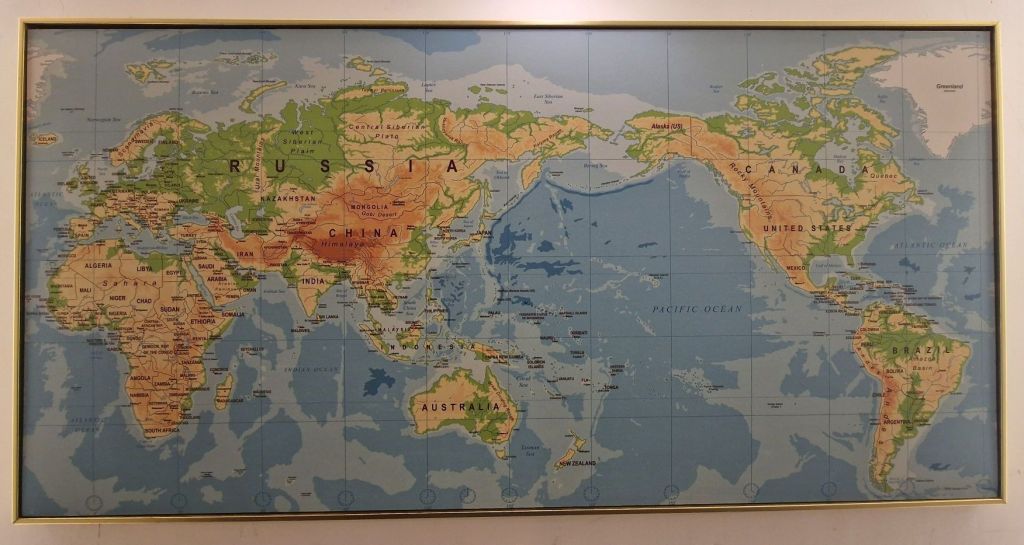
To avoid a 12-hour multi-public transport challenge, we flew straight to Zhangjiajie in 1.5 hours. All was going well until airport security, where our bags were scanned three times, and each time, more items were confiscated, including four powerbanks that contravened Chinese flying regulations – plus my favourite lighter (stolen from my brother at Boomtown). This presents quite a problem in China, where leaving the hotel requires instant Internet useage; navigation, translation, and payment (it’s an almost cashless and cardless economy here).
Landing in Zhangjiajie was so exciting, the landscape a panorama of misty green peaks stretching into the distance.

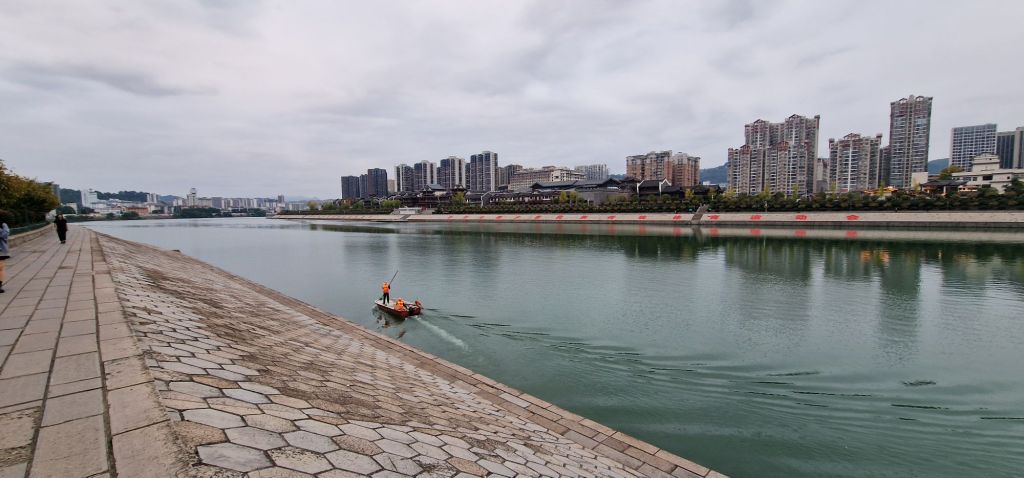
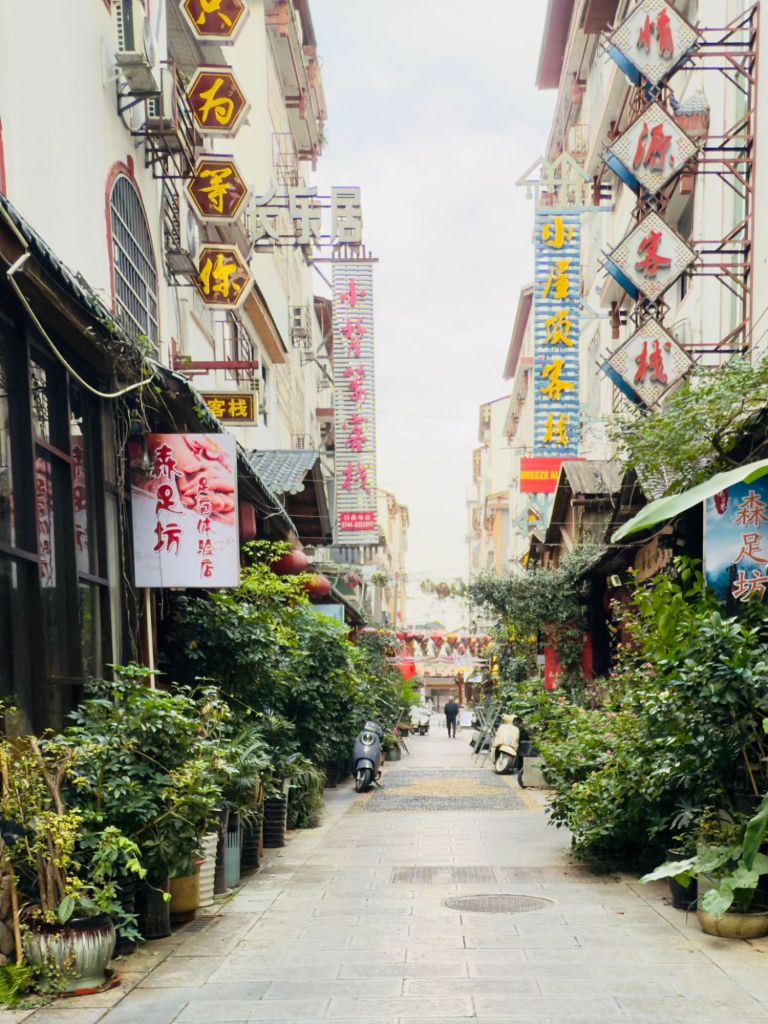
Downtown Zhangjiajie was fairly standard, featuring a small vibrant touristy area, high-rise flats, and an exceptionally pristine river, with floating debris fished out by a flotilla of boats travelling up and down.

For all meals, there are typically three items on the menu in different guises; baozi (bao buns/dumplings), jiaozi (known in the UK as their Japanese name gyoza), plus a myriad of noodle dishes.
Jem put his Big Girl’s Pants on and tucked into some cold tripe. Verdict? “Bland and furry” 😆
Breakfast reawakened the extremely contentious Baozi vs. Jiaozi Debate. So which has the edge?
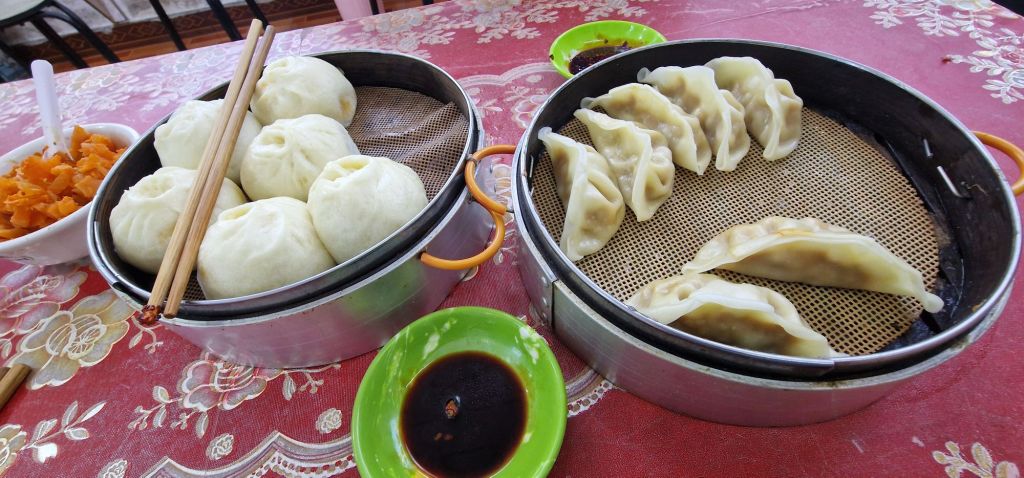
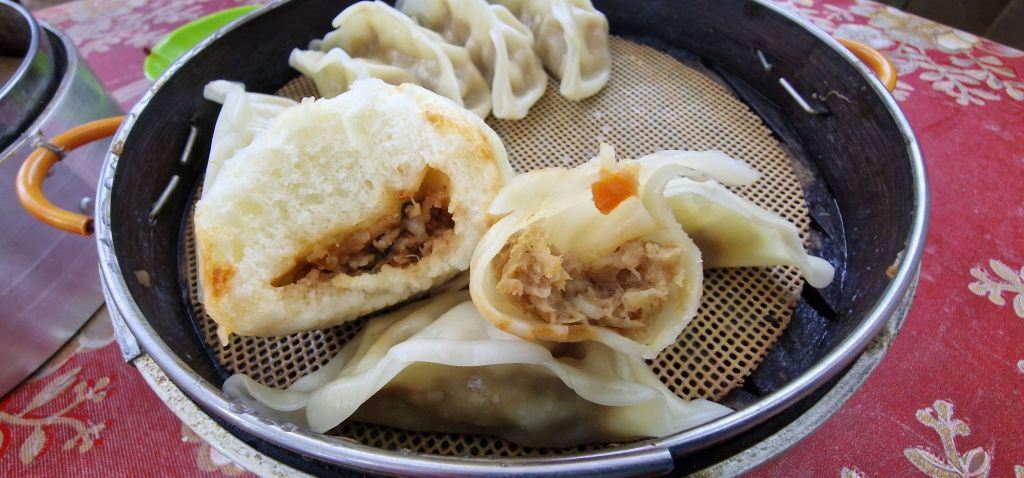
The answer, of course, will depend on the filling. However, the package in which they are delivered can make all the difference! Despite its ability to instantly fill the belly, I find the local bao buns to lack the optimum bun-to-filling ratio. However, the yeast-levened dough is tastier than the flour/water/salt wrapping of the jiaozi. We will have to do more research before presenting the crown. Off we go!


 is there poodle in my noodle
Leave a comment