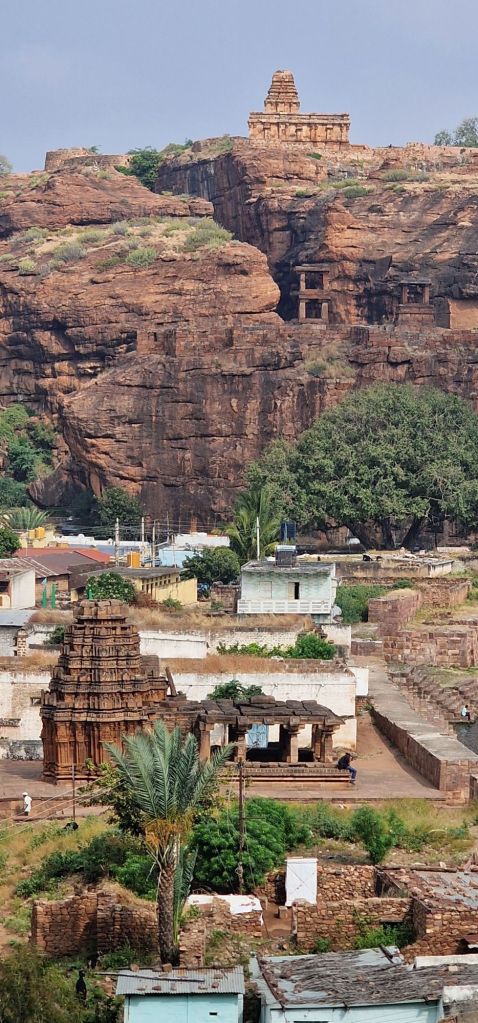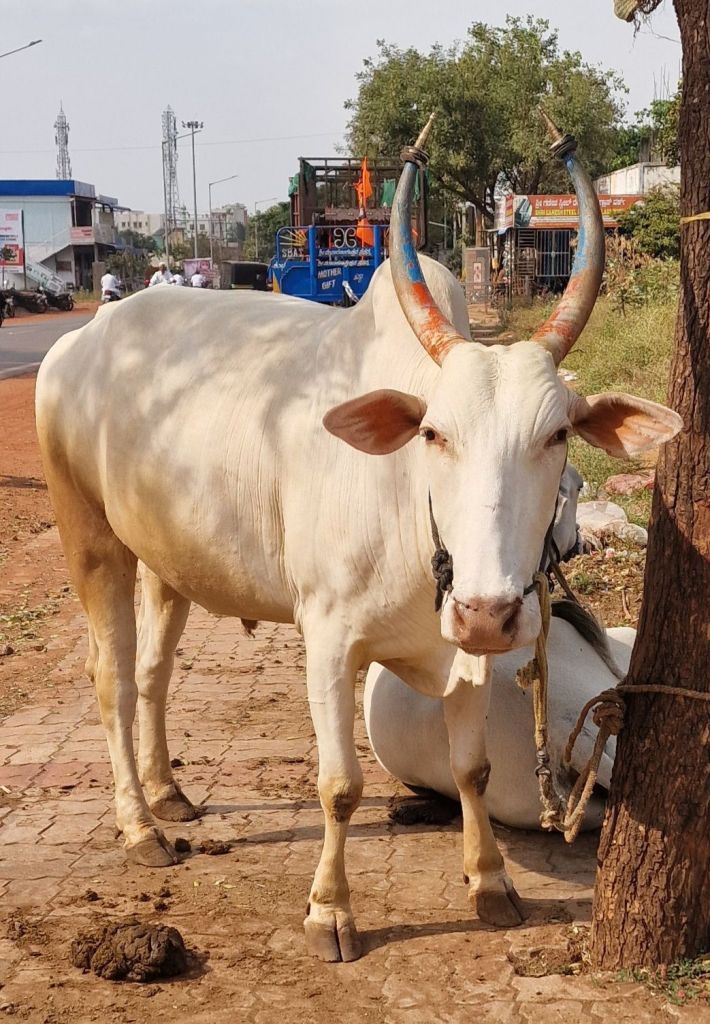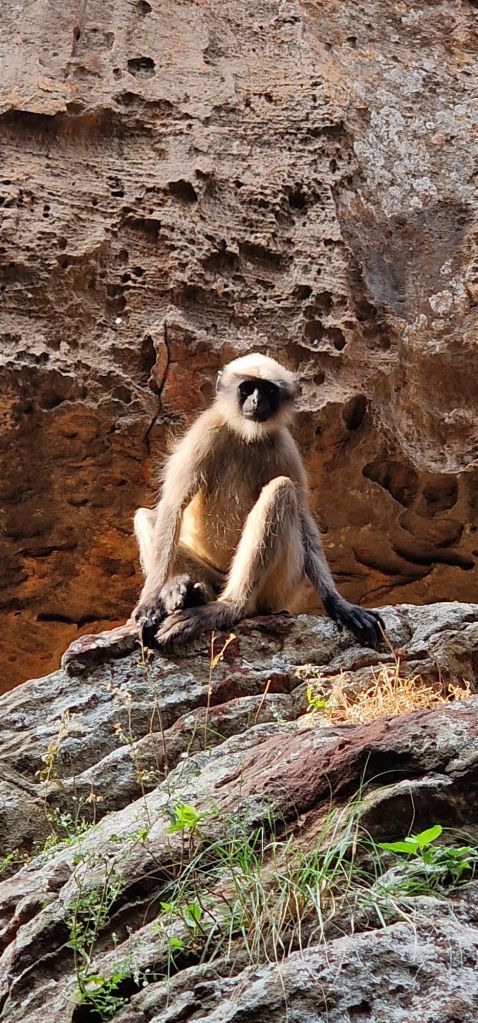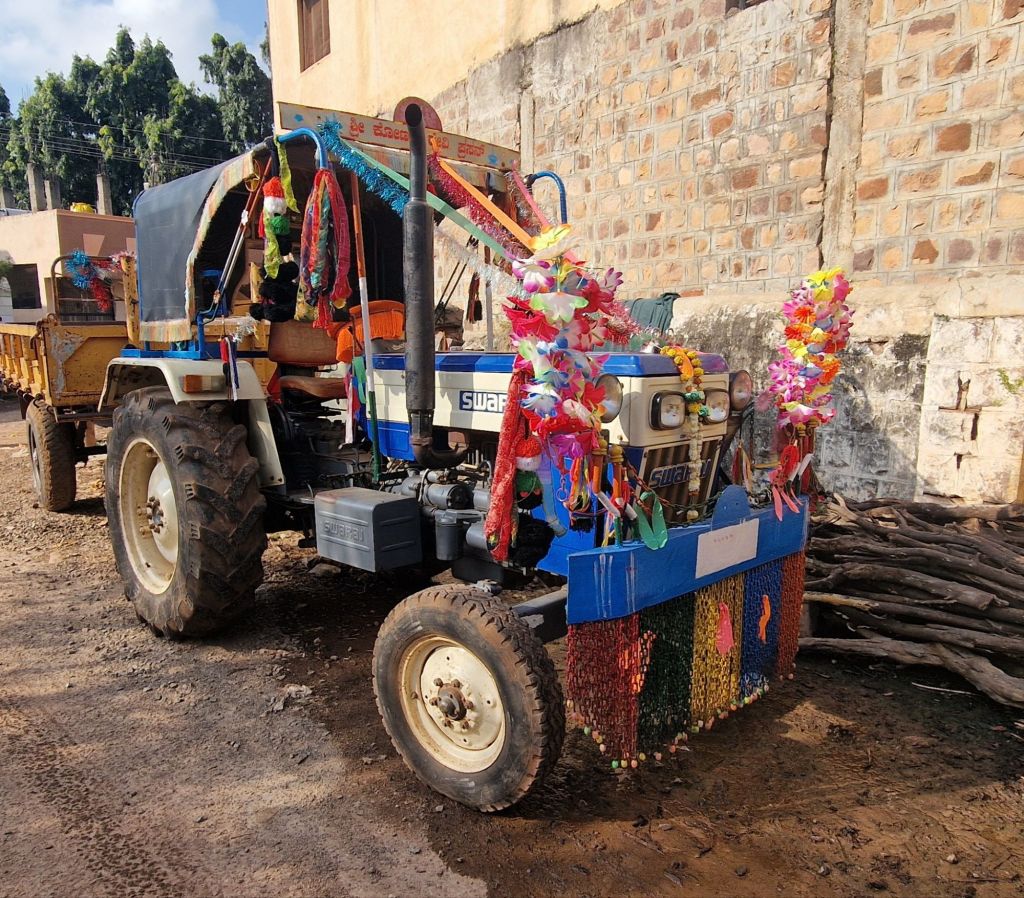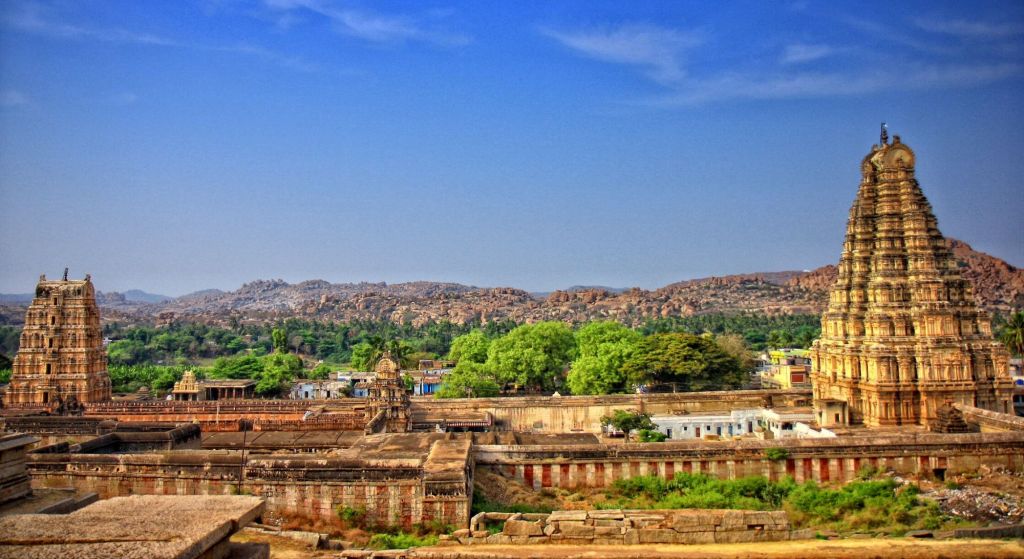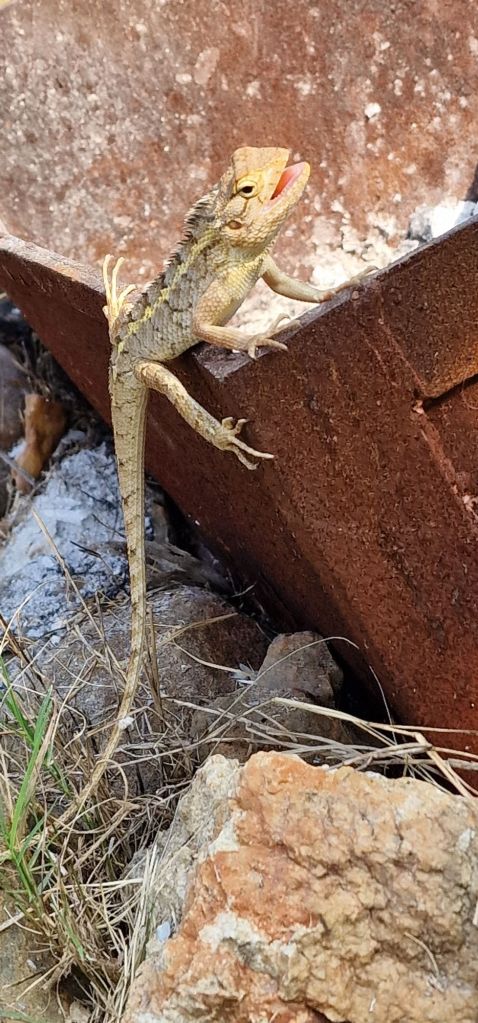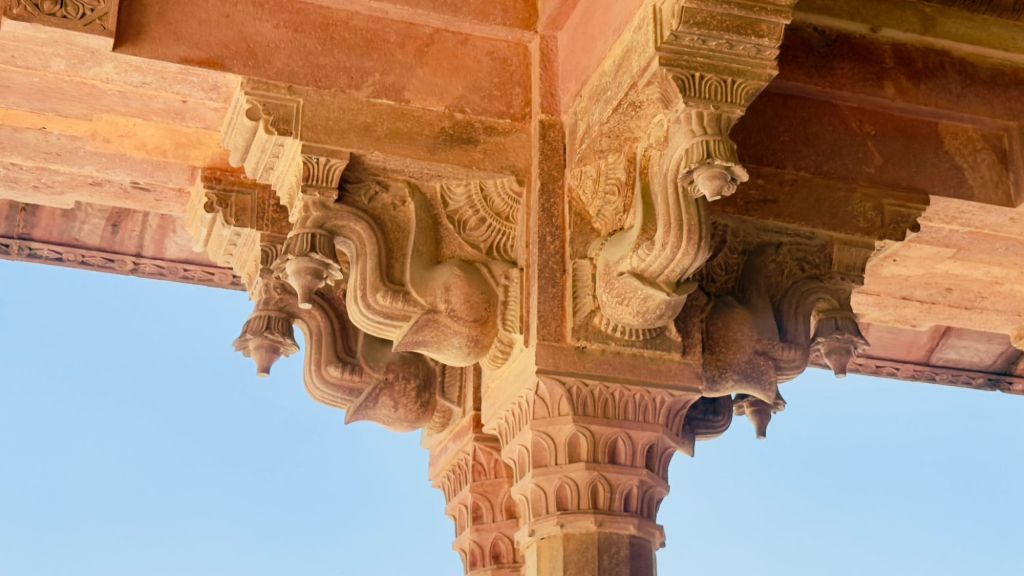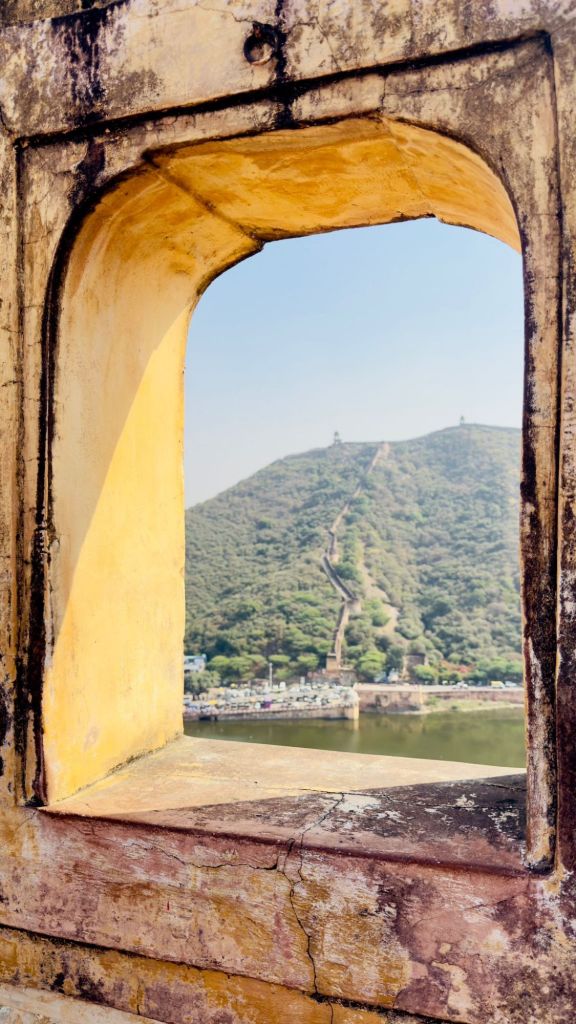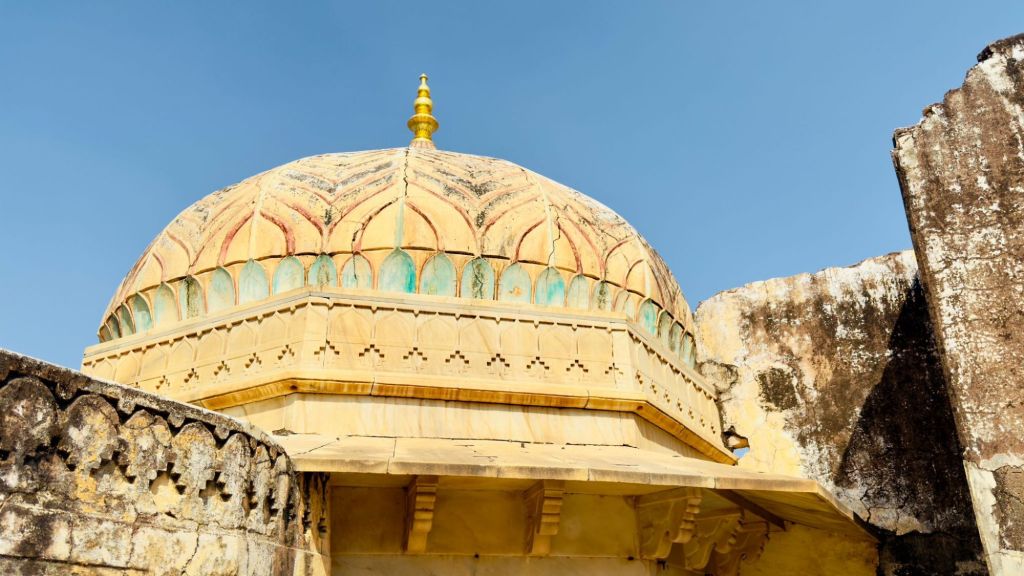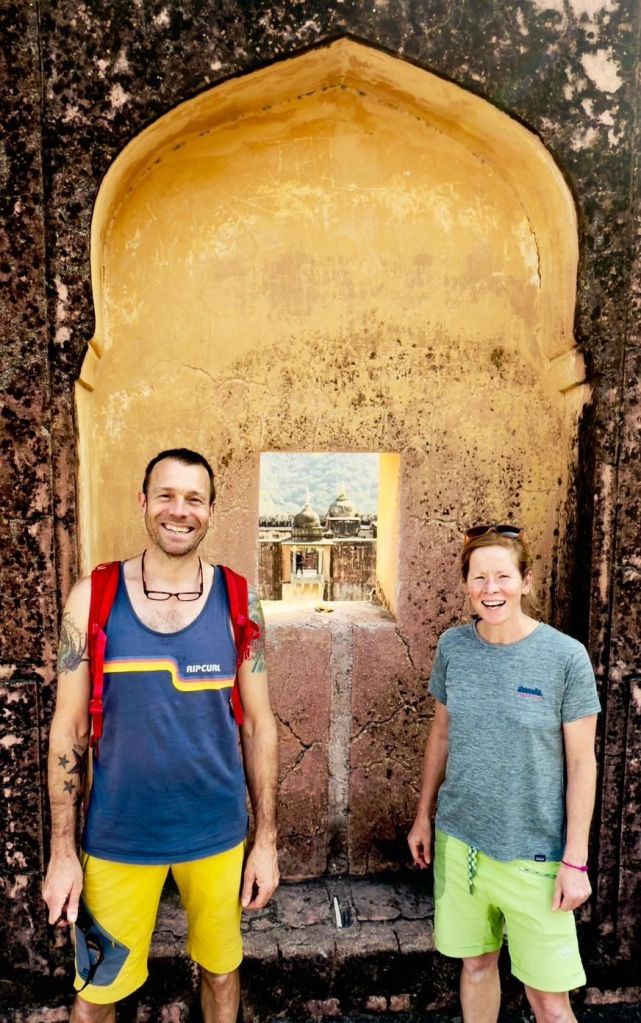
• The granite boulders at Hampi stretch as far as the eye can see

    The journey to Hampi was a trek of epic proportions involving two flights to Hubli airport via Hydrabad. There we waited five hours for a train, before the final one-hour tuk tuk ride to our accommodation.

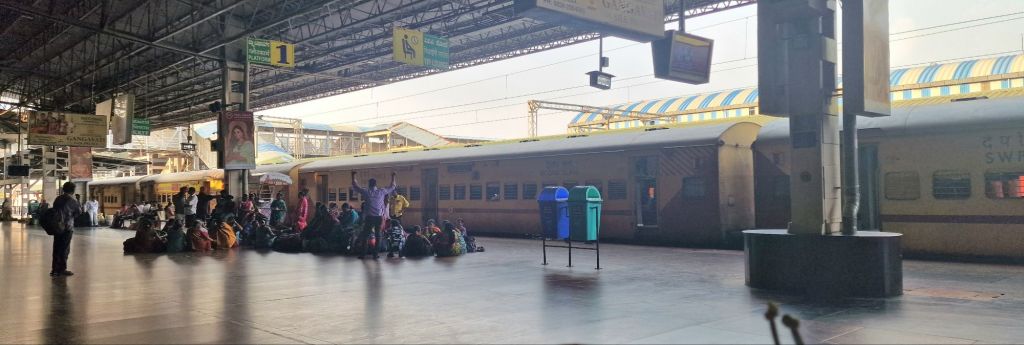
    The train station was mayhem. Unlike China, where the platforms are helpfully marked to show where you should wait for your booked seat, in India, it’s a massive bunfight to cram into an unmarked carriage and just hope for the best.

    The doors are left open as the train rumbles along. Sometimes people jump on and off

    We had naively assumed that our reserved seats in carriage A1 would be at the front. The train pulled in, and we were immediately swarmed by a crazy scrum of passengers climbing over each other to similtaneously get in and out of the train.

    Carrying 20kg bags, we waited for the fuss to die down and crammed into a carriage rampacked with Indians who were piled on top of each other. It was quickly evident our booked seats were not available, so we squeezed on the top bunk and curled up like pretzels for three hours while Jem kept the carriage entertained with tales of do and dare while they looked on with besumsement. Everyone stared relentlessly like we had tails coming out of our foreheads, while food vendors noisily moved up and down the train selling snacks and masala chai.

    This is the only photo I could take. There were four of us on the upstairs bunk trying our best not to cuddle

    Once we had unfolded ourselves and found our flip flops which had disappeared under an old woman’s skirt (awkward), we alighted and walked down the platform past carriage A1, our booked carriage; an adjacent space with luxury accommodation full of Westerners with private rooms, leather seats, and air conditioning. How we laughed.

    This side of India has been way more relaxed. We are staying at Goan Corner, where I stayed 12 years ago, located the famous UNESCO site Hampi.

    The town is a deeply religious place, as well as a holiday destination for Indians. The site was once the capital of the powerful Vijayanagara Empire from the 14th to 16th centuries. At its peak, it was one of the world’s largest and wealthiest cities, and its ruins are a testament to the grandeur of that era.

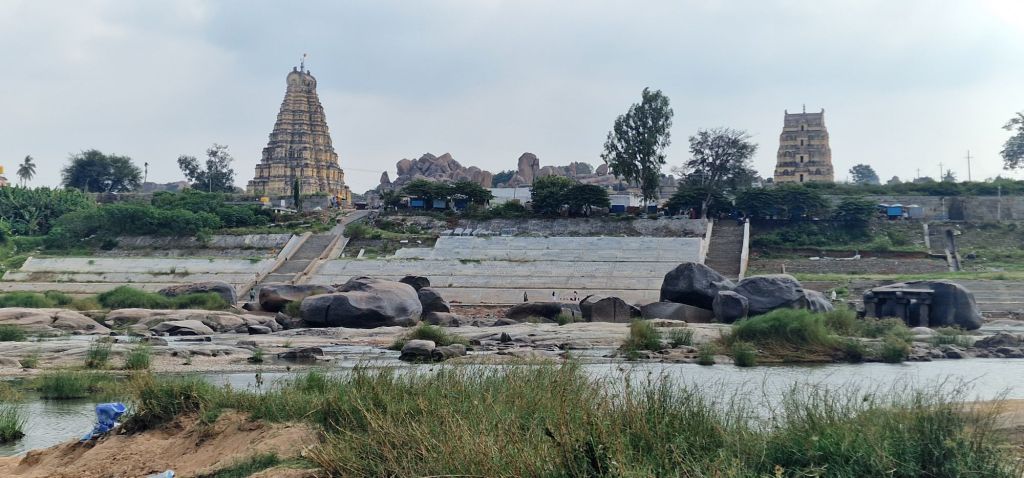
    Hampi seen from the other side of the river
    Getting a backie off Cosgrove is always exciting

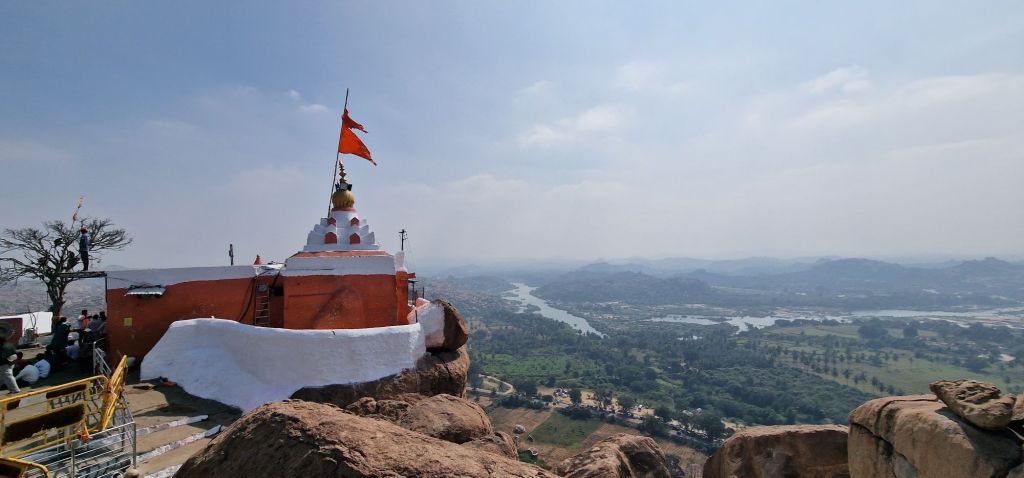
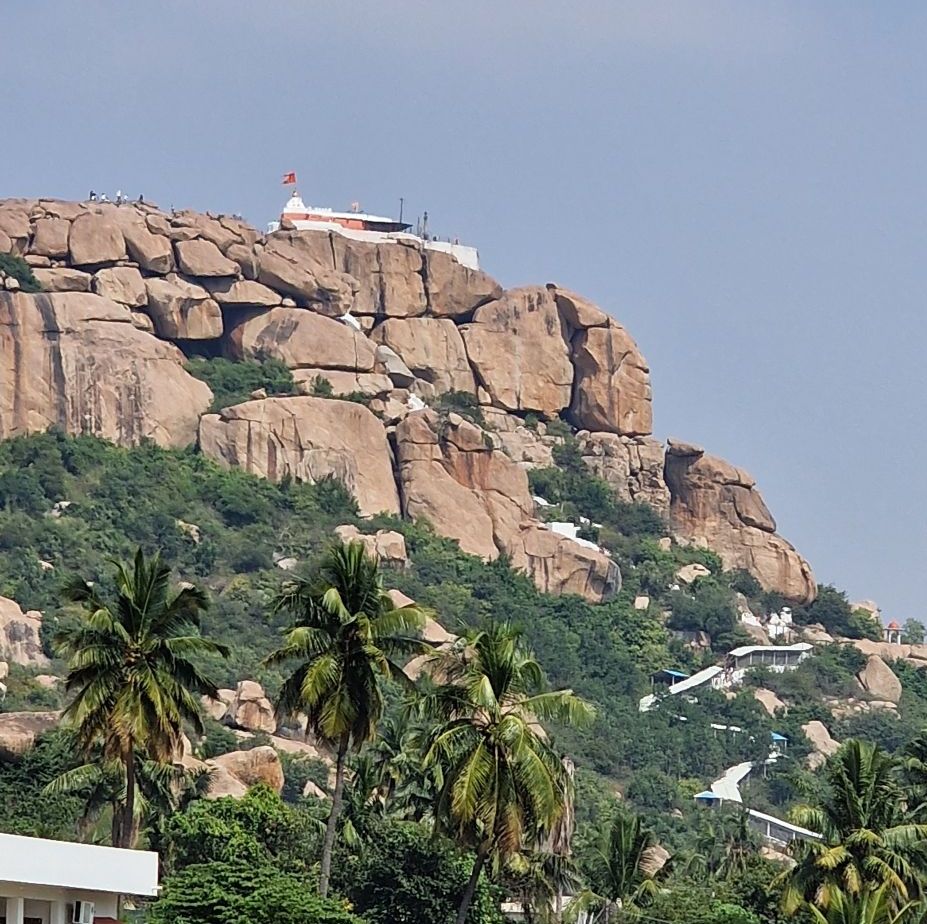
    Yesterday, we grabbed a motorbike and visited the Monkey Temple. The “Monkey Temple” in Hampi is actually Anjanadri Temple, believed to be the birthplace of beloved Hindu deity Lord Hanuman. Visitors must scale the arduous hill to the temple at the summit, which is known for religious significance, panoramic views, and the presence of many monkeys.

    The pilgrimage site was built in the 8th Century. It is also identified with Kishkindha, the kingdom of the Vanaras (monkey-like beings)
    575 steps to the top!
    Kings of the castle: Hundreds of Grey Langur monkeys (also called Hanuman monkeys) inhabit the hill
    Images of Hanuman adorn the walls on the way up to the temple

    The most notable architectural feat in the town is the Virupaksha Temple, a 7th-century structure dedicated to Lord Shiva and still an active site of worship.

    The temple is 50 metres high and has beautifully painted ceilings. It is a significant Hindu pilgrimage site (photo stolen from the internet)

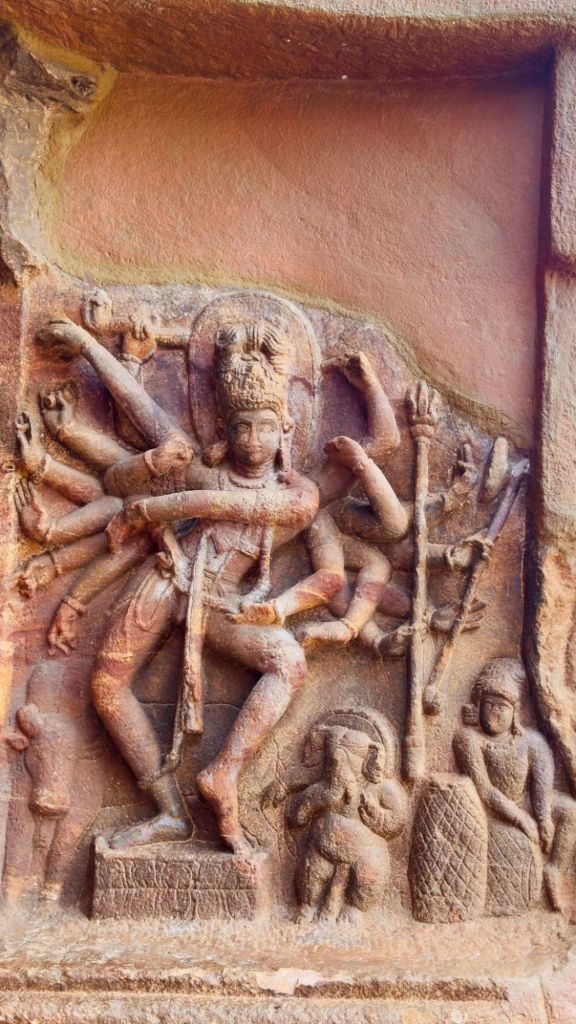
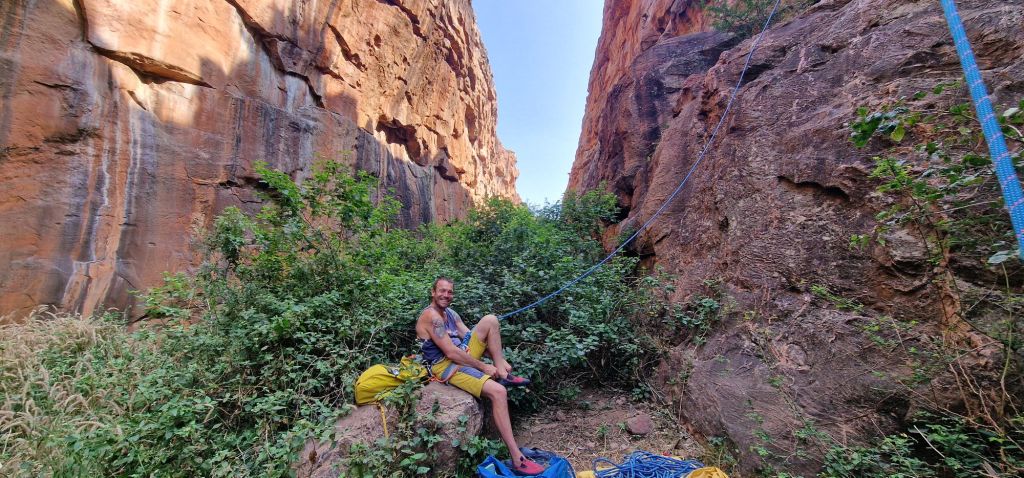
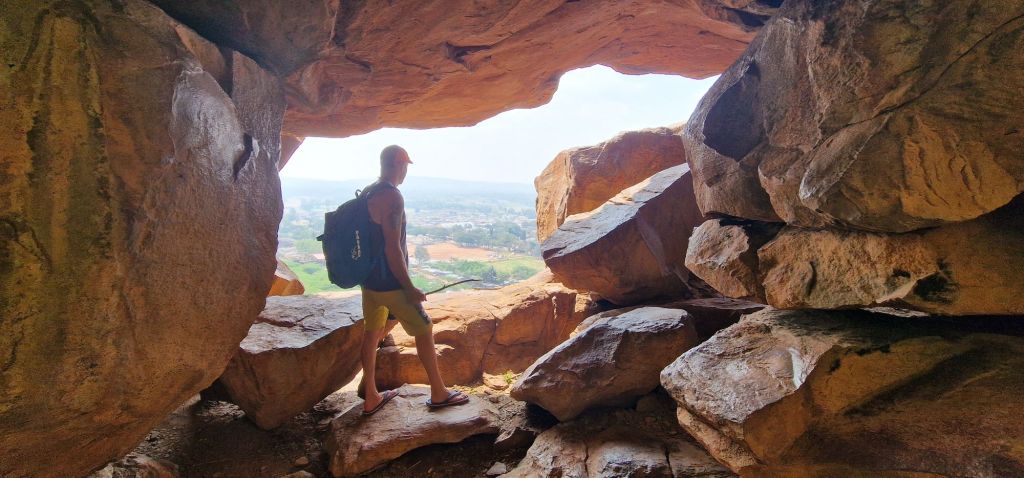
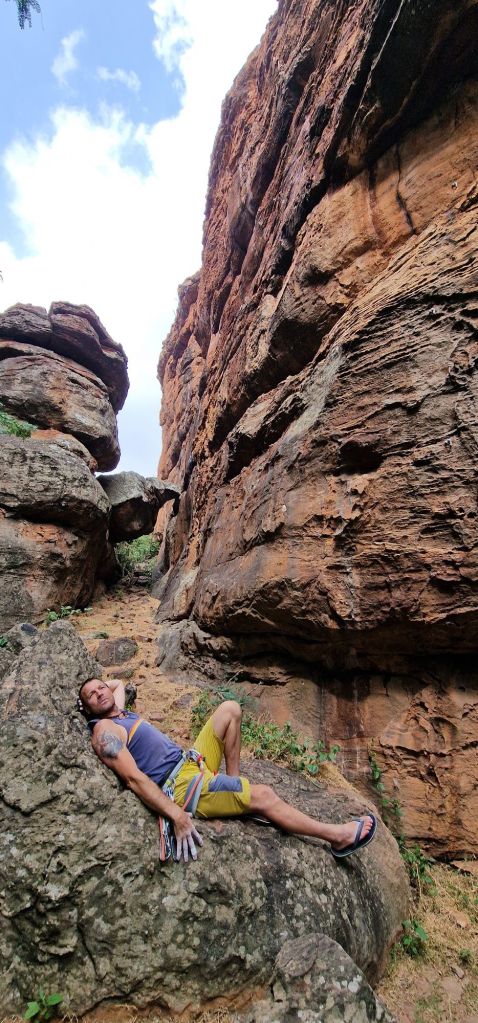
    Going back to the bouldering area in Hampi was a strange experience; not least because I have an extra 10 year’s worth of gravity on my side. We looked at wonder at the improbable lines that I had skipped up on my last visit. The area has changed a lot, and sadly, the climbing scene is not what it once was here.

    Plans at the moment are vague, with an intention to head to sport climbing destination Badami in a few days, before Goa in time for Christmas.

    A white-throated Kingfisher hanging out in Hampi
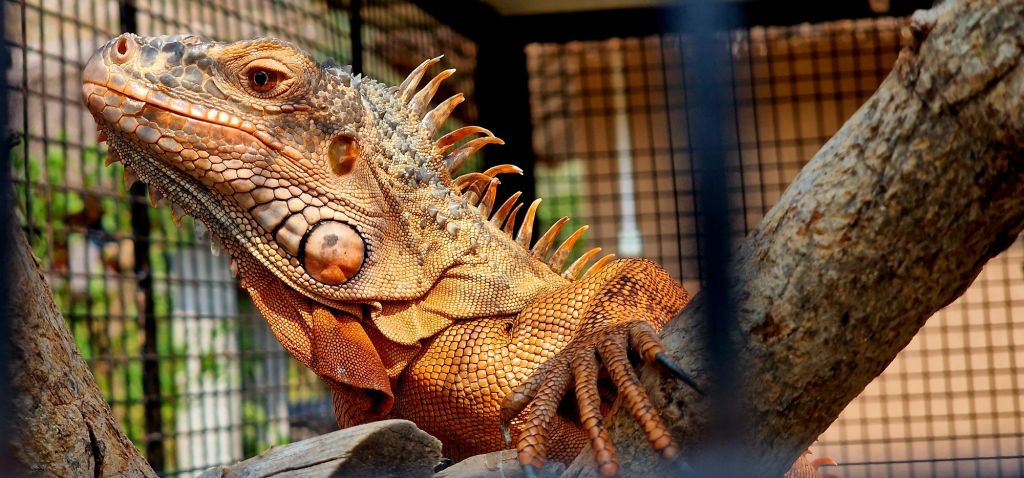
    Despite its colour, this is a Green Iguana, which lives at Goan Corner
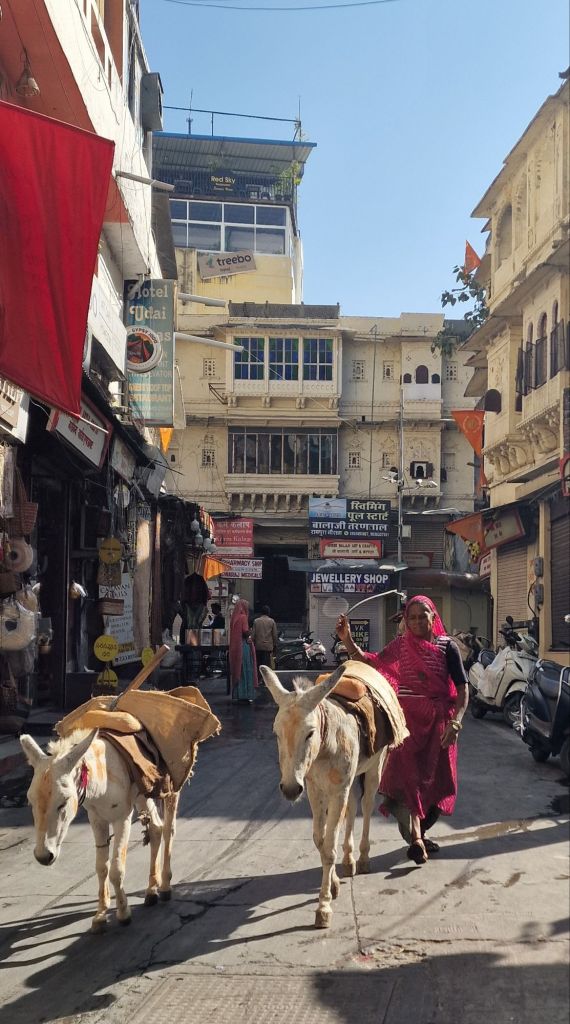
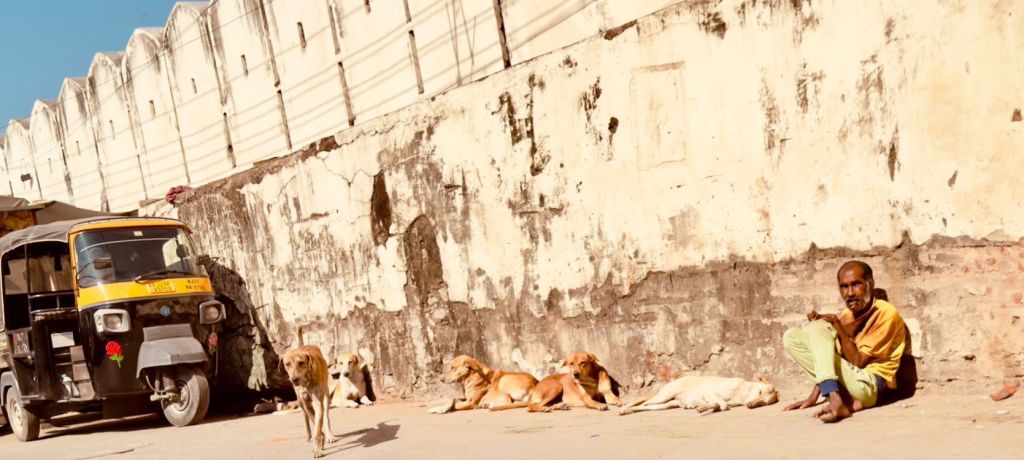
  • Classic scenes in Jodhpur: dogs and rubbish, and shite, everywhere, all the time

    This morning, we hauled up the white flag and saluted it from the comfort of a hotel room next to Jodhpur airport. One week of touring the “less intense” northern Indian cities – an adventure, we thought, we would easily take in our stride – had truly kicked our asses.

    It would be easy to romanticise Jodhpur – ‘the blue city’ – a place so selectively photogenic it comes across as a dream holiday destination

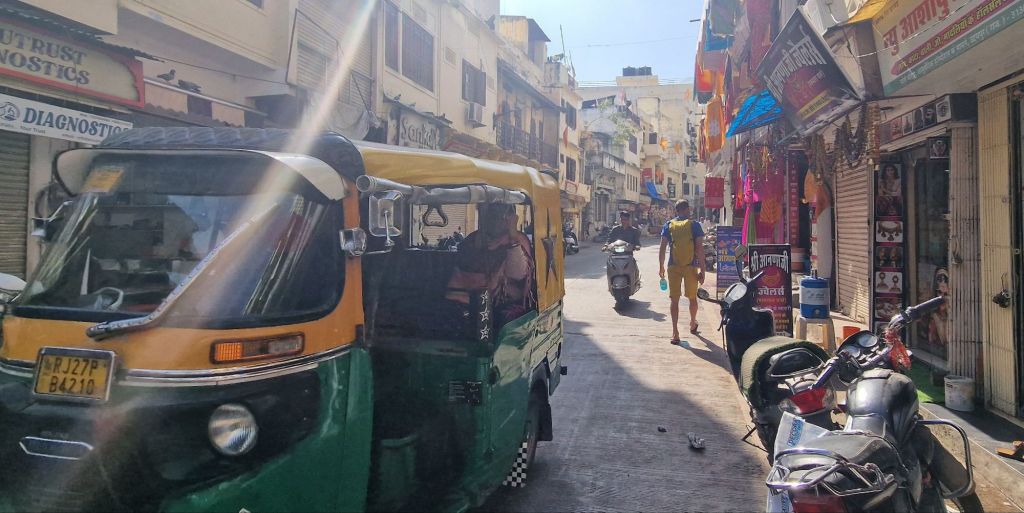
    Admittedly, we made some tactical errors on our journey. It’s hilarious to look back at how we rolled our eyes at the organised tour groups getting picked up from fancy hotels in air-conditioned buses and taken to the tourist-friendly attractions. Away from angry barking canines, huge piles of dog crap, hoardes of motorbikes, menacing beggars, and stinking filth that litters every street. The seemingly deaf tuktuk drivers who never take ‘no’ for an answer. The random ‘helpful’ guy who follows you everywhere until you really lose your shit patience. The way you are persued relentlessly as if you have a flashing dollar sign on your head. “Hello sir, where are you from?”; an oft-repeated precursor to a long-winded conversation culminating in a hard sale.
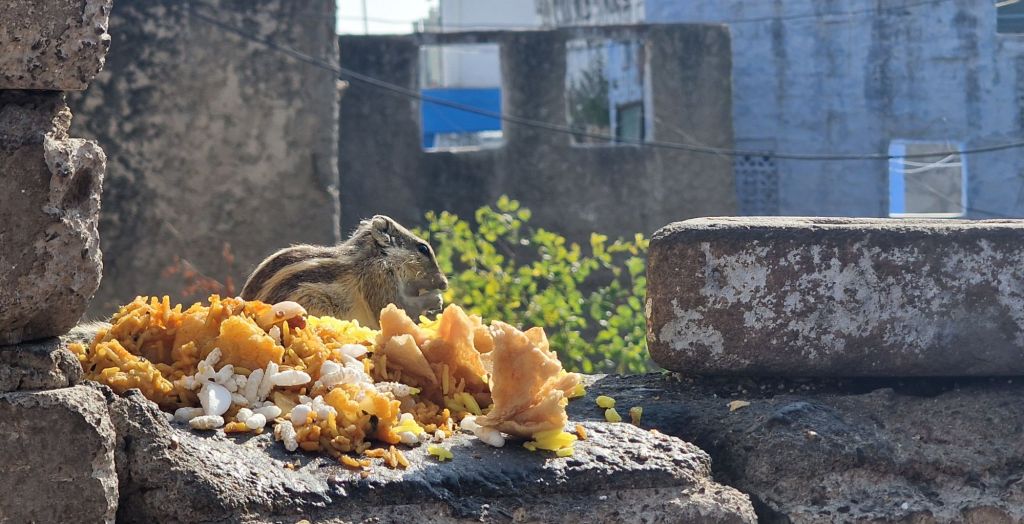
    A palm squirrel eating leftovers
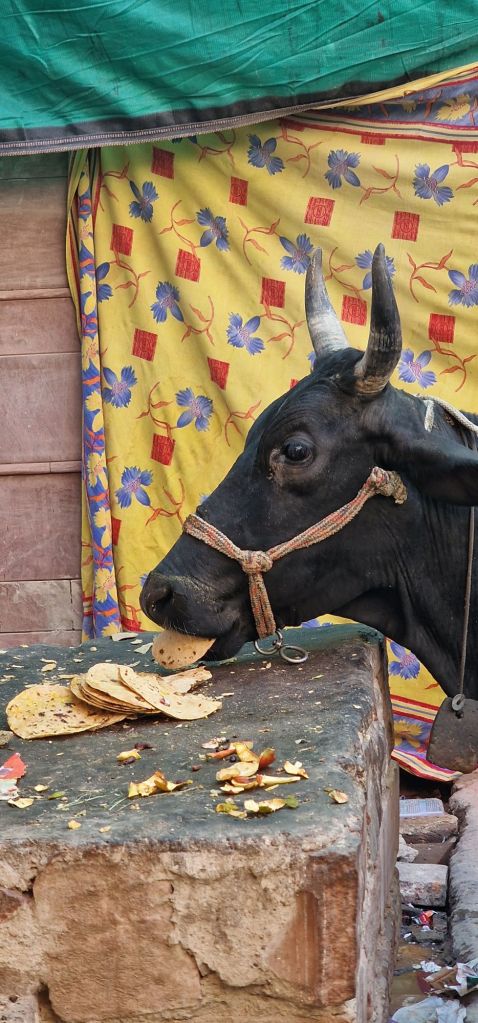
    And a cow eating a chapati

    Our last accommodation in Jodhpur, another hostel that came with bonus cockroaches, a noisy water pump outside our windowless room, a hole in the wall providing unwanted insight into our neighbour’s bathroom habits, and a flooded bathroom, was really the final straw. Somehow, this salubrious and ritzy lodging earned a promising 9.8 rating on Booking.com. We checked out a day early, and this morning, we got a taxi straight to the quietest and cleanest street we could find in the entire city.

    Tough as the last week has been, I wouldn’t change it. Plunging into a country like India, with its extremes and hardships, needs to be sampled from every perspective. We are not ashamed to admit that today, we have reached peak-ordeal, and personally, I feel quite anxious and slightly traumatised. But that’s ok – this is India, and this is what you sign up for. The next few weeks will be relative luxury; climbing and surfing down south.

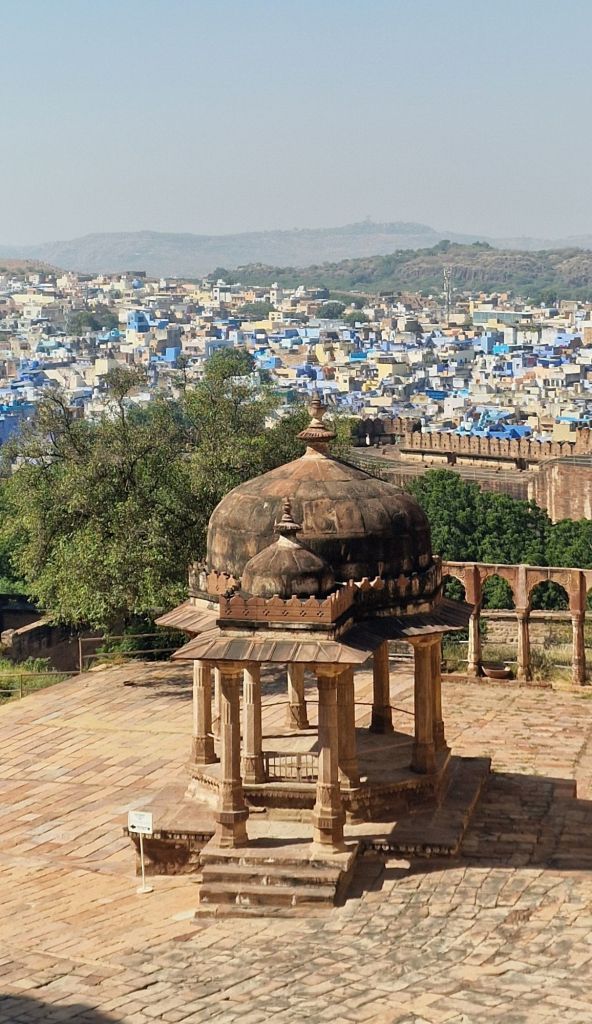
    The awesome 1,200 acre Mehrangarh Fort, where seminal battles have been lost and won

    A real highlight of our trip to Jodhpur was yesterday’s visit to the 15th Century fort, sitting proud on the hilltop overlooking the city. If these walls could talk…. the tales they could tell! It was, without doubt, the most fascinating audio tour I’ve done. Stories of warring factions, inter-familial marriages and revenge battles, stampeding weaponised elephants, and the subsequent dissolution of the ruling clans during the era of independence.

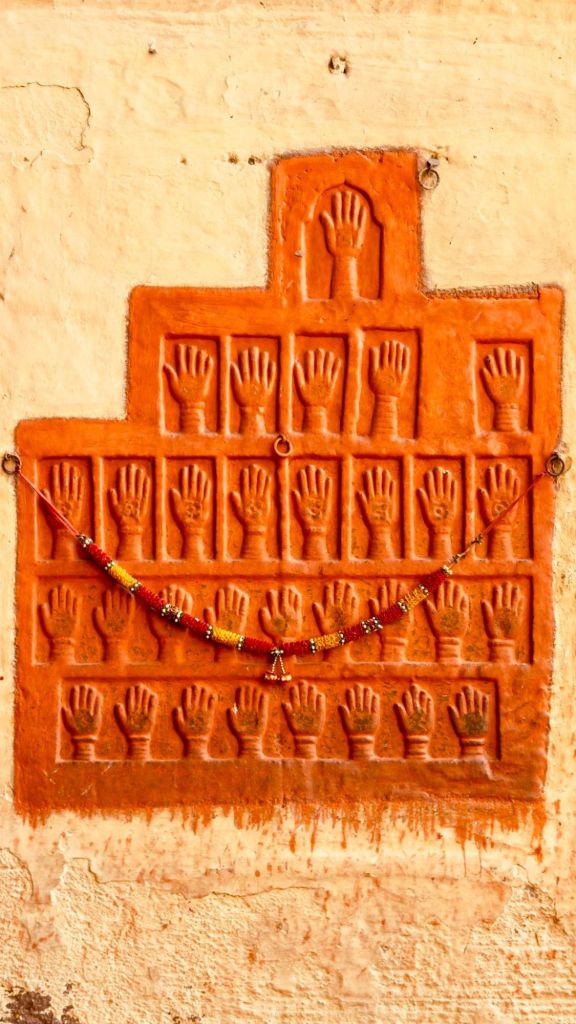
    Sati handprints, marks left by the wives and consorts of Maharajas as a final gesture of loyalty before they committed Sati, a ritualistic self-immolation on their husband’s funeral pyre. As recently as 1843, after their husband died, the women would make their print and then sit in silence as they burnt to death
    The main entrance to the fort was built on a 90-degree bend to stop elephants charging at the door during attack. Spikes at elephant head height were installed as an additional measure
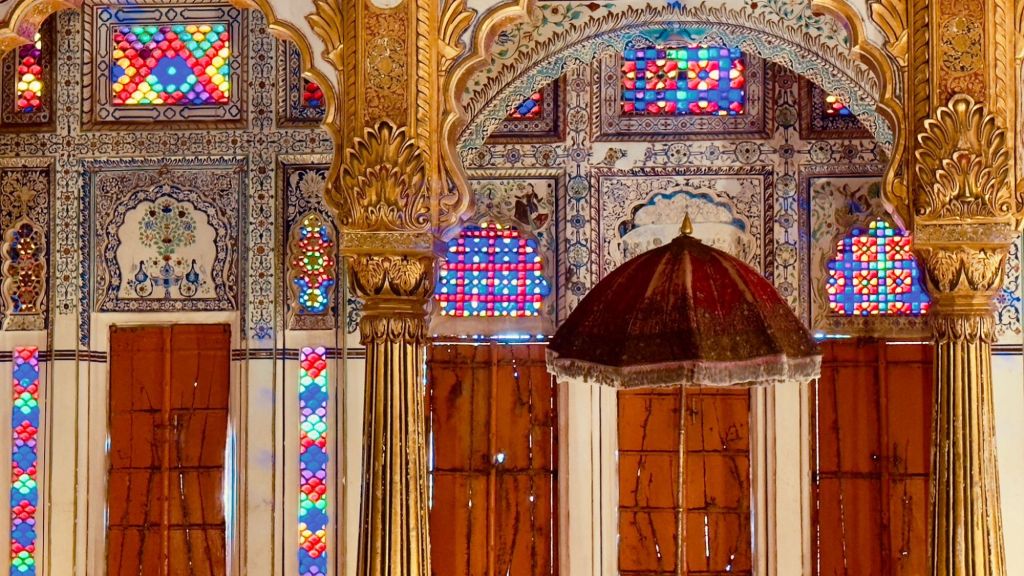
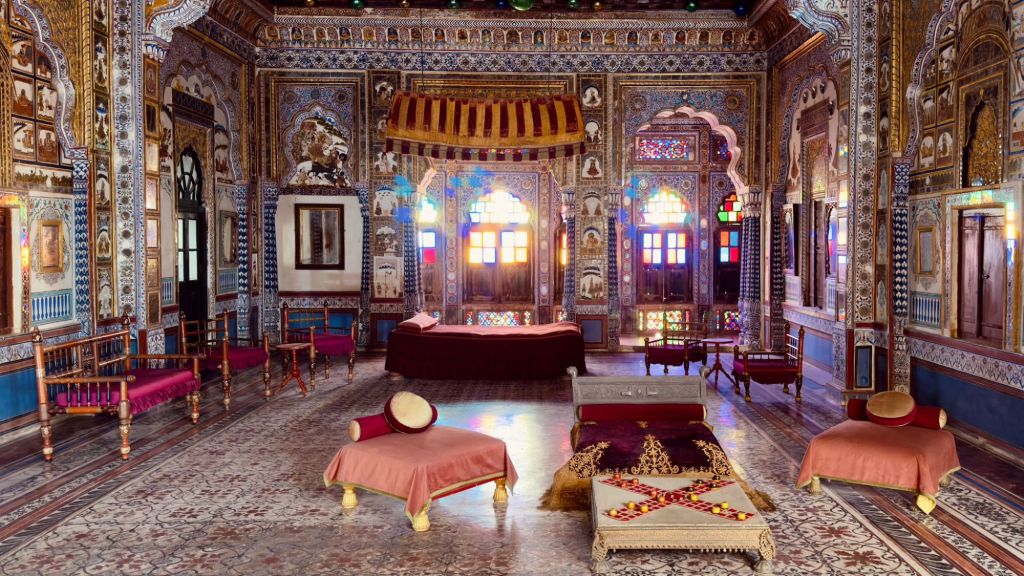
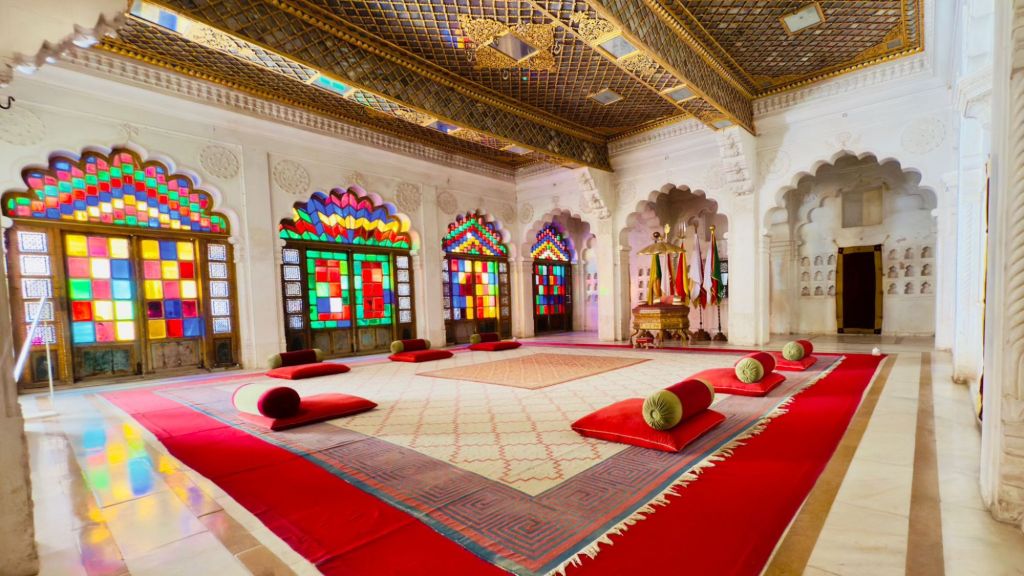
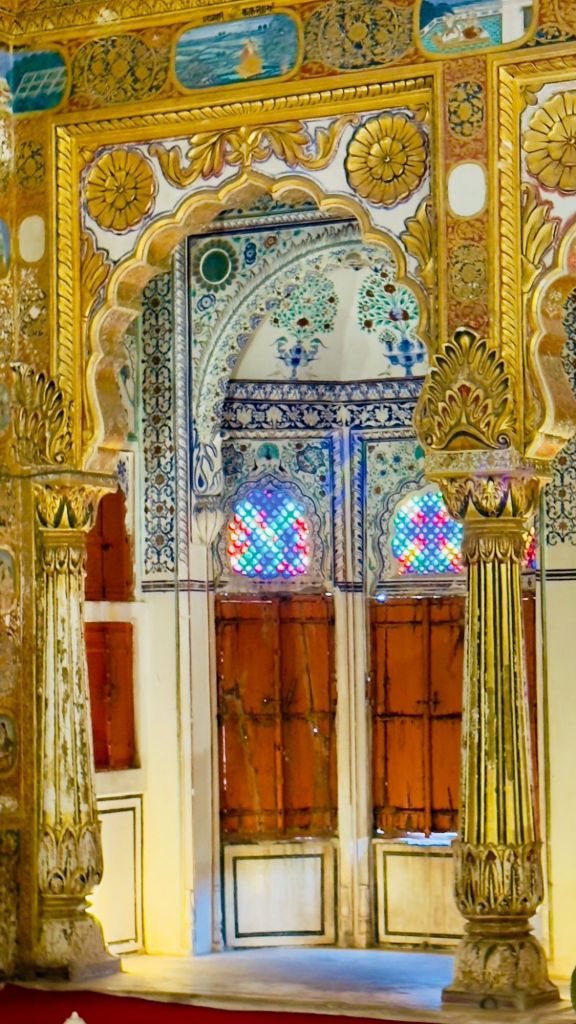
    Inside, the fort boasts opulent rooms where the Maharajah would be entertained by his consort

    Jem was also particularly excited to visit the filming location for The Dark Knight Rises, just behind the fort…. where Christian Bale climbs from the pit of despair to freedom.

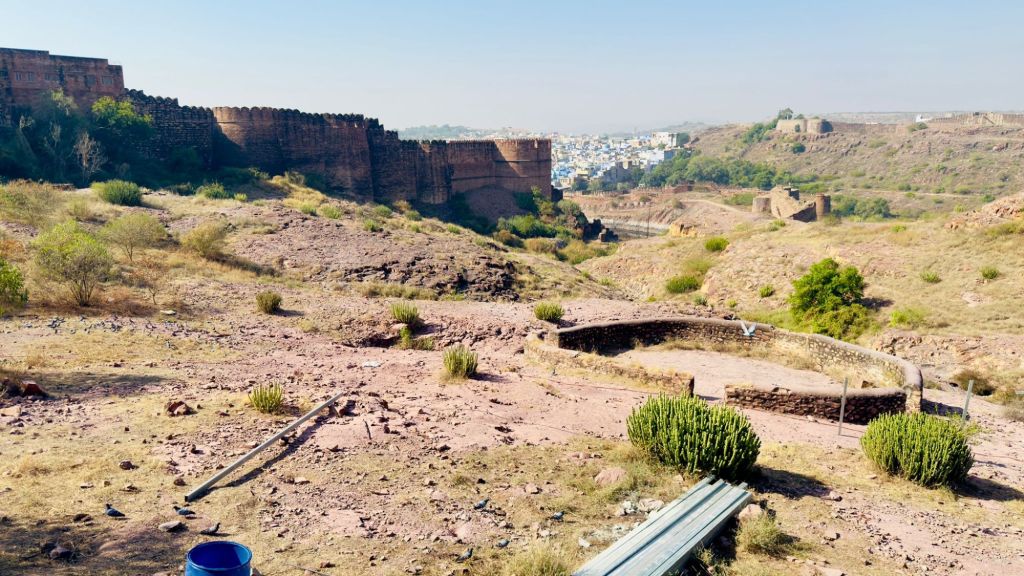
    The circular ‘pit’ featured in Batman Returns, with the city walls in the background, which were built from 1459 onwards

    To surmise, visiting Rajisthan’s urban areas in the way we have – staying in the densely-packed historic old towns and on a budget – has been a slog. There is a world-weary thousand-yard stare in the eyes of every Western traveller we have met who has undertaken the same challenge. To make this pleasant would mean staying in expensive upmarket hotels and paying for endless private transfers to the forts, palaces, and temples. But what would be the point of that, really? Glad we’ve done it in the way we did – as a once in a lifetime experience.

    Next stop, Hampi. We are psyched.

  • The Araveli Hills feature curious and heavily-nippled beasts

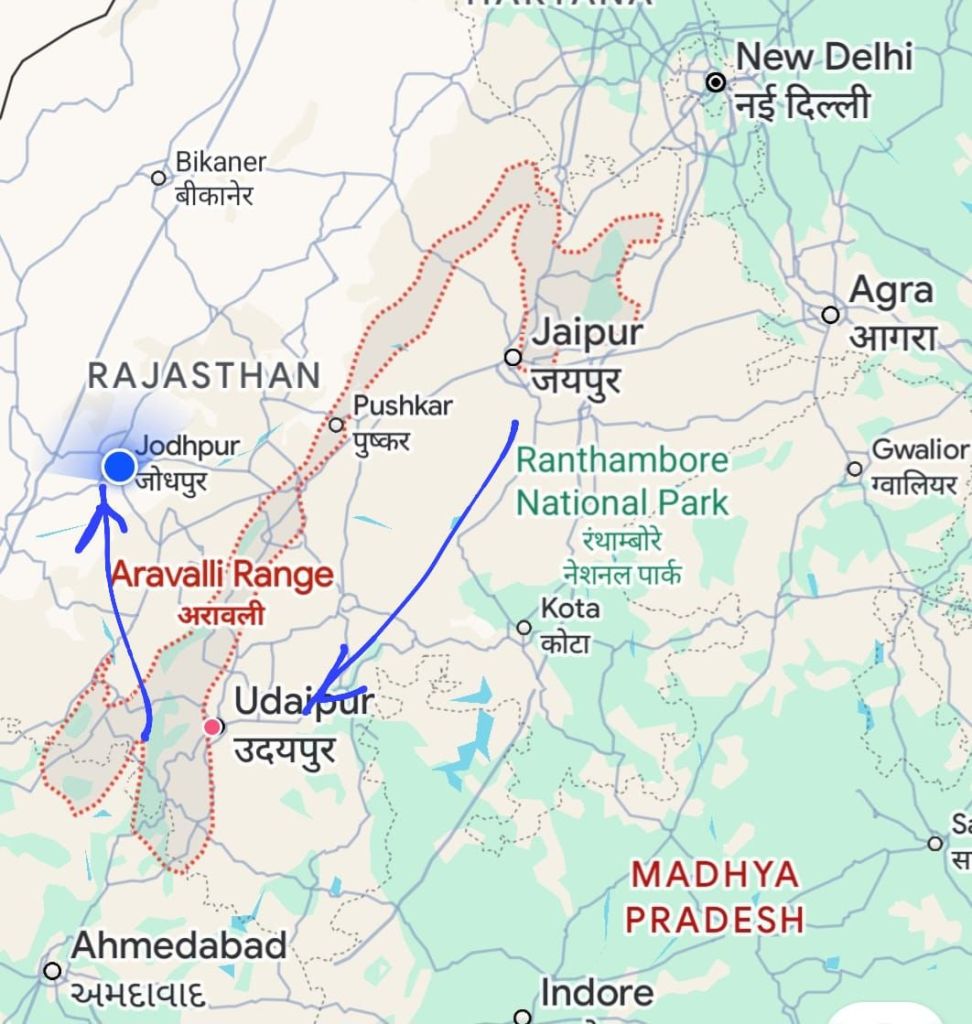
    Between Udaipur and Jodhpur sit the Araveli Hills; the oldest mountain range in India that spans for 420 miles north to south. The hills host a huge and diverse wildlife, including leopards, striped hyenas, wolves, jackals, sloth bears, and crocodiles. 

    This map shows our journey so far. Today involved a vehicle transfer from Udaipur to Jodhpur, straight through the mountains, which are highlighted in red

    The area is home to a number of historical buildings that pre-date the state of Rajisthan, which was created 76 years ago from 22 separate princely regions following India’s independence.

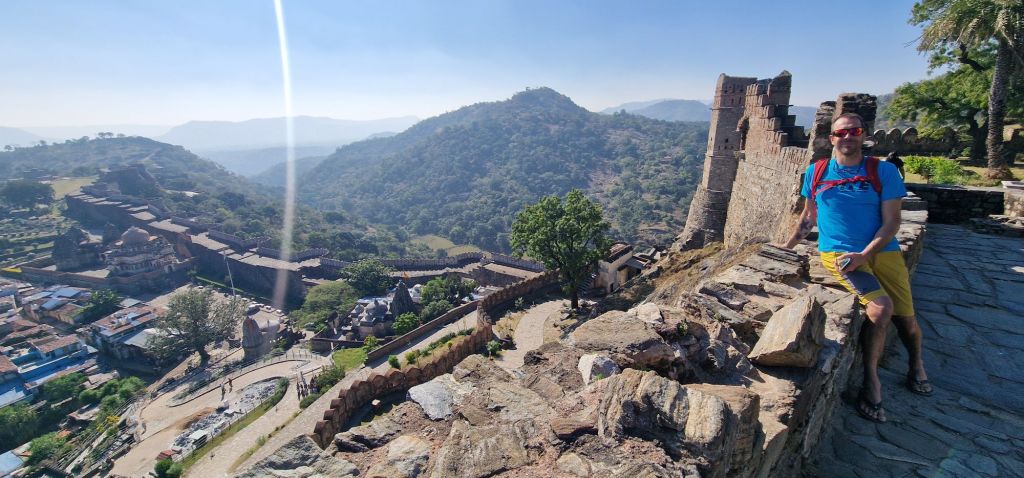
    Kumbhalgarh Fort is a 15th-century Mewar fortress known as the “Great Wall of India” due to its 36-kilometer-long perimeter wall – the second longest continuous wall in the world

    Kumbhalgarh Fort served as a strategic stronghold and a refuge for Mewar’s rulers, featuring high walls for surveillance, numerous gates, watchtowers, and temples, and is now a UNESCO World Heritage Site. It includes seven massive gates, seven ramparts, 360 temples, watchtowers, and palaces.

    The Araveli Hills reach an altitude of more than 1700m

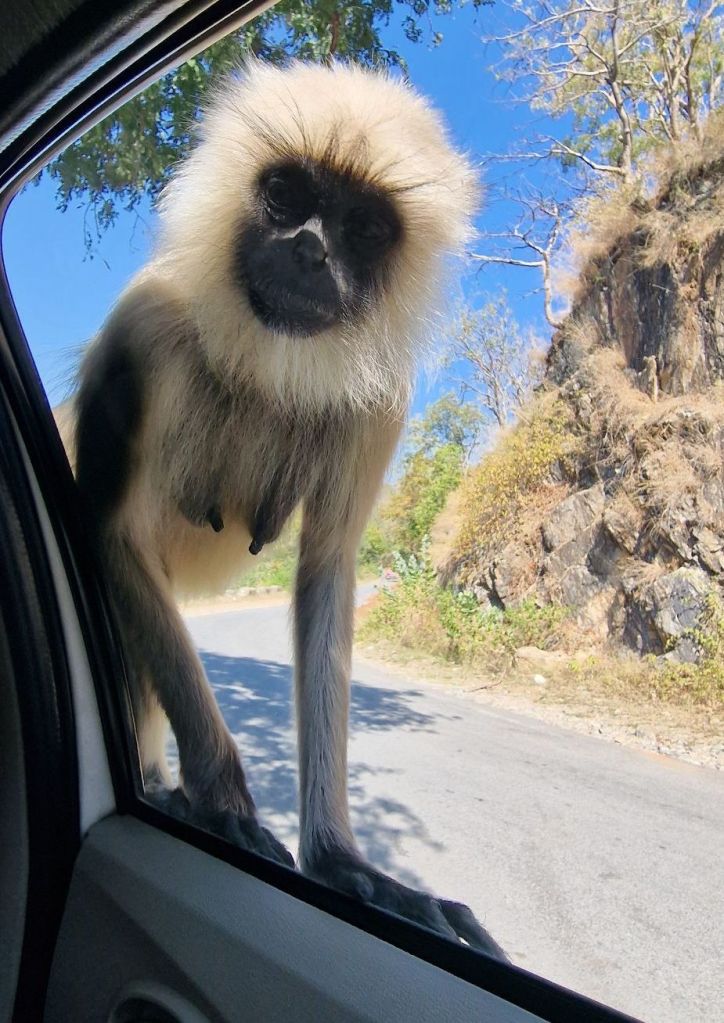
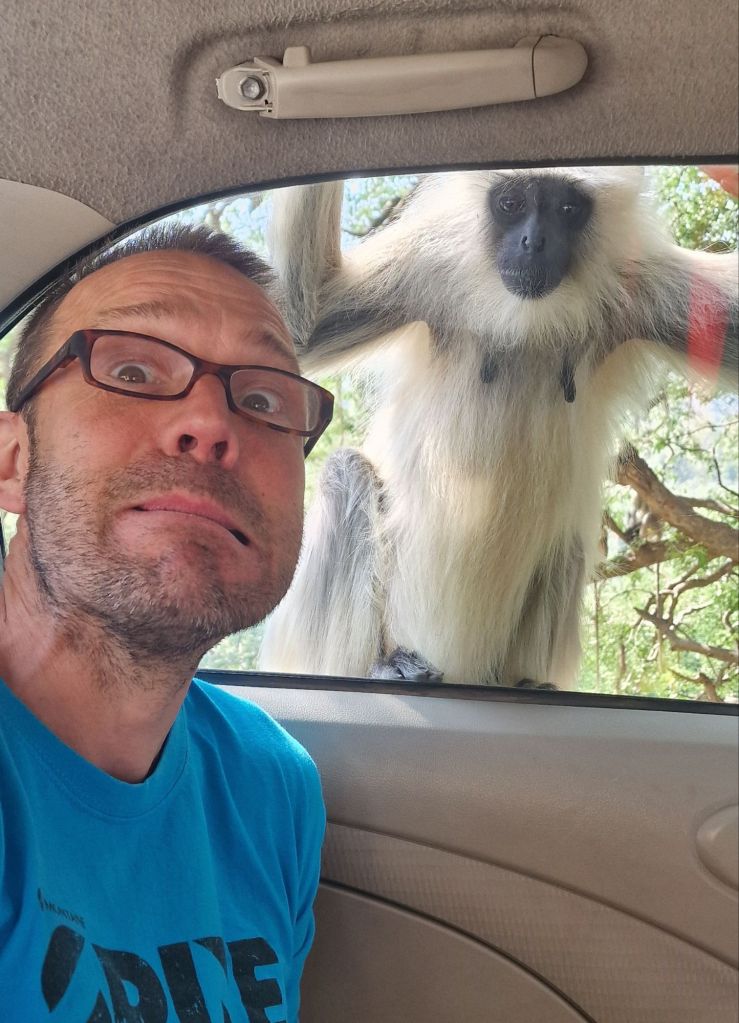
    On our way to the next stop, the car was mobbed by monkeys 🐒 who peered in through the windows. They seemed friendly enough, but we weren’t allowed to take them home. We saw some crocodiles too!

    Here, you can see a hairy primate posing with a Grey Langur monkey

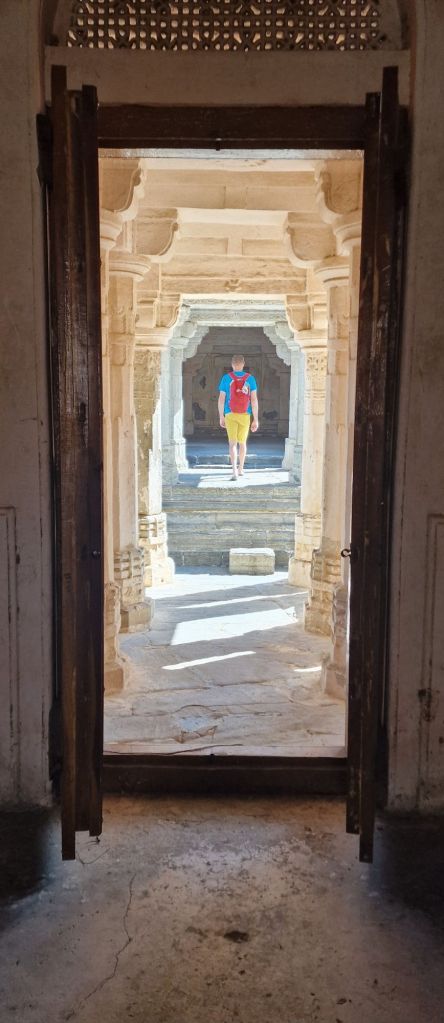
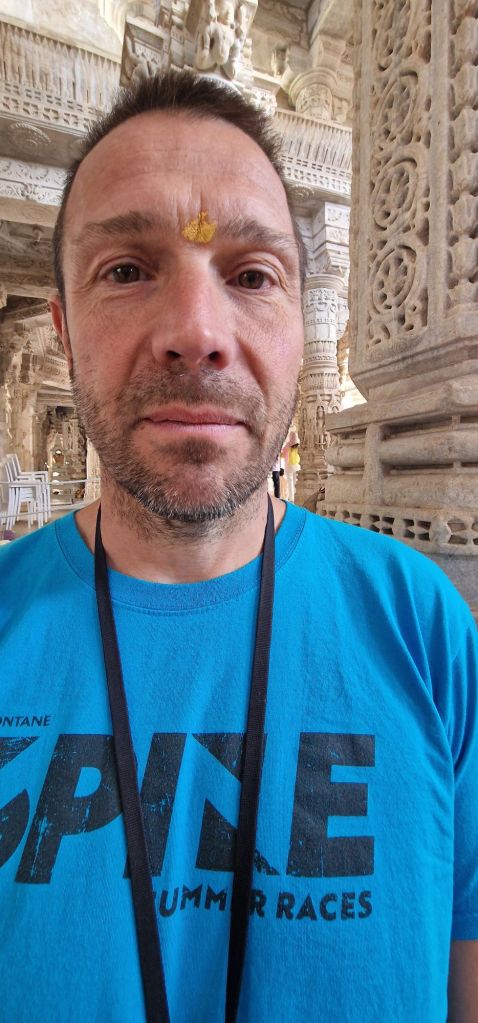
    The Ranakpur Jain temple, an hour north, is one of the most sacred and important pilgrimage sites for Jains, who follow a strict vegetarian diet and undertake a life of pilgrimage. Jainism, an ancient Indian religion not dissimilar to Hinduism, emphasises spiritual purity through nonviolence toward all living beings.

    The temple, built in the 15th century, is made from marble and took 50 years to complete
    The temple has 1444 intricately carved pillars, and no two pillars are alike

    The temple operates a strict ‘no tipping’ rule. Despite this, Jem was fleeced by the helpers who offered to do a prayer for his family, then demanded his cash. No such thing as a free lunch 😂

    Unimpressed
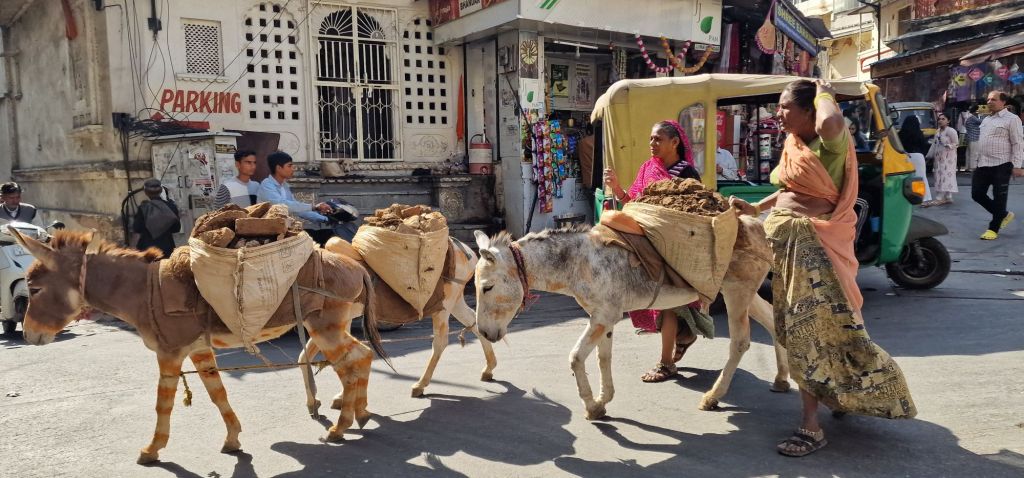
    Bonus photos: meeting the locals in Udaipur
    Udaipur sunsets
  • Udaipur is a beaut 😍

    A common question would-be travellers pose in online chatrooms is: ‘Is Jaipur or Udaipur nicer to visit?”, with each destination typically getting half of the favourable votes. Jem and I are in despair at the comparison. Whilst Jaipur is much like being ensnared in Lucifer’s raging infernos having led an extremely sinful life, Udaipur is more like getting lost in St. Ives in July after a rather hectic but amiable acid trip.

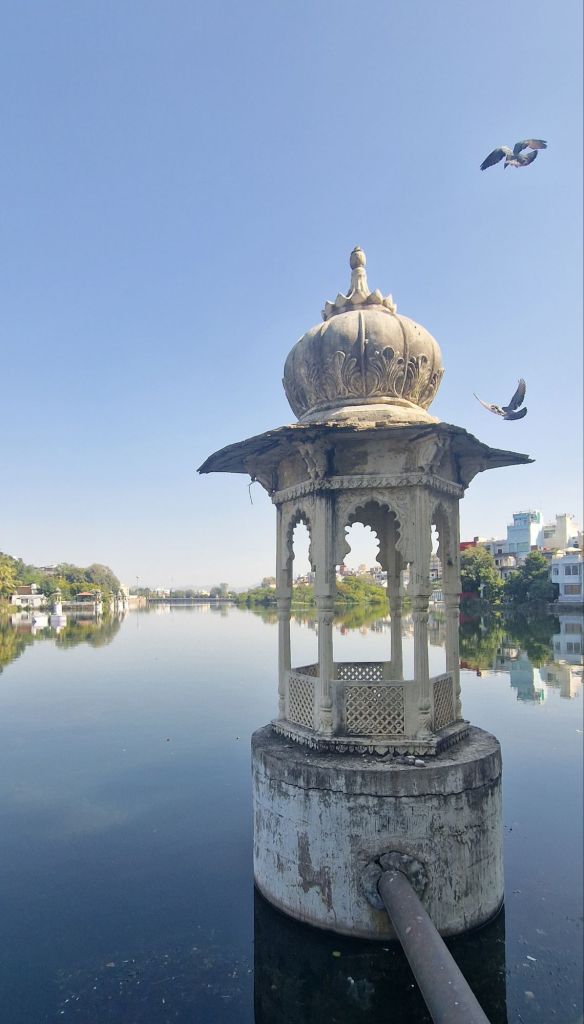
    Chhatris are common in Rajasthan and are often used as ornamental features in lakes, ghats, and palace complexes

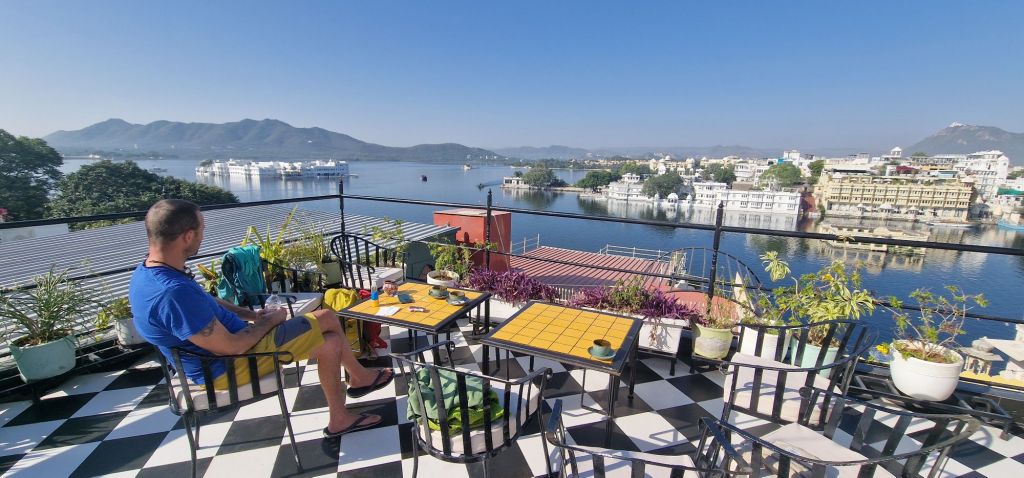
    Udaipur is a world away from its busier neighbour; rather quaint, colourful, local, and friendly, with jaw-dropping views over the artificial lakes.

    We arrived at 6am this morning after a 9-hour night bus, just before Jem left his rucksack in a taxi; a skill he is honing nicely having left his favourite running cap and Rab fleece on trains somewhere in China. This time, though, we were lucky, and the nice taxi guy came back with it an hour later 😀

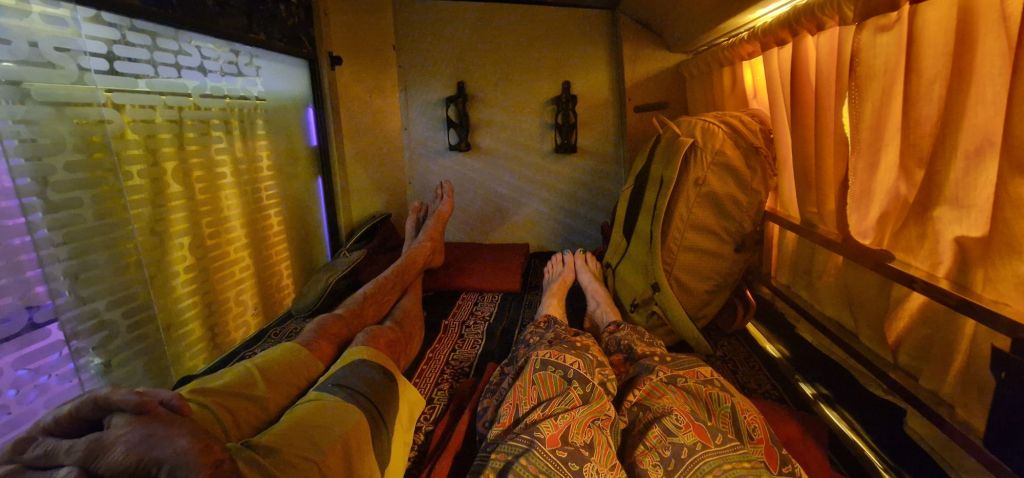
    Night buses have improved since my last trip in 2014. This time, we had a sliding door to our compartment to stop us from tumbling into the aisle. Luxury!

    Udaipur, founded in 1559 and known as ‘Venice of the East’, is set around a series of artificial lakes and is known for its lavish royal residences. With a population very similar to Sheffield’s urban area; 650,000, it is an accessible destination with everything in walking distance.

    This little cutie is an Indian Palm Squirrel. They are prolific and completely harmless

    Cleaner and more personable it may be, but the city is not without its own struggles. Stray dogs and beggars are still endemic, and the waterways notable for their smell and rancid iridescent film – the very same water in which we saw locals bathing and washing their clothes.

    It was a surprise to me that the world GDP ranking of 2025 reveals India to be the world’s 4th largest economy in the world, on a par with Japan. India’s GDP has doubled in a decade, with the IMF predicting it will overtake Germany in 3rd place by 2028.

    Similar growth in China saw huge investment in transport, rural development, and farming, bringing the standard of living up for almost all marginalised groups.

    However, in India, the wealth has not been spread far and wide due to its massive population, and wealth remaining in the top percentile. India, for individual wealth, or GDP per capita, ranks around 140th out of 193 countries. While the GDP per capita (wealth per person) in Germany is almost $56,000, and in China $14,000, in India it is just below $3,000.

  • Parachuting into a filthy and chaotic Indian capital city with 4.5 million inhabitants sounded like a good idea at the time. Jaipur’s famed pink walls looked quite romantic, with its picturesque forts and palaces, as well as the novelty of visiting my favourite beer’s namesake.

    The city was painted its terracotta-pink shade in 1876 to welcome Prince Albert Edward (later King Edward VII), as the colour symbolises hospitality and honour in Rajasthan. A law was passed in 1877 to keep the buildings painted in this colour, and since it has been known as the Pink City.  

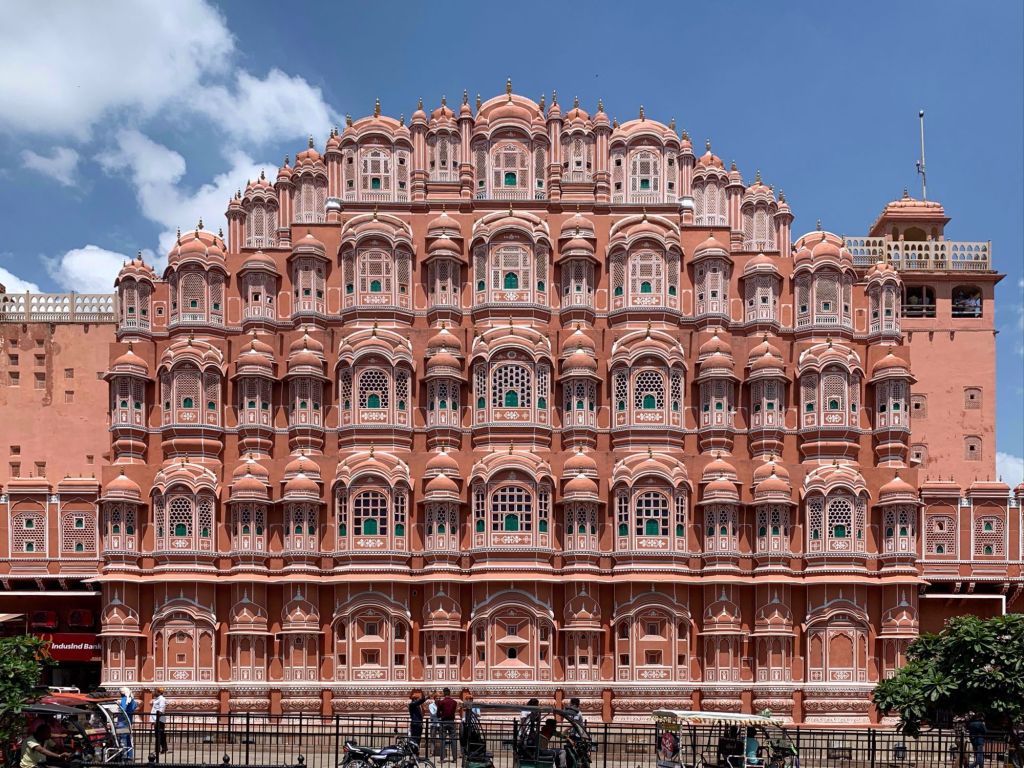
    The celebrated facade of the Hawa Mahal (Palace of the Winds). Its unique honeycomb-like frontage has 953 windows and is built with carved architecture that leans at an 87-degree angle. It was constructed so royal women could observe street life without being seen

    It’s sad to report that the city is neither romantic nor picturesque. In fact, the last couple of days have been quite a shock for both of us. The city has more than 3 million registered motor vehicles; three-quarters of them two wheelers, and 90 per cent of those were on every street we chose to visit, leaving us in a permanent state of anxiety.

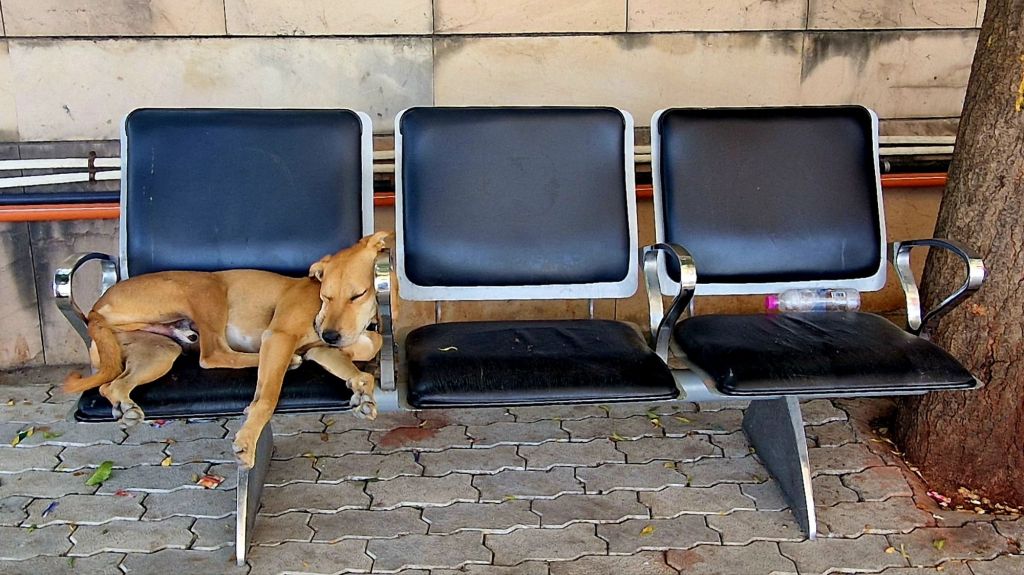
    The few pavements that do exist are random blobs of cracked weeping concrete; an insanitary obstacle course shared with a menagerie of uncompromising bovine creatures, dogs, and piles of rubbish.

    It is the rule that all vehicles must incessantly and inexplicably honk their horns. They mustn’t use their brakes at any time godforbid, especially when in proximity to bi-peds, and they must regularly collide at speed to keep you on your toes.

    Cow in a rubbish dump: sums up Jaipur quite nicely

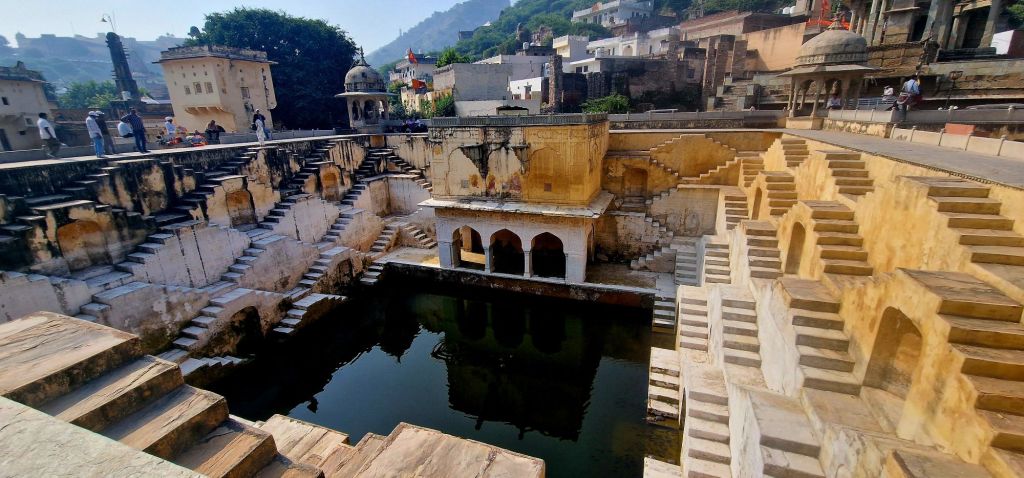
    Our first stop today was the famous stepwell in nearby town Amer, a subterranean structure for harvesting and storing rainwater. Found mainly in western India, stepwells are deep excavations with broad openings to collect rain during the monsoon season. Stone blocks arranged into stairs lining the walls allow people to descend into the stepwells and gather water during the long dry season in these arid regions.

    Panna Meena ka Kund was constructed in the 16th century

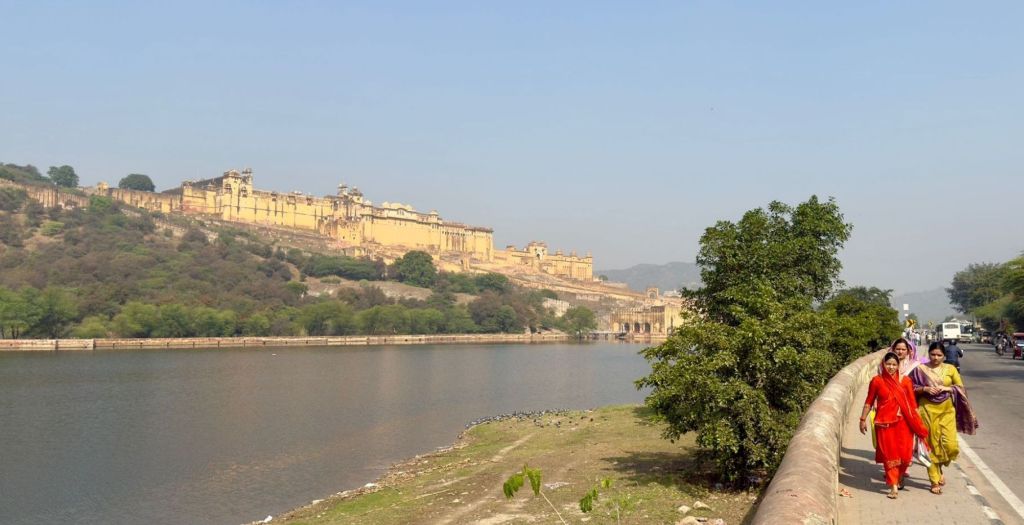
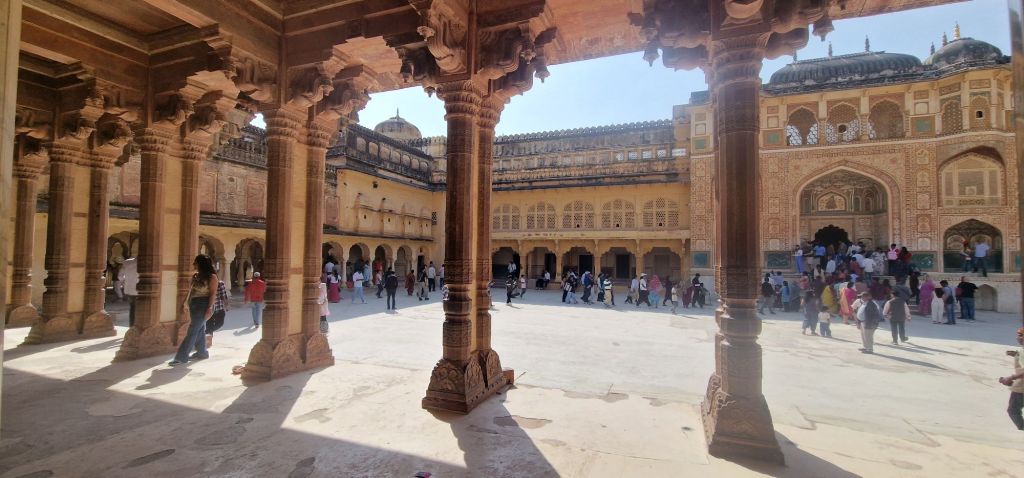
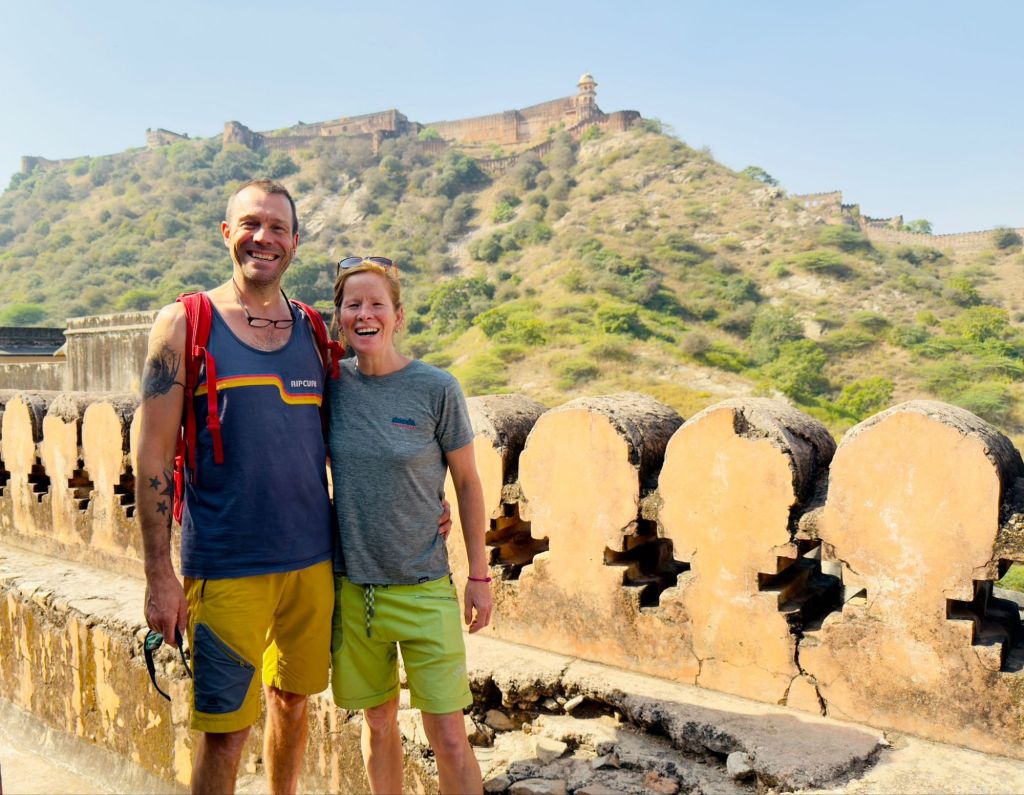
    Just down the road near Amer also sits the region’s number one tourist attraction, the Amber Fort. Construction began in the 10th century, and the site was then significantly expanded in the 16th century. It served as the royal residence until 1727, when the capital moved to Jaipur (a few miles away). 

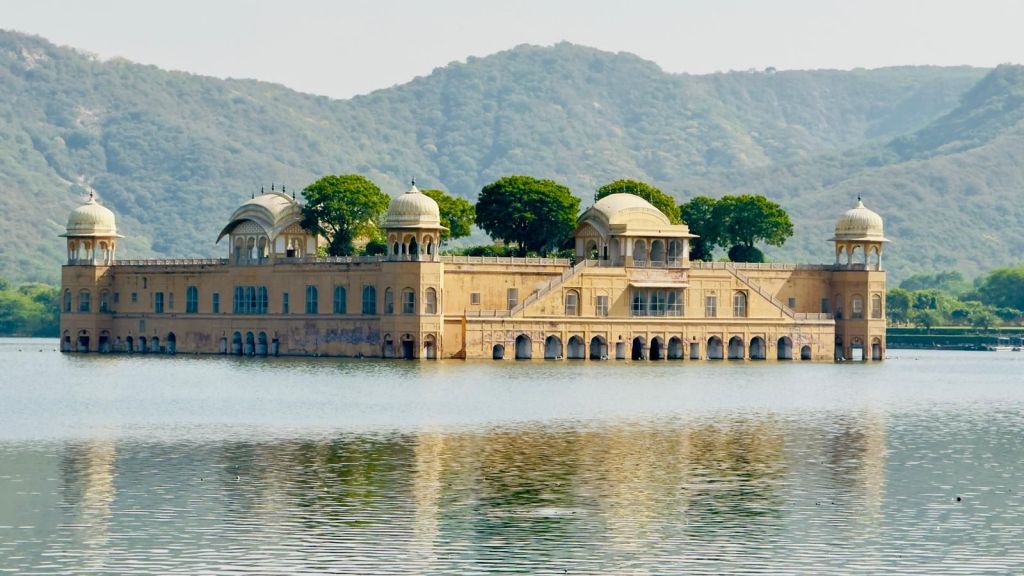
    The Jal Mahal (meaning Water Palace) is another 17th-century royal building located just down the road from Amber Fort. The palace, built with local sandstone, is a three-storied building, with only one story showing when the reservoir is full. It was once used as a summer house for the king and his wives, though sadly, it is not open to the public. Our tuktuk driver told us that the water provided some cool air in the hot summer months when temperatures can reach up to 50 degrees.

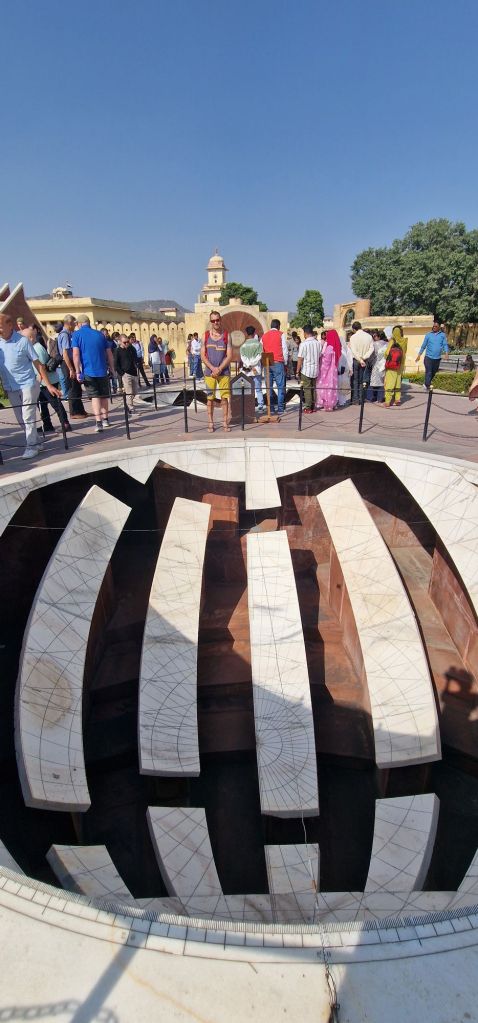
    Back in town, we headed to the Jantar Mantar, a collection of 19 astronomical instruments built by one of the kings, who also founded Jaipur. The monument was completed in 1734 and features the world’s largest stone sundial.

    Here is a massive tool that tells the time
    One for the boffins: This instrument represents the celestial hemisphere, which is divided into hours, minutes, and seconds. In the middle hangs a ring, which is representative of the sun. The shadow of the sun falls through the metal ring, allowing to calculate local time, altitude, azimuth, meridian pass time, zenith distance and declination of Sun, as well as its longitude

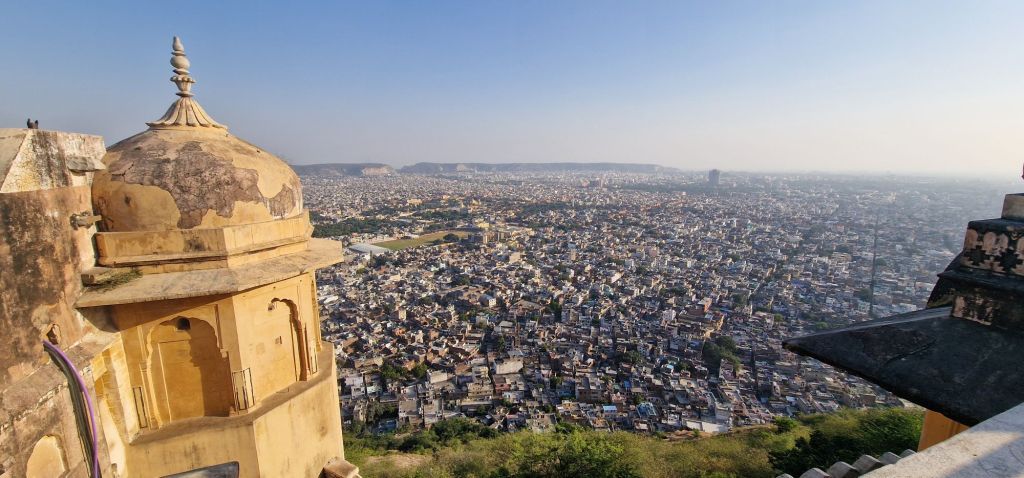
    Our final stop for the day was the hilltop  Nahargarh Fort, which was built in 1734 and helped defend the city. This was not on the tourist trail and was by far our favourite one of the day.

    Granted, these photos do give the impression of a beautiful city and historic pink buildings. But don’t be fooled. Jairpur is a war of attrition; an exhausting battle against an army of persistent hawkers, motor vehicles, and pollution. Despite this, we have had many awesome interactions with locals, who have shown kindness and respect, and just want to know what we are doing here. In addition, we are reassured that Jaipur is nowhere near as busy as Agra or Delhi, which form the other two corners of the famous Golden Triangle.

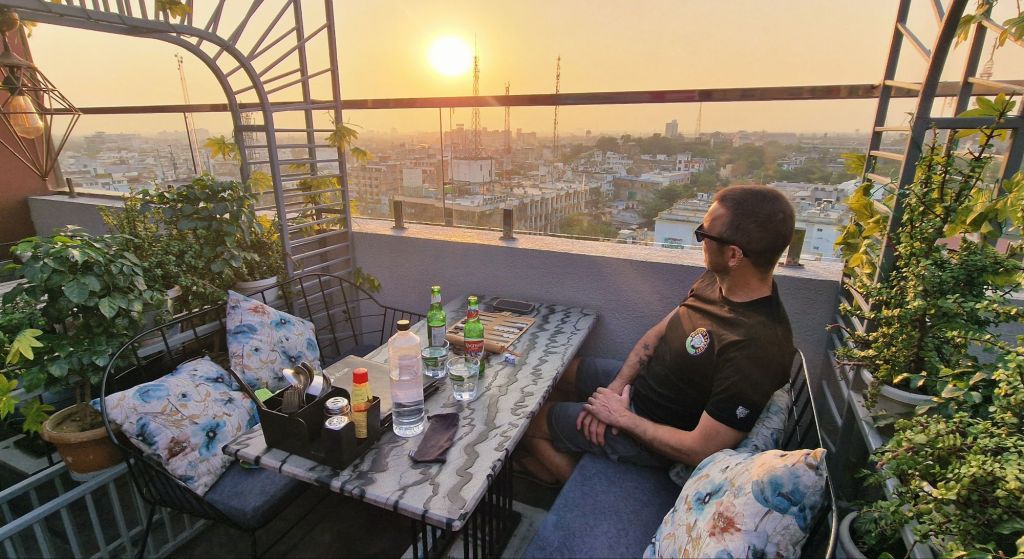
    Rich and poor operate side by side in this crazy maelstrom – the rich just disappear up to their roof cocktail terraces and ponsy bars for some respite at the end of the day.

    We tried out one of the rooftop bars and wept at the £2.70 price tag of a small beer

    Here is a dosa masala. It was tasty. The end.

  • Jus chillin yo

    It was not until we were queuing for our flight to Kalkuta that I realised how much I missed the carefree and banterous exchanges familiar in the UK.

    The Indians are a gregarious and expressive bunch who love a laugh. The vibe of the Indian territories is the Ying to the Chinese Yang; where there was order and efficiency, now chaos and anarchy reigns. Modesty and reservation have been replaced by bravado and swagger. Serenity and sanitation, now petrol fumes and random piles of discarded items, leaking weird juices.

    On our triple-leg redeye flights to Jaipur via Bangkok and Kalkuta, the female flight attendants were downright fierce just to keep the passengers in check.

    The Indian customs were no joke. At one point, I feared Jem would be deported when the officer, at the end of a long night shift, shouted, “What is this e-visa you’re talking about?”, when they have been using the system since 2014. He then proceeded to stamp Jems passport with the wrong date, and when we got to the hostel, Jem was declared an illegal alien by the owner.

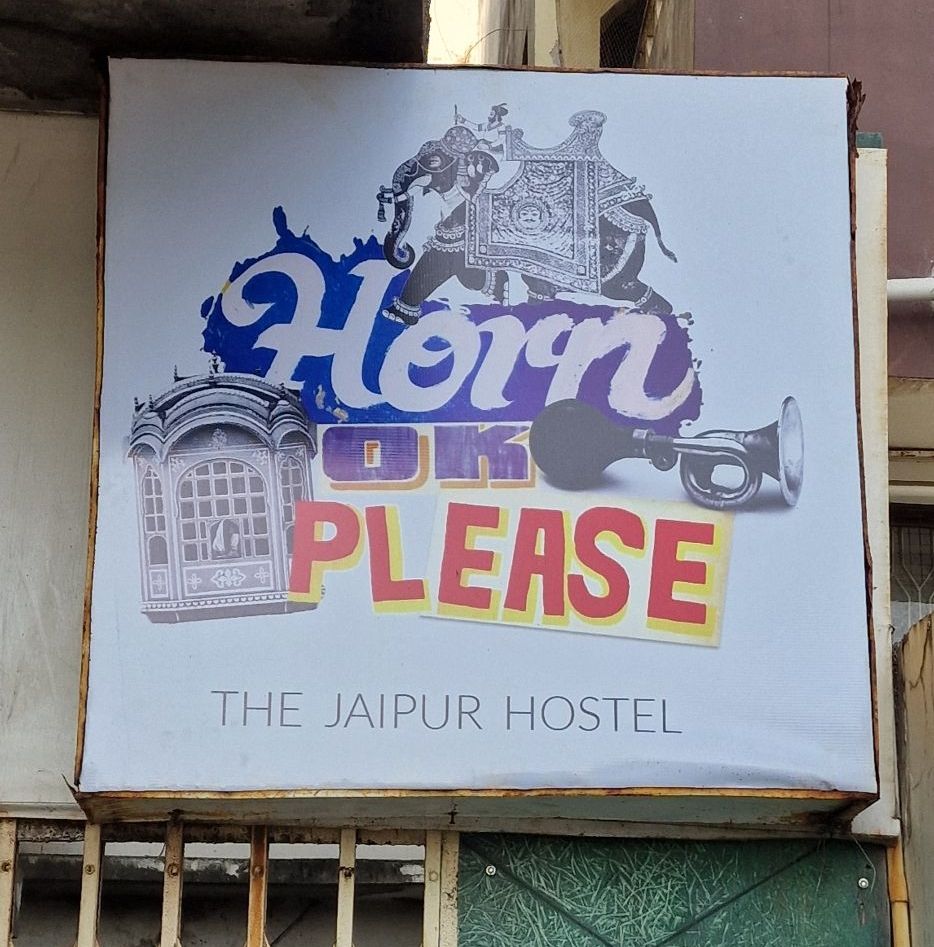
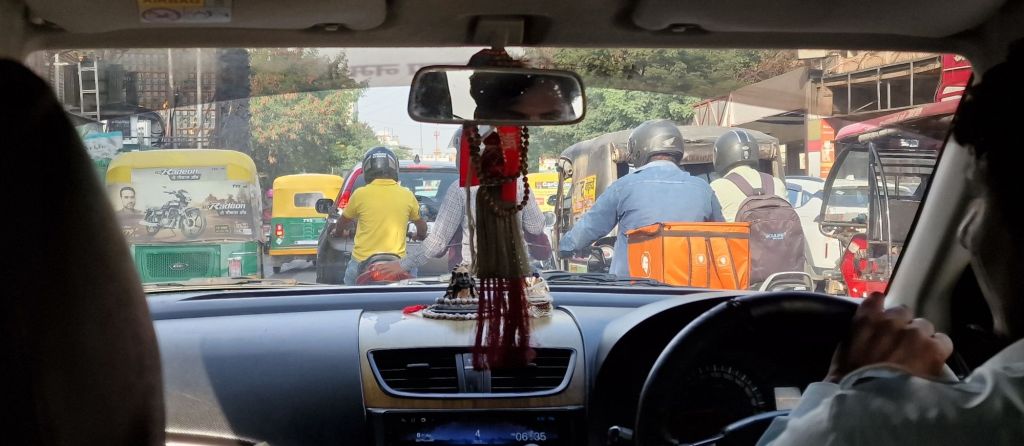
    ‘Horn OK Please’. Initially a confusing name when we booked the hostel, which is cheap but comes with excellent reviews. It came clear that the ‘horn’ was referring to the incessant beeping from passing vehicles
    Exciting times

    We are planning a merry journey down through India, ending up in Goa for Christmas. All safe and well here, and full of curry.

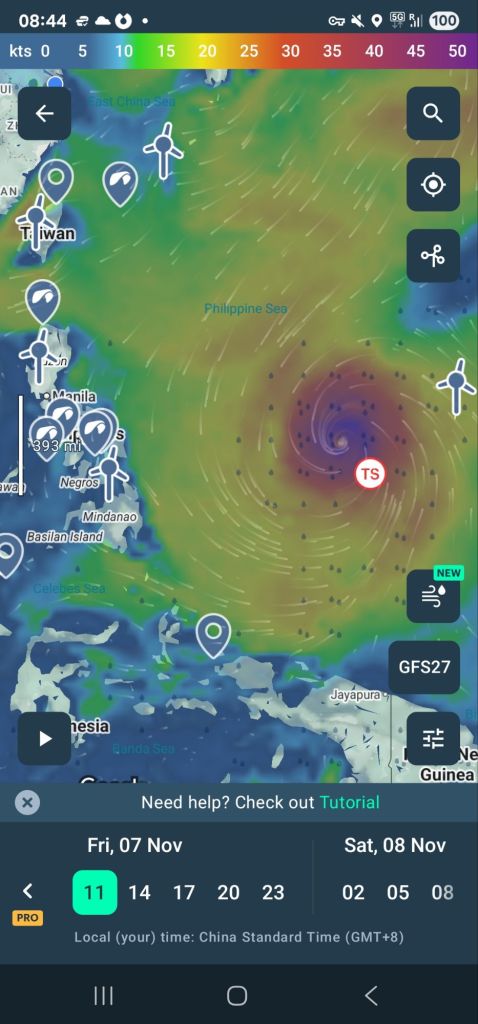
  • The tropical typhoon Fung Wong is building intensity over the Philippine Sea with a western trajectory

    Just a quick update to let you guys know that we have cancelled our trip to the Philippines. We have been keeping a close eye on the natural disasters unfolding, with the 6.9 earthquake on October 10 which hit the east coast of central Filipino island Cebu, killing 74, and then Typhoon Kalmaegi, which killed 114 last week on the same island.
    By chance, as we were headed to the airport yesterday, Jem checked out the local Filipino surf report, and the 30-foot waves forecast next Monday caught his eye. Further investigation revealed new reports of a possible ‘super typhoon’ headed straight to the northern island of Luzon.

    The red arrow shows where we had booked our accommodation on Luzon for the first week – right in the path of the storm. Winds of more than 100mph and widespread flooding are predicted

    It is devastating for the Filipinos – about 10pc of their income is from tourism, and about 10pc from agriculture. The above link provides an overview of the physical impact to date created by the barrage of natural disasters.

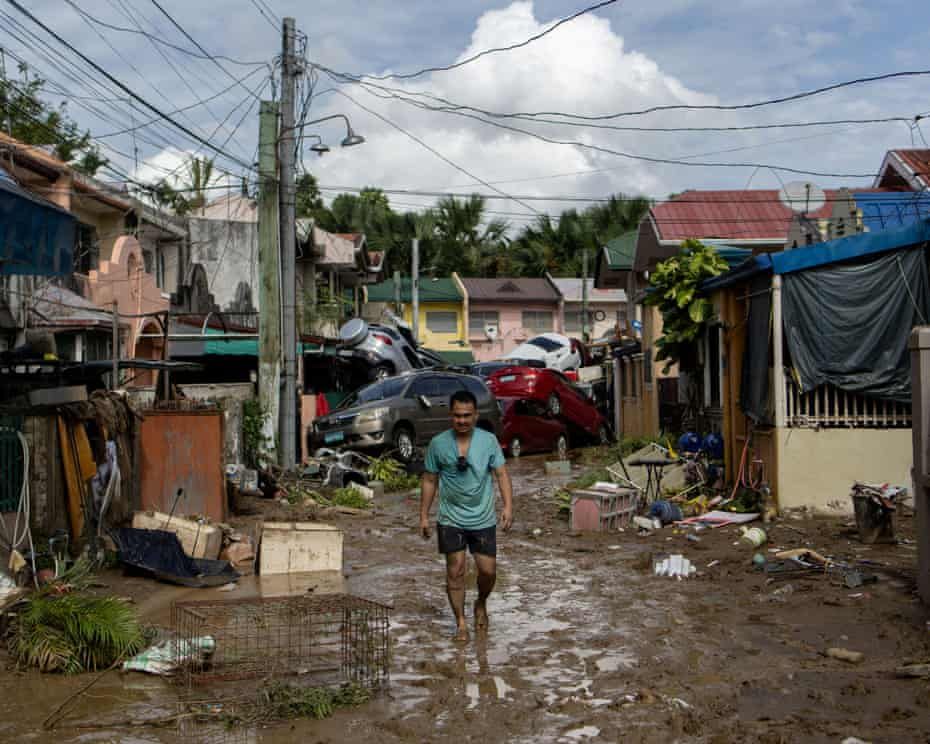
    An image of the catastrophe caused by last week’s typhoon on the island of Cebu, taken from The Guardian. The country has declared a state of emergency
    Taken from Associated Press

    The British Foreign, Commonwealth & Development Office have not advised against travel to the Philippines, and we can’t claim any money back on insurance until they do so. But staying safe is priority number one.

    After contacting the poor accommodation owners to cancel what bookings we could, we made a shortlist of new destinations. Jem voted for hiring a yellow Mustang in LA and cruising up the west coast – I had to put a stop to that immediately 😂

    As most of Southeast Asia is wetter than an otter’s pocket at the moment, ruling out Laos, Thailand, and Vietnam, the only affordable and dry option was India.

    Last night saw the most intense 6-hour visa application session ever. Anyone who has dealt with the Indian Visa Application Service website will know that it is like entering a glitchy inpenetrable Fort Knox labyrinth in the Matrix. Couple that with a shocking Internet connection, trying to access their website from their arch enemy’s country without a VPN (which don’t work for some inexplicable reason), trying to make documents the correct size and format, and all of this while using a mobile phone rather than a laptop. It was enough to drive a sane man or woman around the bend. At about 1am this morning and several therapeutic beers later, we had both submitted our applications.

    A very vague plan is to head to Goa in a few days, where there is some decent sport climbing nearby. Possibly a trip down to Hampi; a world-class bouldering destination. For now, we are getting out of the city to Hangzhou to enjoy some rural life until our visas arrive.

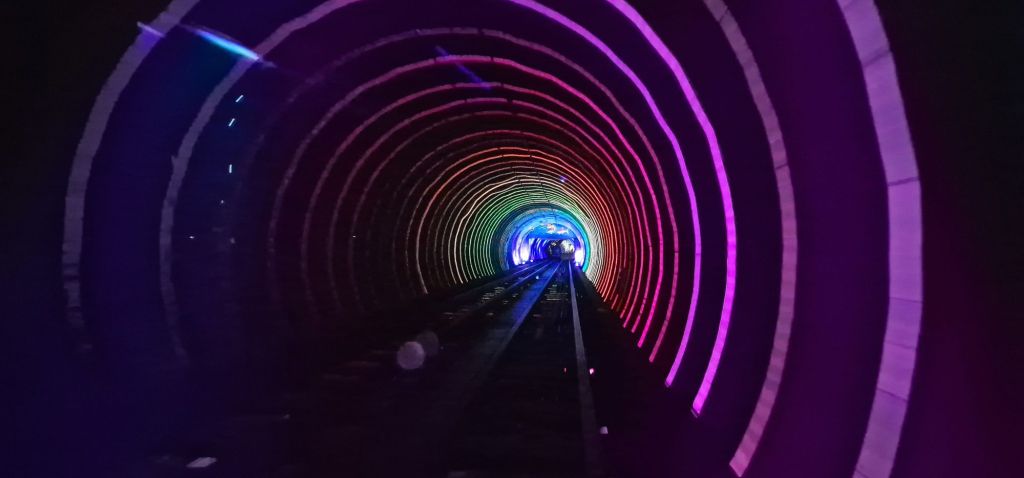
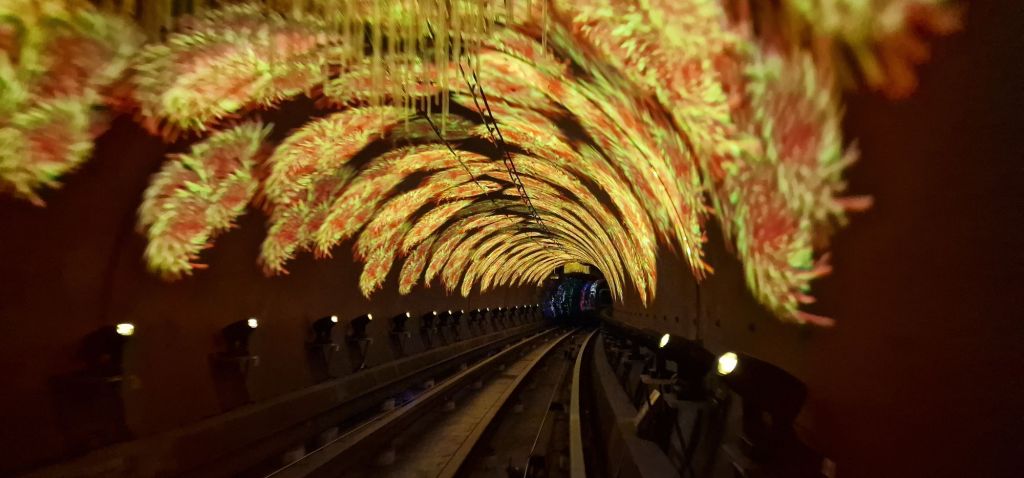
    This is the Bund Sightseeing Tunnel, perhaps the strangest attraction we have ever witnessed. Tourists ride for 5 minutes in a carriage from the Oriental Pearl Tower and under the Huangpu River to the Bund. For some reason, they pitch this at adults. Jem was besmused, but it’s probably the best £5 I’ve ever spent.
    Easily pleased
    This cutie has been looking after me for the last 2 days while I’ve had a virus. What a hero!
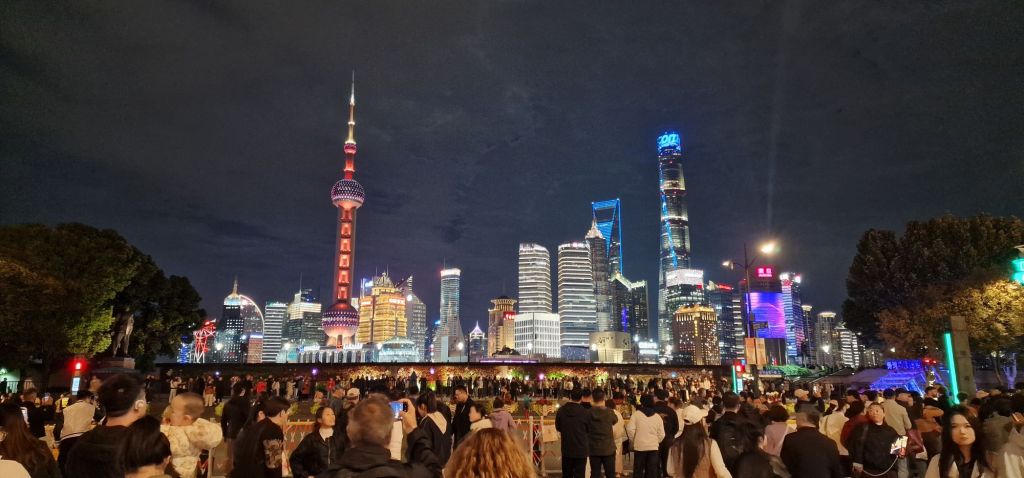
  • The famous skyline lights up from 7pm until 10pm every night

    Shanghai is a cosmopolitan whirlwind of extravagant high-end shopping malls, neon lights, raging counter-culture, and incessant hustle and bustle. The global finance and innovation hub could not be any further, culturally, from the repressive Orwellian regime of Beijing or the relatively unsurveilled lawless backwaters of Yangshuo.

    Shanghai is the third most populous city on the planet (after Tokyo and Delhi), with the city proper hosting about 26 million people, plus tens of thousands of extra tourists downtown.

    Behind the camera: Almost 20,000 foreign tourists visit Shanghai every day

    Originally a traditional fishing village and market town, Shanghai grew to global prominence in the 19th century due to domestic and foreign trade and its port location. The city thrives at the crossroads of transformation and tradition, with buildings dating back to the 1640s nestled between towering skyscrapers.

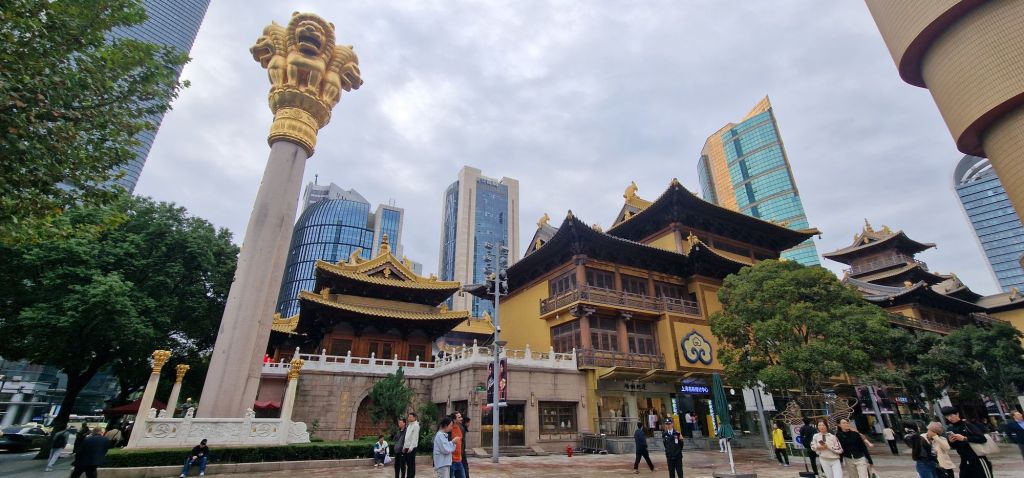
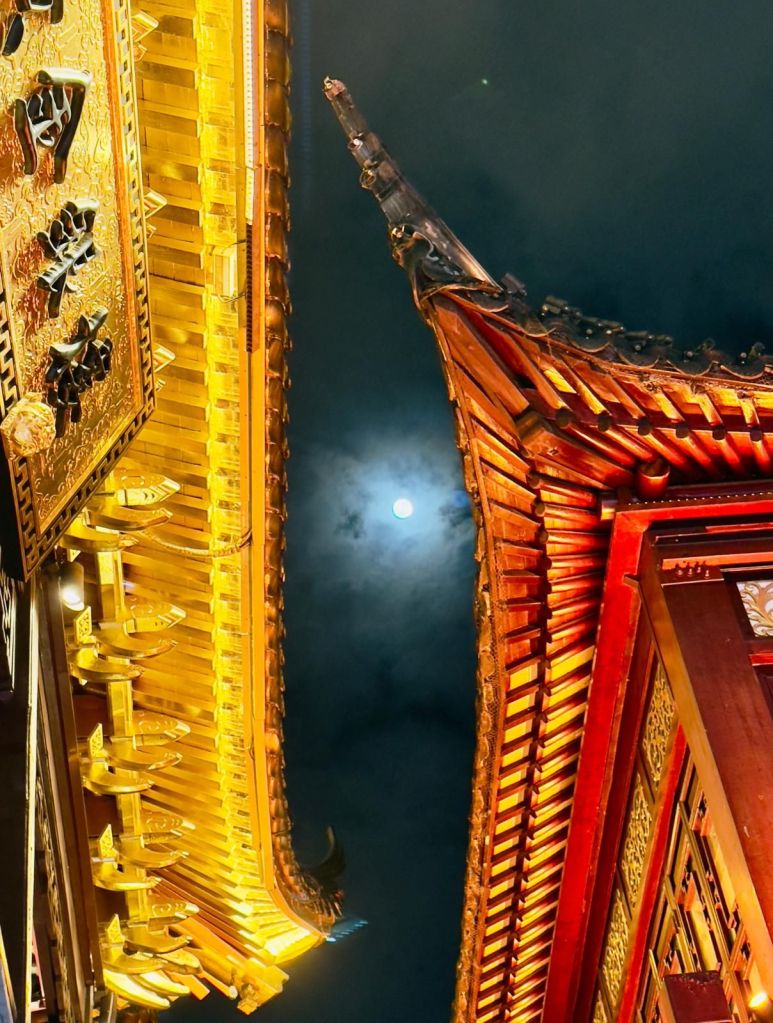
    The buddist Jing’an Temple, originally built in 247AD before some reconstruction, and the surrounding luxury shopping centres
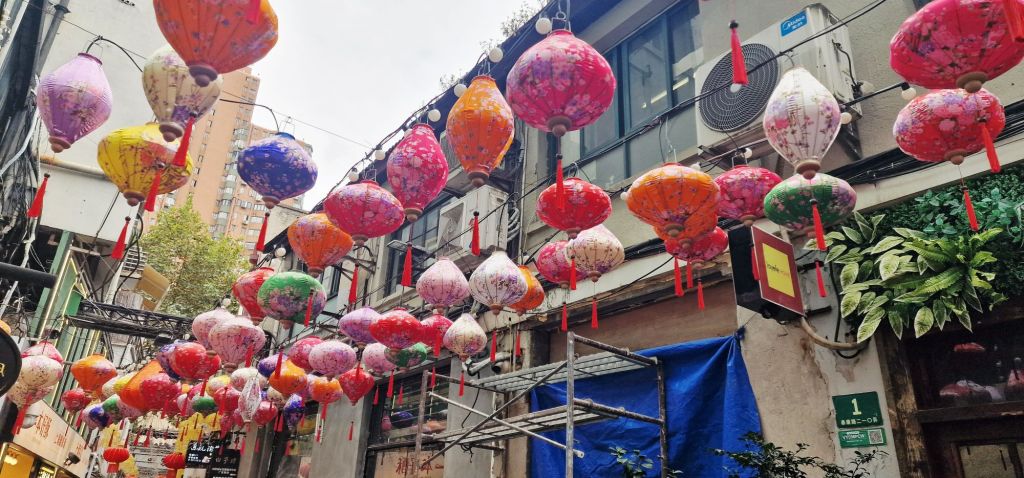
    Yuyuan Old Street is a historic area in the heart of Shanghai, dating back to the Ming Dynasty (1368-1644), and features beautifully preserved architecture
    Much like in Yangshuo, girls flock to the more picturesque areas in Shanghai to have their photos taken
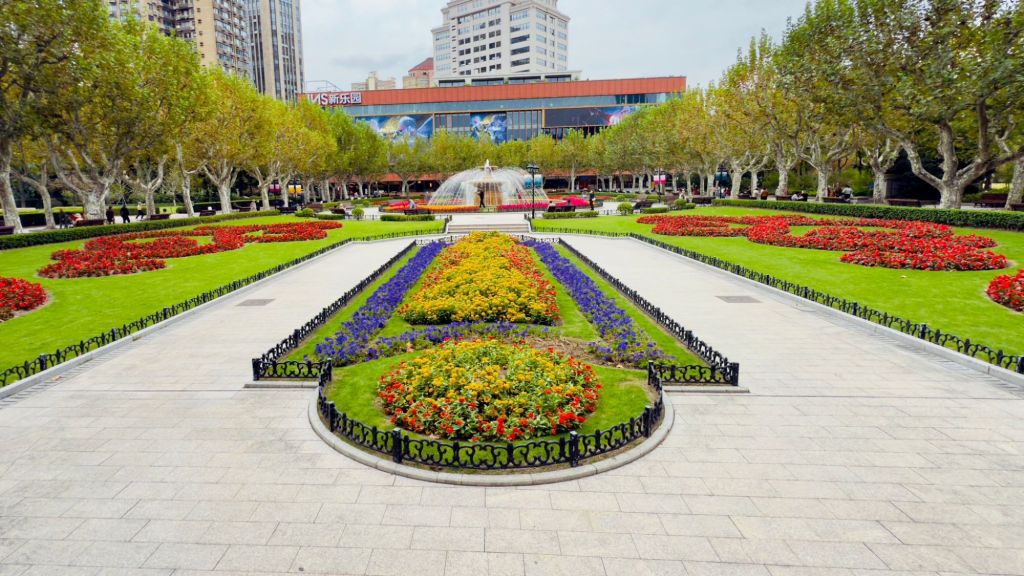
    Fuxing Park: this area was once a foreign concession under French possession from 1849 to 1943. It has much French influence and is now home to high-end dining and shopping

    The famous waterfront skyline started taking shape from the 1990s onwards. The Bund, a historical district featuring both classical buildings and views of the skyline, is the main tourism draw here, along with the Vegas-style shopping area Nanjing Road East.

    The street features gargantuan 3D advertising billboards, the size of the buildings they adorn, and is fringed by dozens of architecturally unique skyscrapers, each with its own light display.

    Nanjing Road East
    A typical Nanjing Road shop: like being at Disneyland

    Shopping here is insane; ostentatious malls on every corner and highly-coiffured women carrying couture shopping bags like a scene out of 1980s film Pretty Woman. So far, we have been able to afford a 2-inch solar-powered gold lucky cat and a fridge magnet. While we have been paying about £10 a night throughout China for some fairly spacious rooms, in Shanghai, we are paying more than £50 a night for a shoebox in a youth hostel.

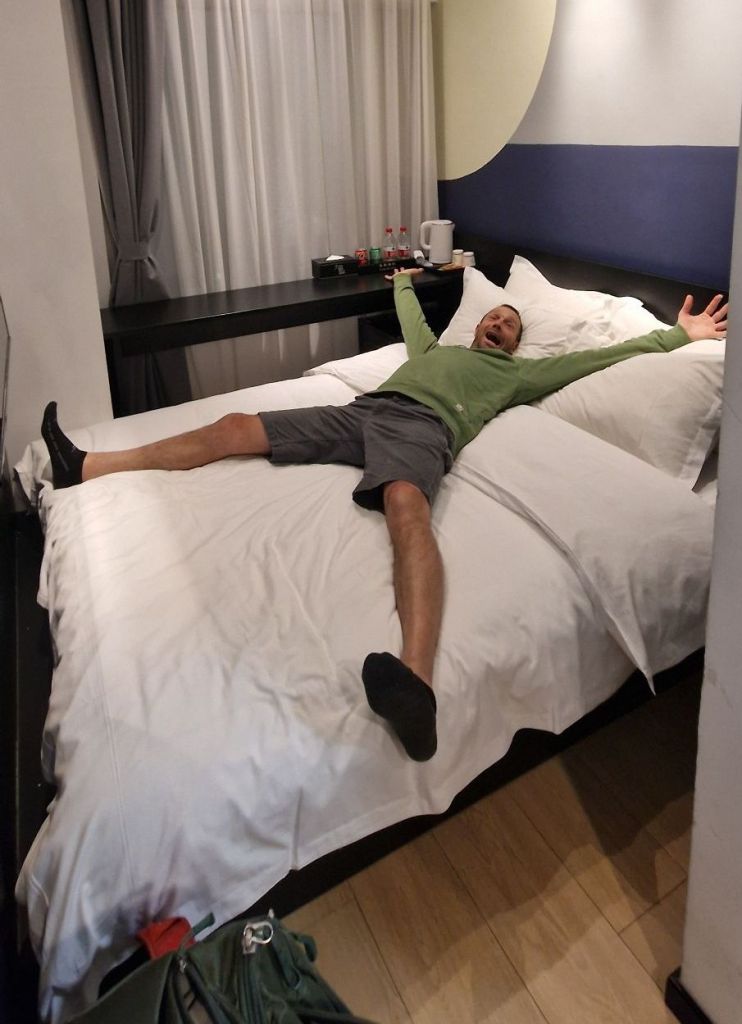
    No room to swing a mouse

    Walking through the city is reminscent of a scene from Dawn of the Dead; almost everyone’s face is buried in a mobile phone, their bodies aimlessly meandering, unaware of their surroundings or the imminent environmental perils. Similarly, mobile phone volume control is non-existent, especially on public transport, with passengers oblivious to the fact they are playing videos at volume 11 in a packed carriage. If this brain drain is a symptom of an overpopulated metropolis, it conjures genuine concern for the future of our great planet. Beijing to Shanghai; from one dystopian existence to another, it could be argued.

    After one month of living off noodles and rice, it has been a pleasure to get stuck into some Western food

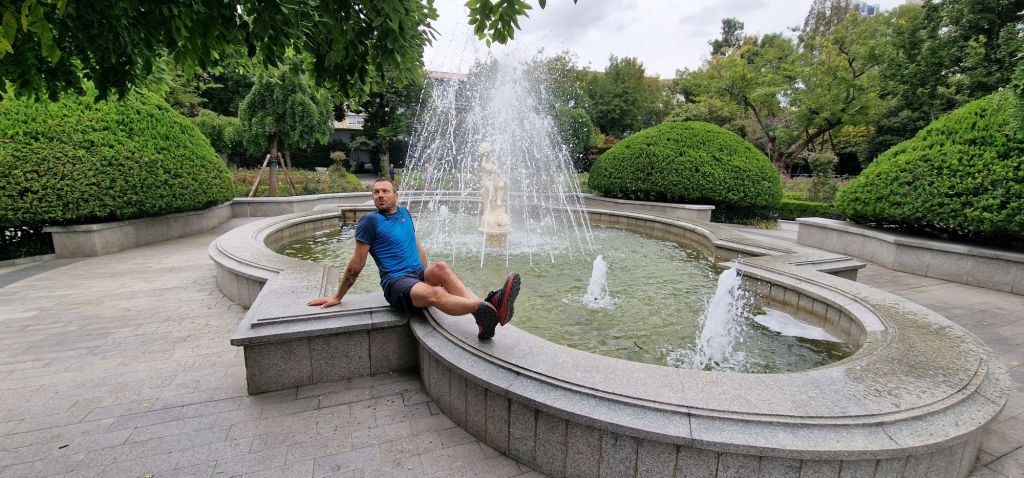
    Due to the ramped up cost of living here, we found some cheap activities to do, like jogging around the city and taking the train to some suburban tourist spots.

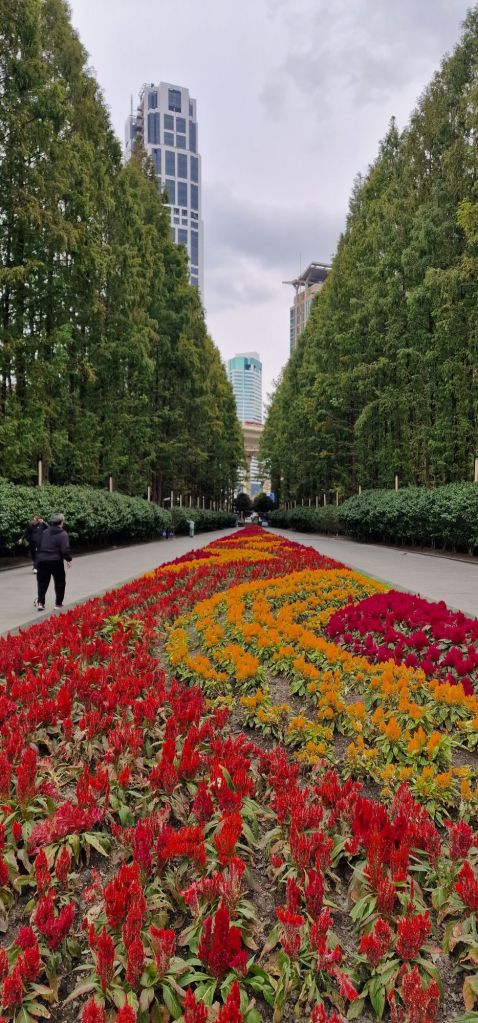
    The parks are stunning and full of older folk (playing cards and practising tai chi)
    Marx and Engels
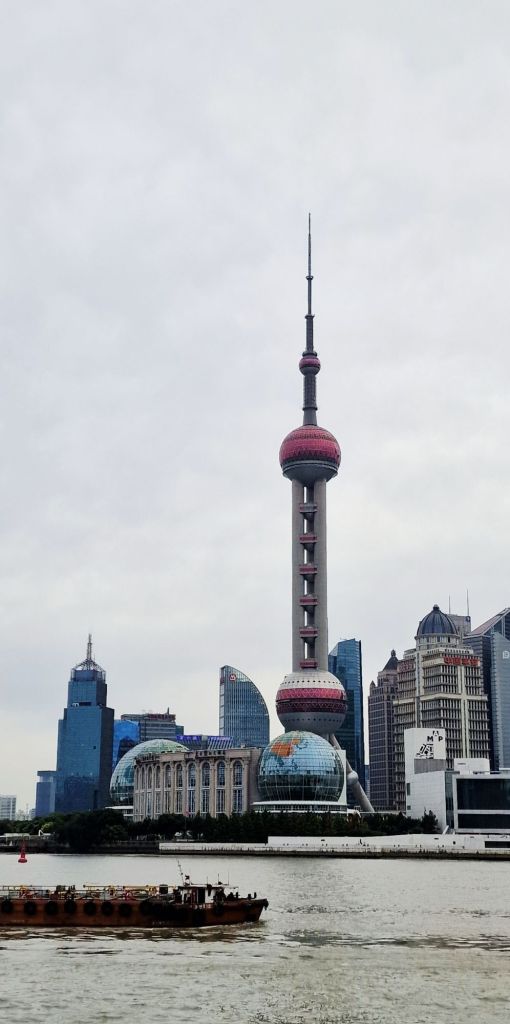
    The iconic Oriental Pearl Tower was built in 1994. At 468 metres, it was the tallest structure in China until 2007. It doubles up as a hotel, restaurant, and observation deck
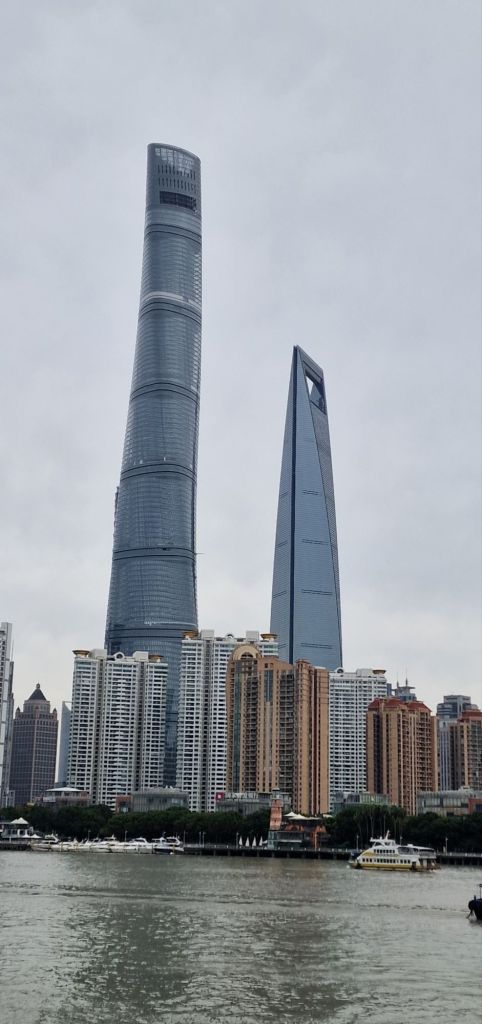
    The Shanghai Tower is currently the third tallest building in the world at 632 metres and is used for office, retail, and leisure
    These guys were dancing to drums to mark the opening of a new shop

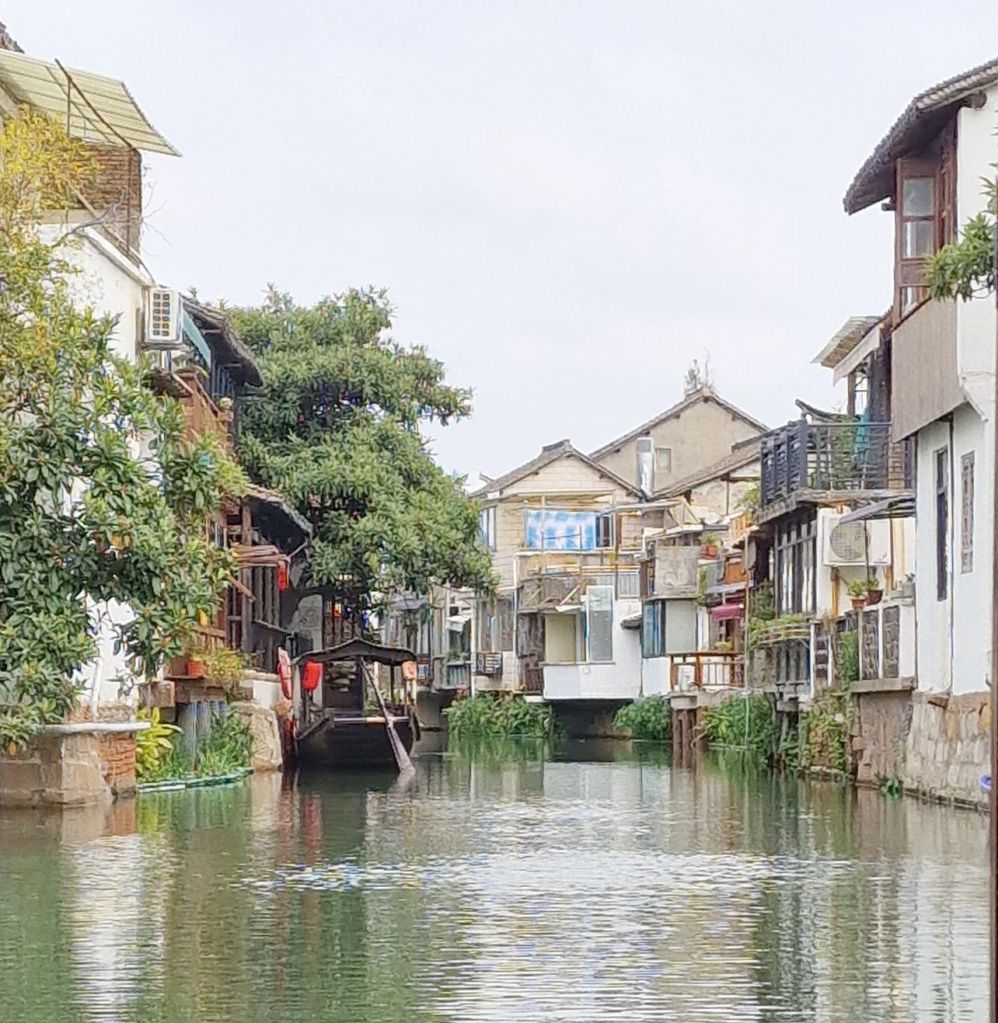
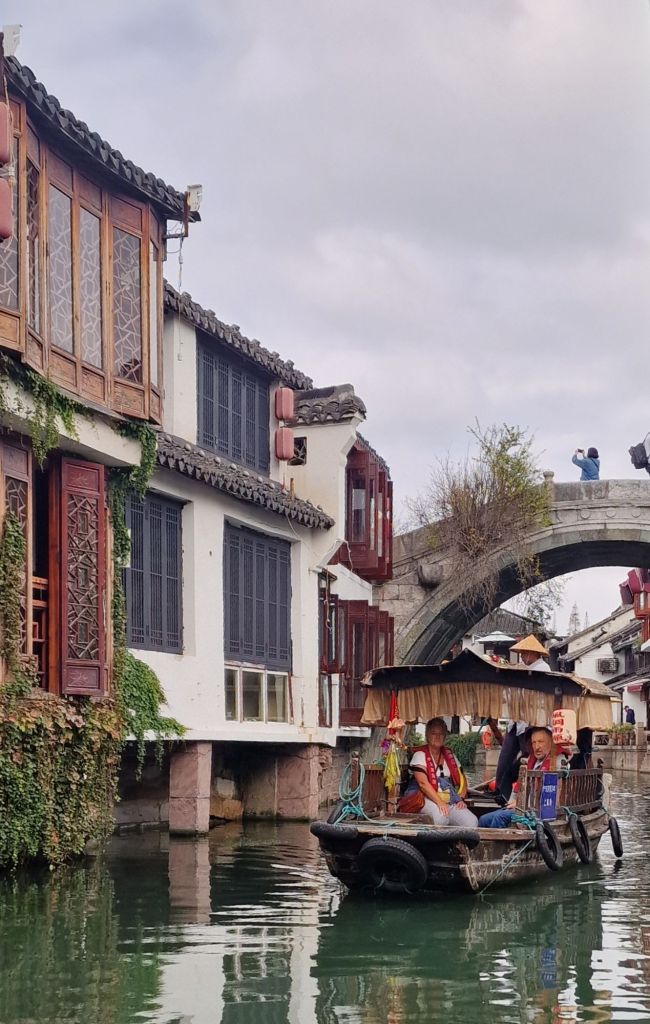
    Shanghai is surrounded by several water towns; ancient, historic towns built on and around canals, known for their arched bridges and narrow stone lanes. Zhujiajiao, an hour away from the city centre, was established about 1,700 years ago. It provided a great value for money option with the train costing 80p each way per person.

    The town boasts 36 stone bridges and numerous rivers. We arrived into the town on a canal boat like the barons we are
    Many ancient buildings still line the riverbanks today

    Meanwhile, we have been keeping an eye on the weather in the Philippines, where a typhoon has just swept through, killing dozens on the central island of Cebu. This follows a 6.9 earthquake that struck the same island one month ago. There has been much debate about cancelling the trip, but hostel owners reassure us that it is safe to travel on other islands on the archipelago. We fly tonight 🤪

  • We arose to find some limp half-gnawed bananas on the table; our family suite is also hosting a mischief of mice who scurry around in the ceiling cavity in the twilight hours. Sharing our fruit with rodents is preferable to the hum the air-source heater on the roof, which, every 2 minutes and 38 seconds, rattles the room. During the day, it is unnoticeable, but by night, it is akin to a jumbo jet landing on our duvet. Penthouse living, it appears, is not all it is cracked up to be.

    Today’s excursion to XingPing, a circular route north including a mountain climb and river crossing, initially didn’t sound like too much of a drama. Some may say that four hours on a scooter in sideways driving rain would be sub-optimal, and after our trip, I am inclined to agree.

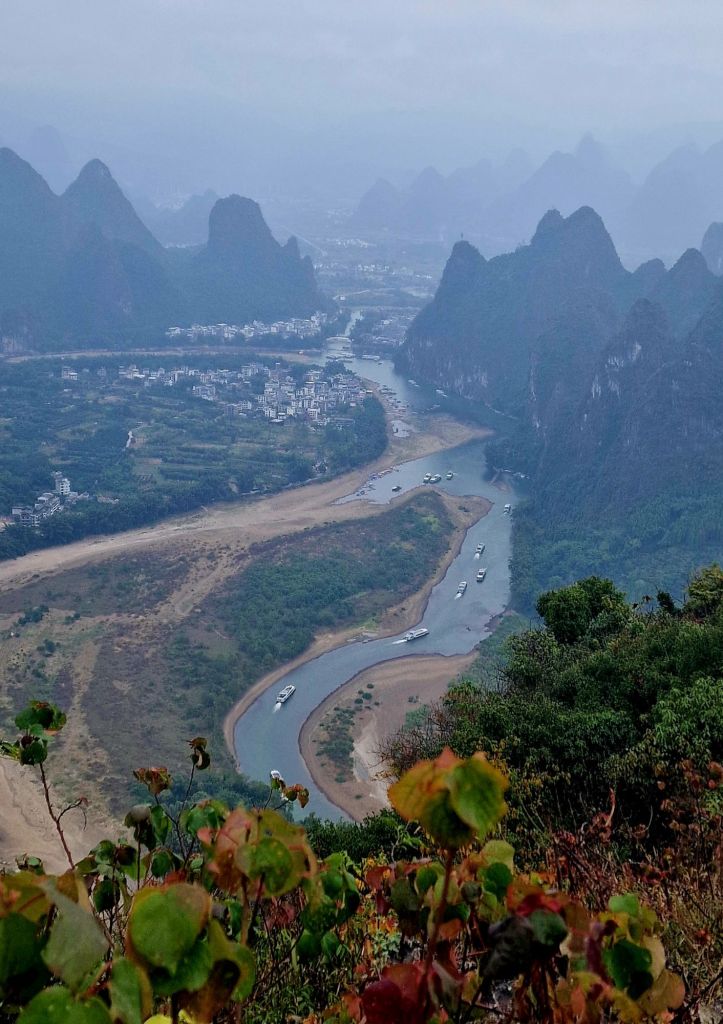
    The 1,250 stone steps to the summit of Damian Mountain provided spectacular views onto local tourist hub XingPing and beyond

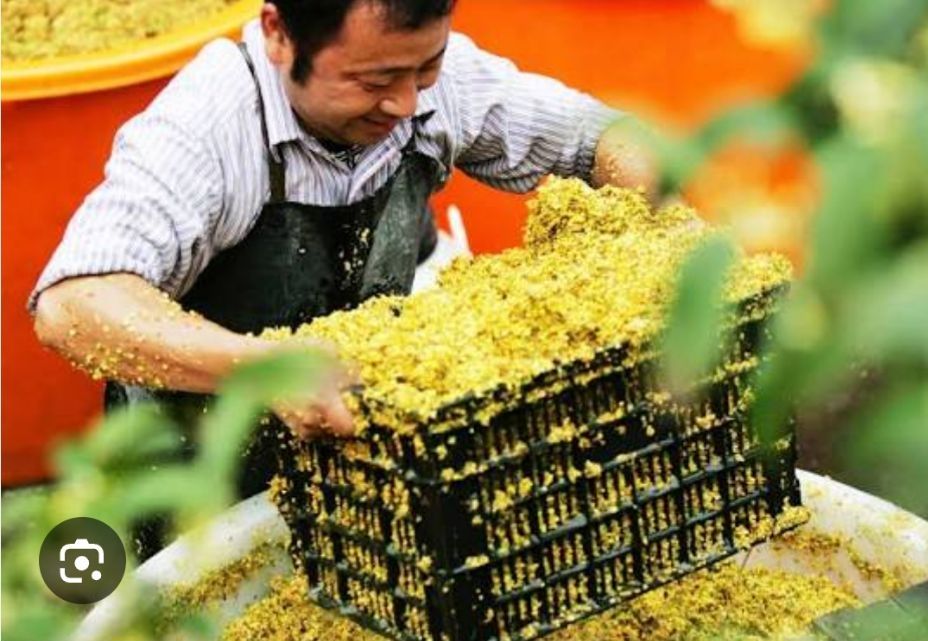
    It was market day, and so the roads were pandemonium, with traders porting around huge baskets of osmanthus flowers; a highly fragrant blossom collected for teas, pastries, honey and wine. Guihua is known as ‘wooden rhinoceros’ in Chinese, owing to the resemblance between the tree’s texture and rhinoceros horns. The plant is prominent in southern China and in provinces along or south of the Yangtze River.

    This one is stolen from the internet

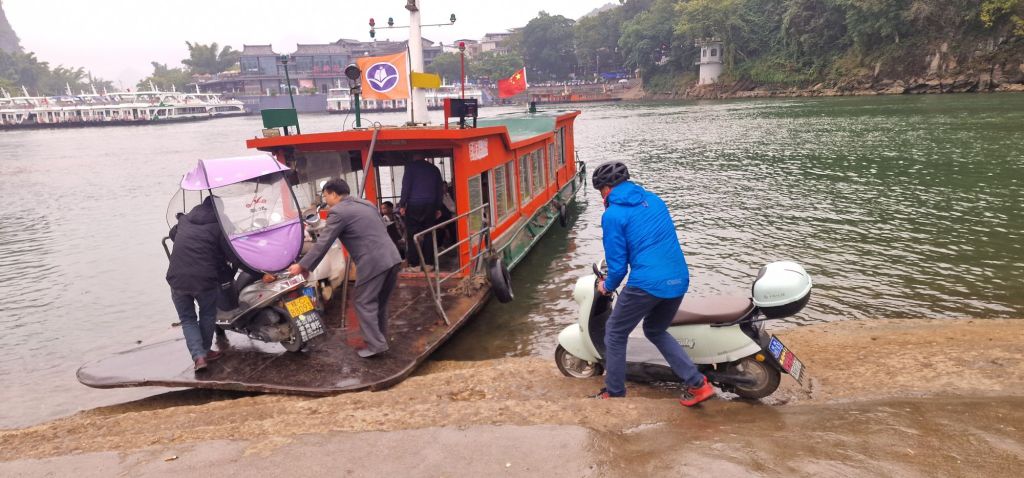
    The next obstacle, a 150-metre ferry crossing, was a head-scratcher. We puzzled at how we would manoeuvre the bikes down the steep steps onto the tiny wet sloping ramp, complete with adverse camber, angled to eject us both into the dark brown swirling river. Jem reassured me with some golden nuggets like: “If the bike lurches into the water, then remember to let go of the handles.”

    It was unclear if scooters were allowed on the boat, which initially appeared to have capacity for only a few foot passengers.
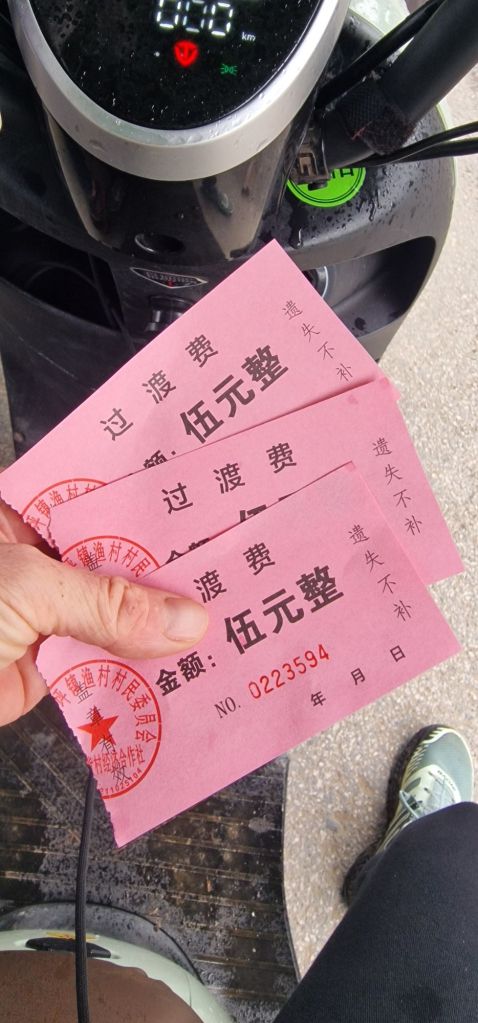
    Curiously, we were handed three tickets each and waved through anyway
    All aboard! The guy in front very nearly dropped his bike in the river until Jem and the captain caught it in the nick of time

    The captain shouted angry-sounding Chinese exclamations at us for the entire crossing while the other passengers stared on mercilessly. We looked back nervously and practised our best awkward smiles.

    Some boats on the river exhibit the Hammer and Sickle emblem. Introduced by Russia after WW1, it was later taken up by many Communist governments to represent solidarity between industrial and agricultural workers

    On the return journey, Jem’s scooter battery drained to red, several miles from home. Never have I seen a more sorry sight than Jem limping along at 5km/hour in torrential rain, knees by his ears, and wearing his wonky climbing helmet, as lorries rumbled past honking their horns ejecting sprays of water sideways. I had somehow missed Jem gesticulating furiously in my wingmirror as I pootled happily off into the distance, carrying both charging cables under my seat.

    It was a glorious homecoming; two drowned rats cheering as we pulled up outside our hostel. A great day out indeed.

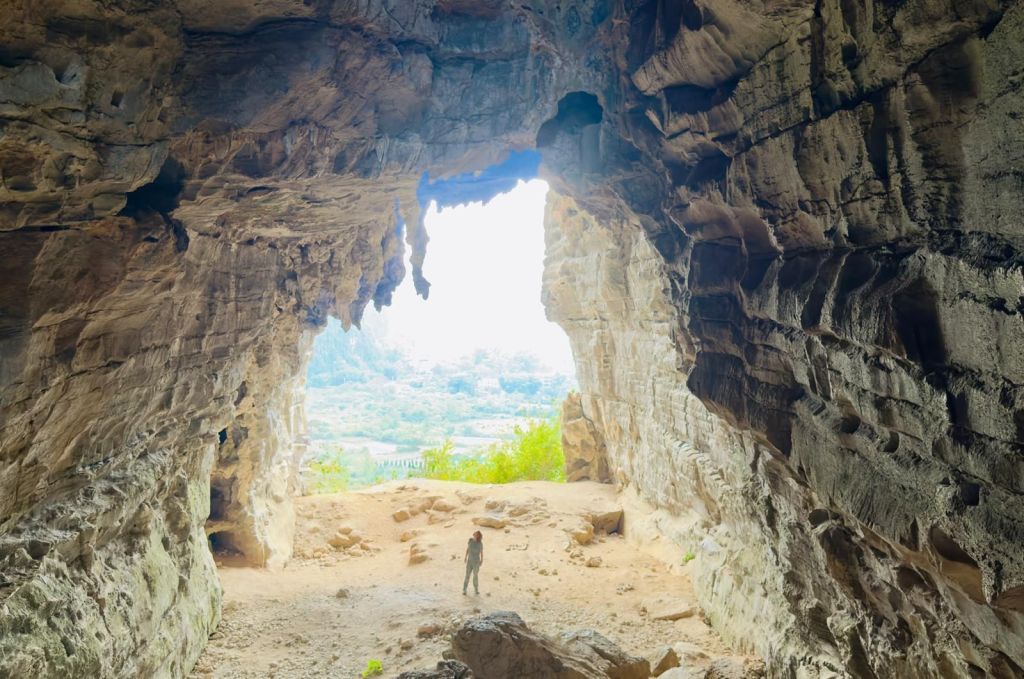
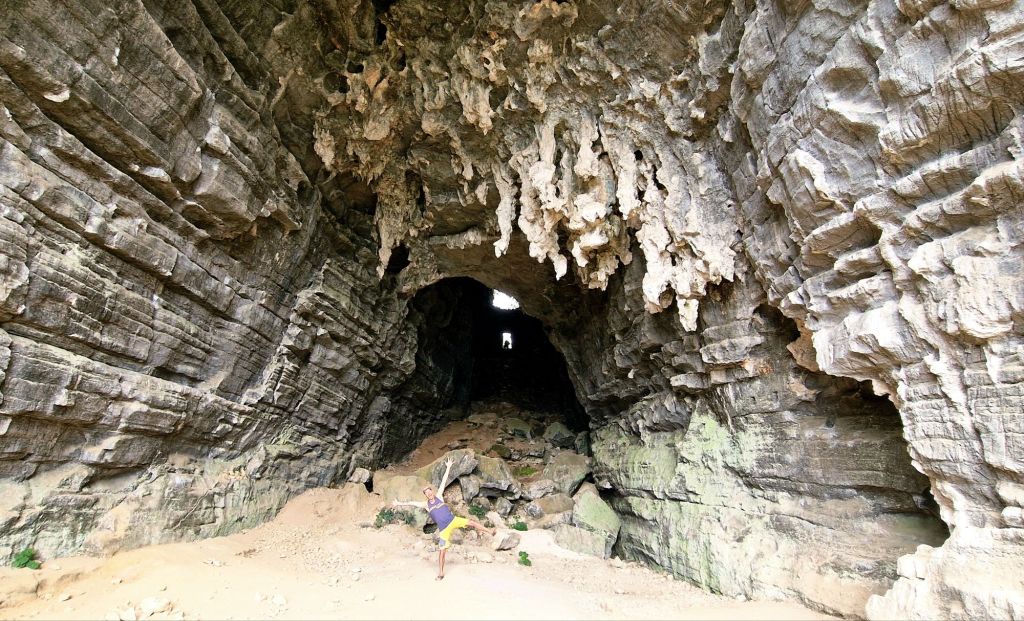
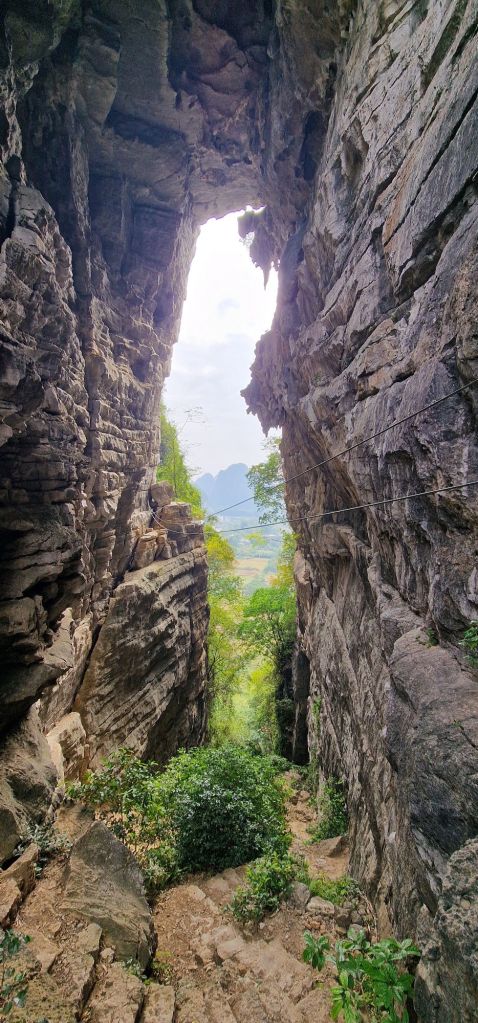
    Yesterday, we binned off climbing and instead adventured around the local aspirational stalegtite-laden climbing venue; Square Mountain. If we had trained for this trip, this is where we would have set up camp for the last week.

    These two caves – Brother’s Cave and Treasure Cave – go right through the mountain and boast about 30 quality routes from 6a to 7c

    We looked on in wonder at how some of these near-horizontal lines through flowstone and dripping tufas could be unlocked. A return visit would surely be in order to test our mettle.

    The hammer and sickle are just one example of Chinese iconography and symbolism that have got us googling. Colour and etymology, and even what specific words sound like, can lead to PR armgeddon in China. For example, the Mandarin word for shoes – ‘xié’ – is a homophone for ‘xié’, or evil, so giving someone a pair of shoes is thought to be bad luck. Similarly, the Mandarin phrase for sharing a pear – ‘fēn lí’ – is a homophone of ‘fēnlí’; to separate or part ways. In the same vein, it’s bad form to give someone a fan (shàn) or an umbrella (sǎn), as the Mandarin and Cantonese words for these objects sound like the word ‘sǎn/sàn’; to scatter, to part ways.

    In some cases, choosing the right quantity is almost as important as choosing the right gift itself. Because the words for ‘four’ (sì) and ‘death’ (sǐ) sound similar in Mandarin, it’s a serious faux pas to give gifts in fours. Gifts given in pairs or eights are thought to be luckier. 

    In Chinese culture, the colour red traditionally symbolizes good luck and happiness. But you should never write a Chinese person’s name in red ink, since some people believe it will bring that person bad luck.

    White is traditionally associated with death and mourning, so presenting a bouquet of white flowers will send strong funereal vibes. The phrase ‘dài lǜ mào’, which literally translates to ‘to wear a green hat’, means a man’s wife is cheating on him, so you should never give a Chinese man a green hat unless you’re prepared to answer some serious questions.

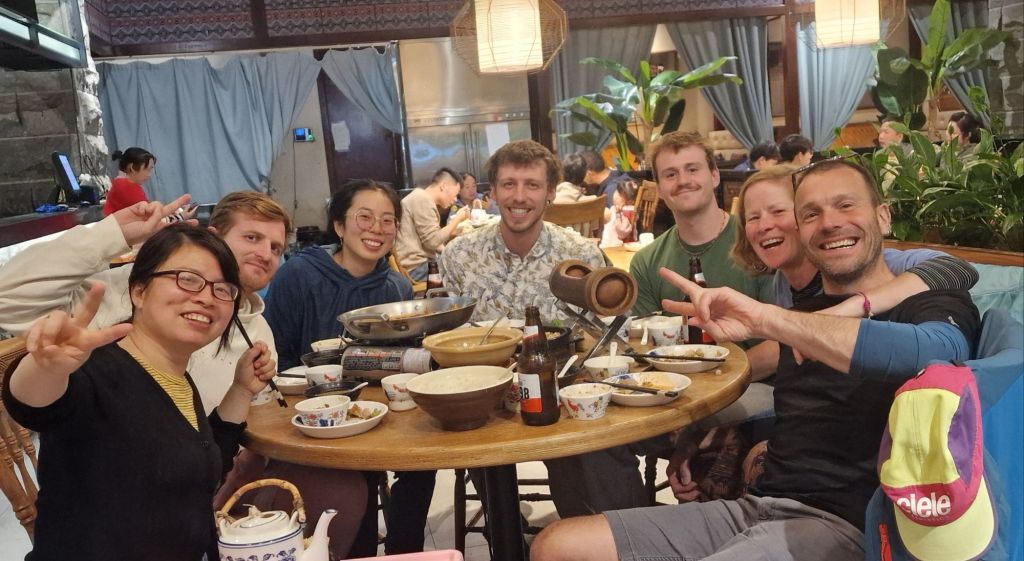
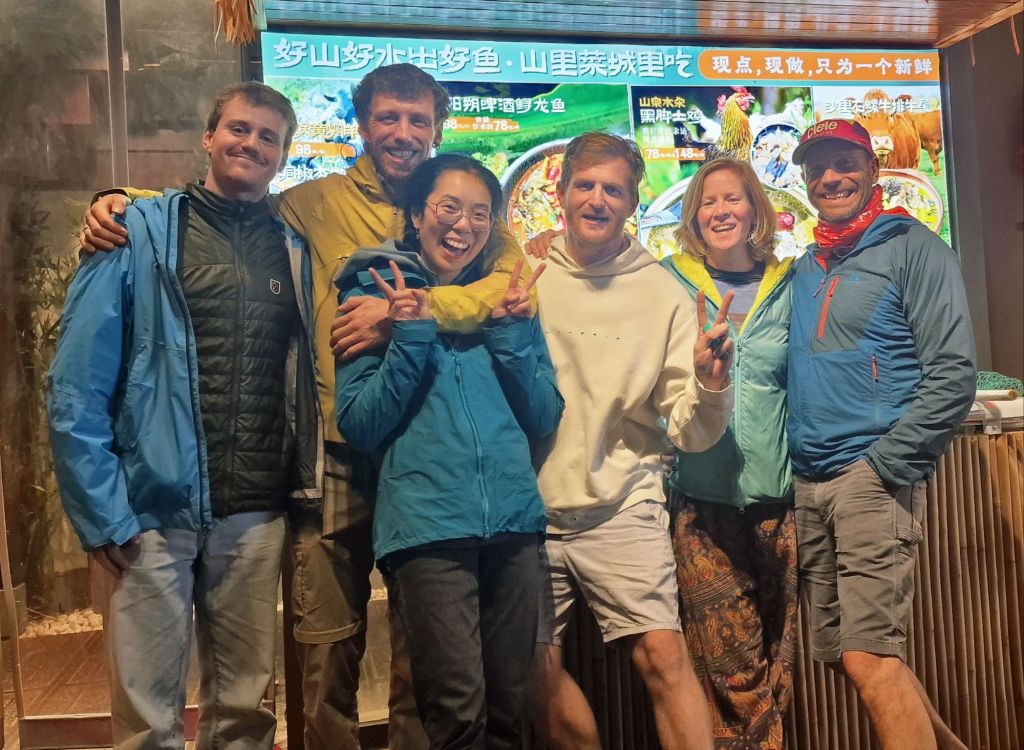
    With that in mind, when we left, we gave everyone a stiff hug rather than risking a diplomatic bombshell. Our last night was really special; Lilly took us out to an awesome restaurant, and we said bye to some guys who we will certainly be staying in touch with.

    Last night scenes: Beer Fish is the local speciality here. Freshwater fish cooked in beer. Lilly, our gracious host and owner of the Climber’s Inn, is on the left
    If you’re not doing a V sign, you’re not down with the kids. We are not.

    So long, Yangshuo. We will miss you and your exquisite beverages. Off to Shanghai we go…. on the BULLET TRAIN.

  • Leaving the house in an exhausted grump wasn’t the best precursor to questing up a five-pitch climb at the top of our limit. To the unititiated, this means climbing five separate routes in sequence to the top of the mountain. I kept Jem up till 2 am doing a full starfish, and I arose at 3 to the dulcet tones of a pig having a fit in a bowl of jelly. 

    This crag is called ‘Panda’s Thumb’; five 25m pitches of sublime limestone thuggery. To put the height in context, you can just see two guys abseiling off about halfway down

    Nevertheless, we romped up the first two pitches without incident before all hell broke loose. Pitch 3 felt rather hard for a 5C (even here) and involved a face-to-face encounter with a large serpent who was residing in one of my hand holds. I’m not sure who was more surprised, but I climbed with my motor at full blast until reaching the next belay.

    The ‘5c’ route felt quite stiff, I thought

    Jem joined me, whilst fighting off a huge angry wasp, which took delight in repeatedly nosediving his red sweating bonce. I shan’t repeat the profanities that occurred.

    Shit’s getting real

    Climbing past me, he entered territory unfamiliar to us since 2010. Sitting in my hanging belay for about 1.5 hours while my kidneys throbbed, I couldn’t understand why Jem was aiding up bolts using his ConnectAdjust and hauling on quickdraws until we looked down to see the other team (on the same intended route as us) disappearing off around to the right, giving us perplexed sideways glances. The route we were on, it turned out, was six grades above our limit.

    Having abseiled down off two random bolts back to the top of pitch 2, leaving a load of gear for some lucky souls, we sat on the ledge and had a good laugh about our predicament. Do we go up, or do we call it and abseil to safety? There’s only one choice – continue and crush this beast.

    In happier times: we found a box similar to a geochache at pitch 2 and left a little note. So little we knew of what was to come

    We pulled the rope, and to our horror, it jammed in a crack about 5 metres above us.

    It’s lucky our rope skills surpass our route finding skills, and we spent some time working out how we were going to safely get to the top of pitch 3 and also resolve the ‘rope incident’.

    Off I went, up the next pitch, to try and free the wedged line, which was stuck in a crack about 4 metres off-route on holds resembling crispy cornflakes, which cracked and splintered under my weight. It took a while to free the stubborn beast, by which time I was pumped out of my fucking mind but continued up to the next hanging belay.

    At which point, my body much protesteth to hanging in mid-air, and I summoned Jem to climb with haste to relieve me of my aching spine. Sadly, as Jem took the lead, he was gifted the most horrendous bulging and thin bitch of a pitch and was shut down on the Chimney of Doom.

    “You’re right next to the bolt. Just see if you can get your feet higher,” I airily suggested, attempting to install as much confidence as humanly possible as my vertebrae crushed. However, this was not the right communique. Jem looked around, his face eminating a look that would slay an angry polar bear from 100 paces.

    “I understand I am on the bloody bolt, I just dont know how I can get any higher,” was the strained response from above. I quickly looked down to avoid eye contact.

    It was heroic and awesome to see Jem overcome the grunting slithering bastard, and up he went to the belay of the final pitch. After much exasperated heavy breathing, I joined him. We looked up at the last yomp. A gaping grinding overhanging off-width, with more sludge than an ultra marathon running trainer.

    It was at this point that we realised the route had taken everything from us. Seven hours in, we had to descend for our mental, physical, and spiritual health – and get straight to the pub. 

    Type 2 fun: we had a laugh, right?

    Now, back at the barracks, we are delighted to reflect on recent fun, including yesterday’s rainy run around the north of Yangshuo.

    And also trying the fruit we have discovered. One particular variety, the Dorian, apparently smells of farts but tastes like heaven. We agree on the first count but not on the second.