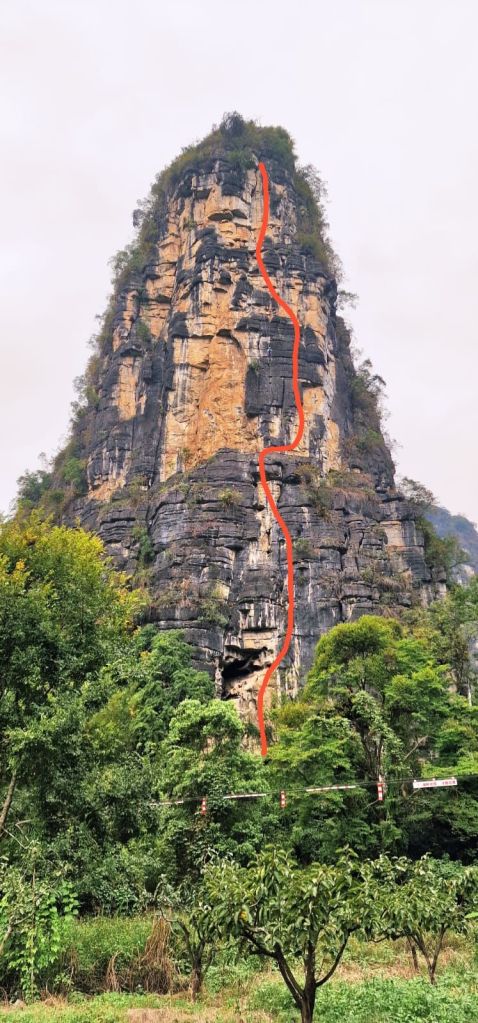
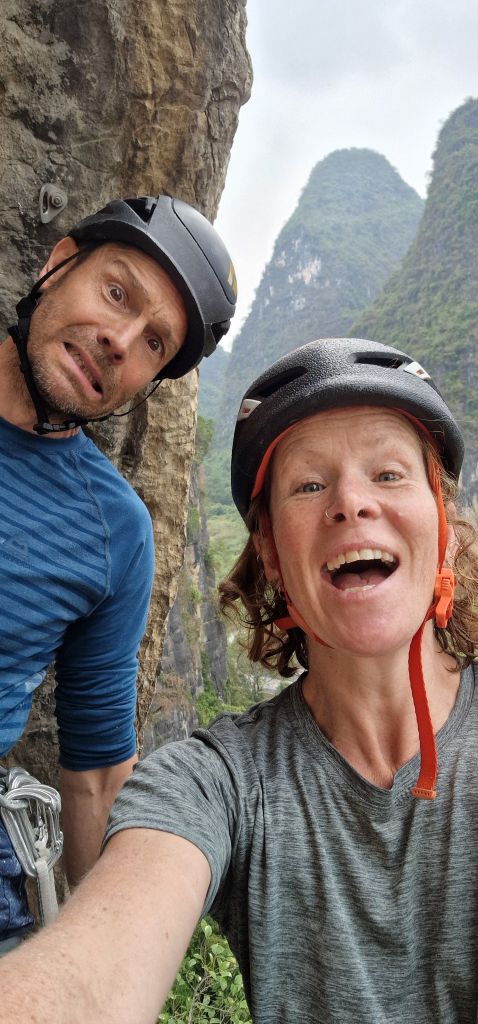
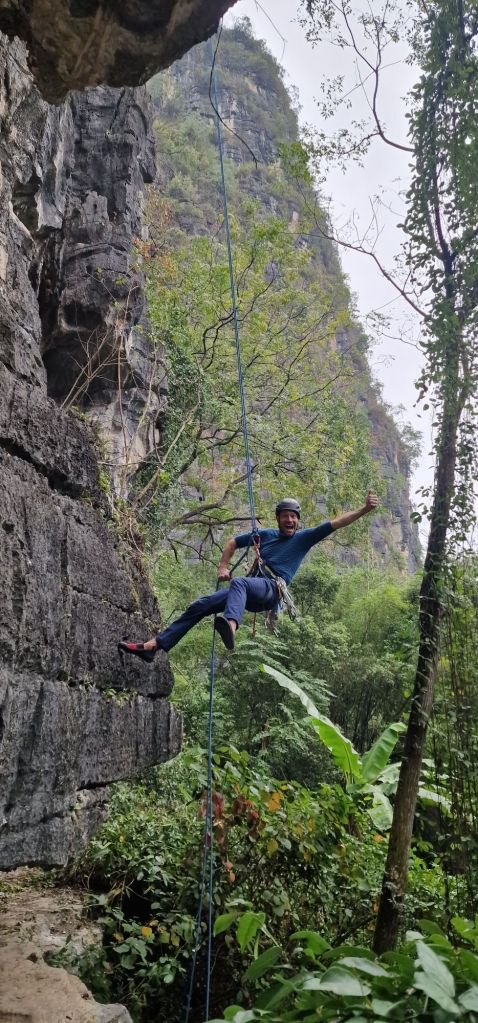
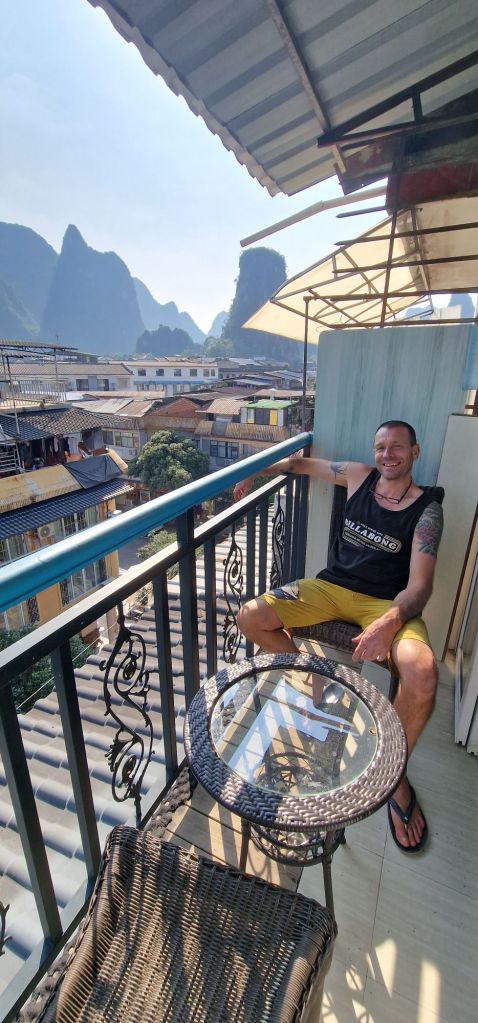
It seems apt that last week’s multipitch was called Penhouse Platforms. Due to our extended stay in Yangshou and desire to stay at this fabulous hostel, The Climbers’ Inn, we chose to upgrade to the last room available; the family suite on top of the building, complete with balcony and childrens’ room. A snip at £15 a night.
Penthouse Wankers
Most residents here are solo climbers and spend their time shuttling between Hong Kong/Laos/Thailand/Taiwan when their visas run out. We have a two-year visa that allows one three-month stay at a time – you need only to cross the border and return for the allowance to renew.
Despite the monthly rent of an apartment in Yanshou costing a paltry £80 a month, climbers choose to stay here due to the scene and location. We have joined a team of young guns all in their 20s, who talk to us like we grew up with the dinosaurs and say hilarious things like: “What was it like growing up without colour TV?”, and “Did quickdraws exist last century?”
The local speciality ‘hotpot’: where diners boil raw meats and veg in spicy water and spend the next day in the bathroom
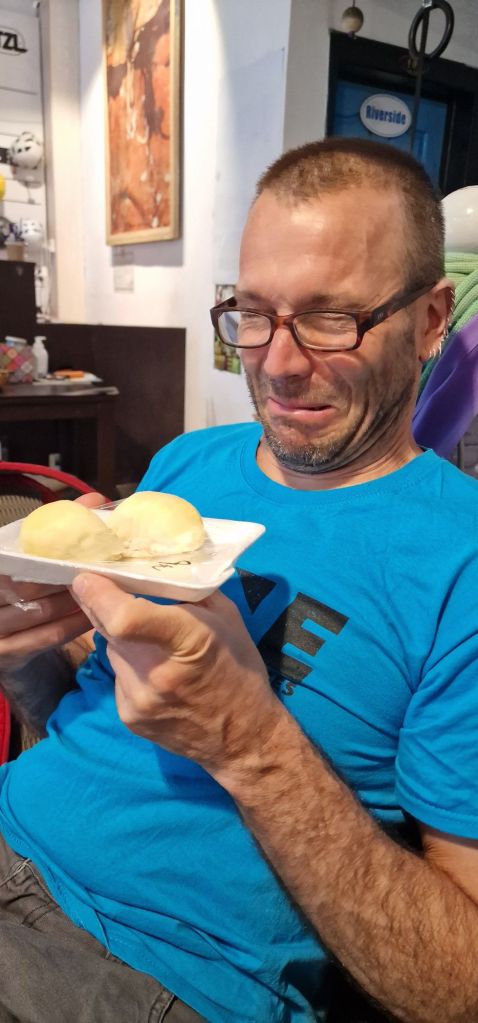
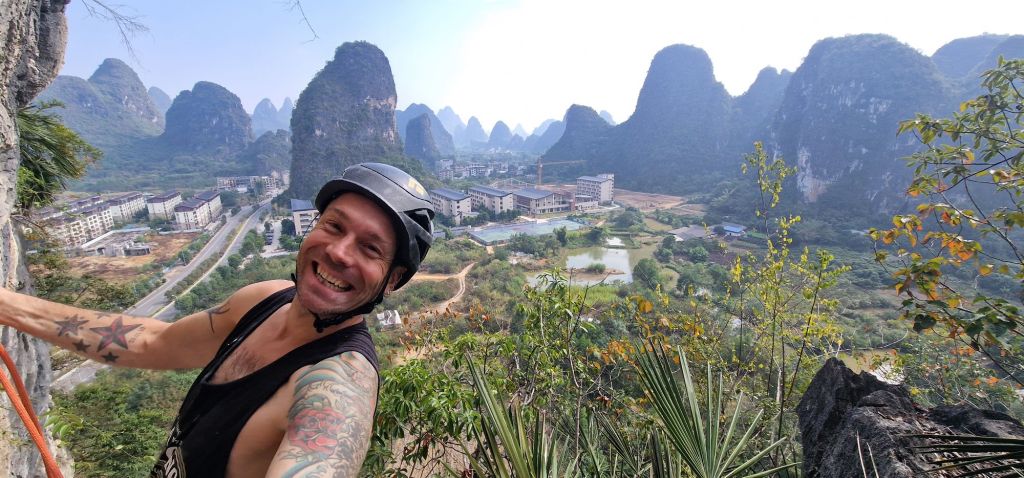
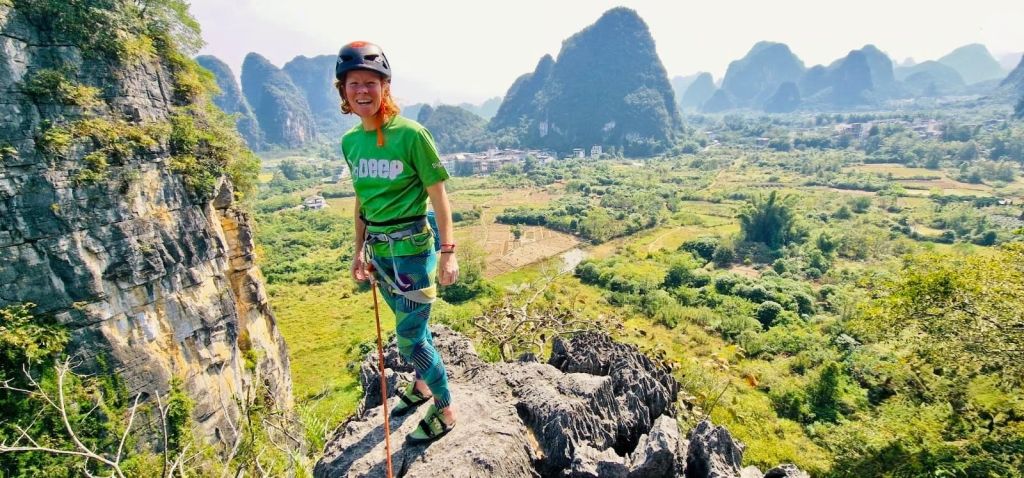
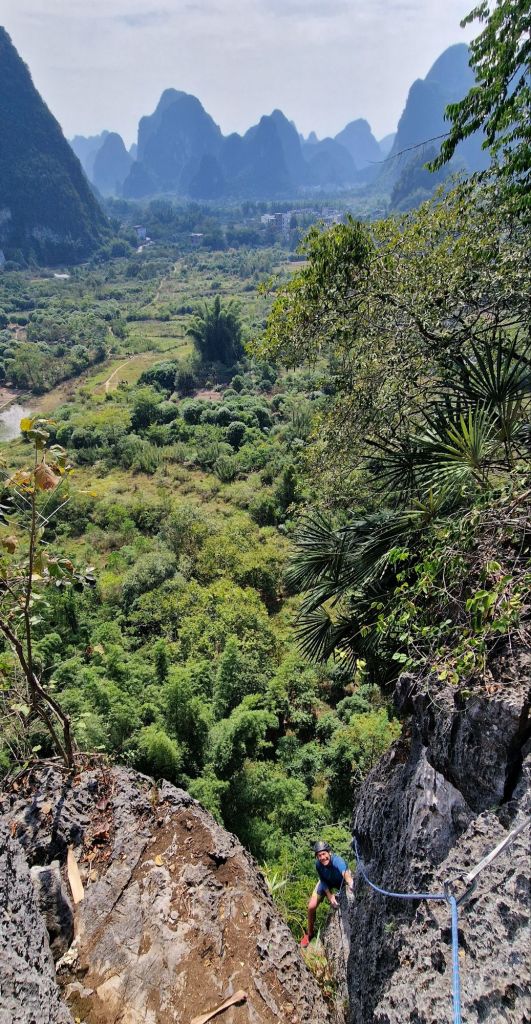
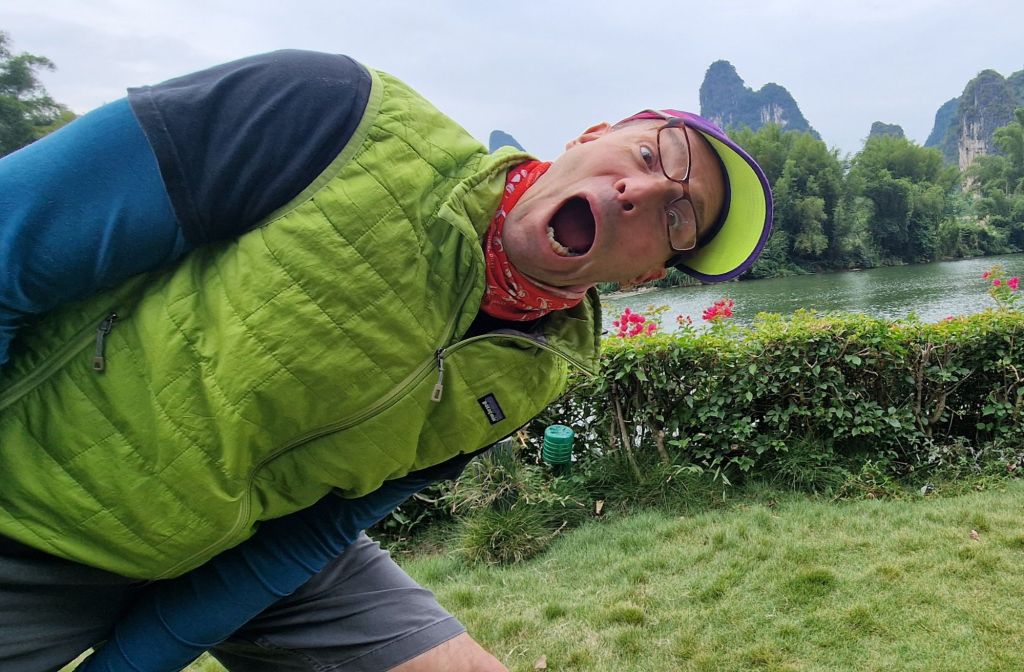
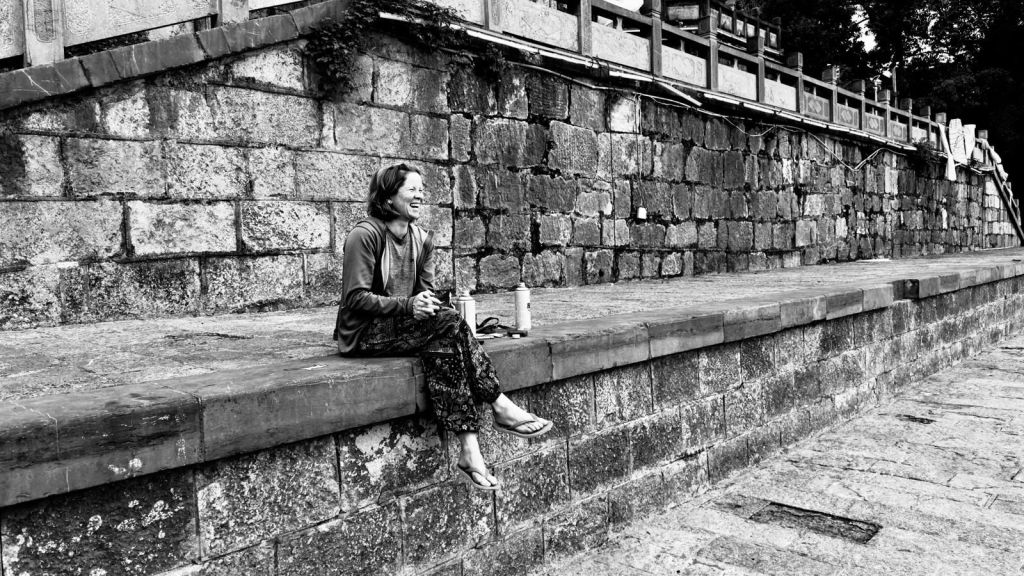
Here are three photos from recent adventures (that aren’t gratuitous ass shots):
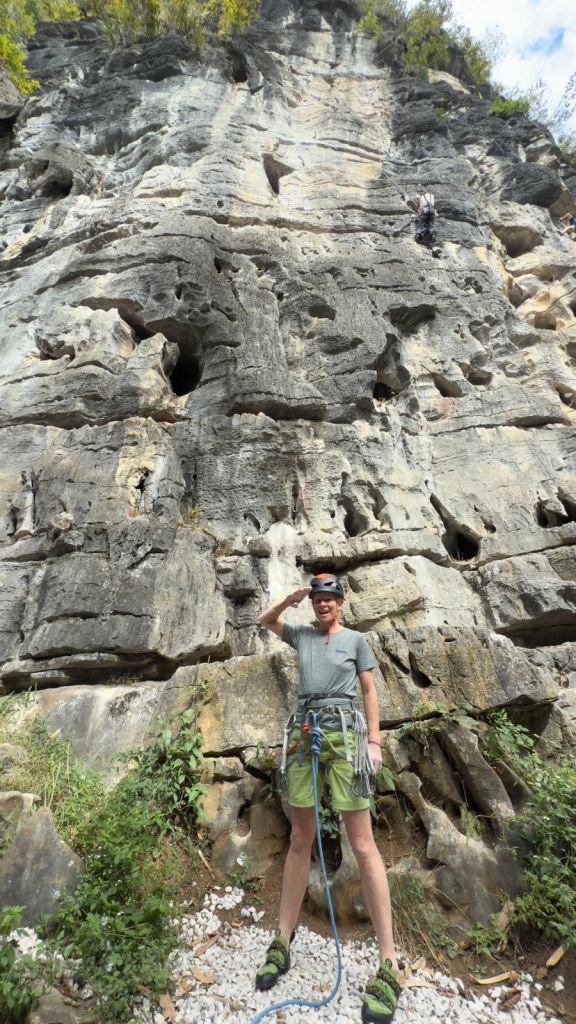
I am pleased to report that Team OAP smashed a 6a+ today
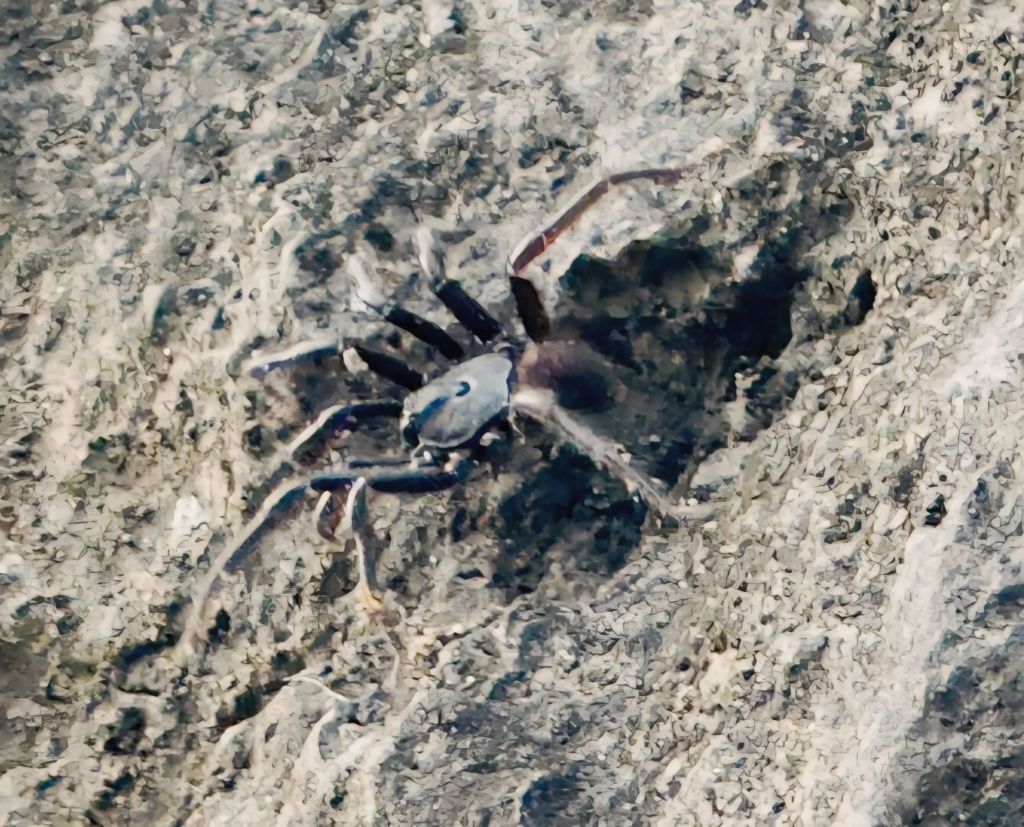
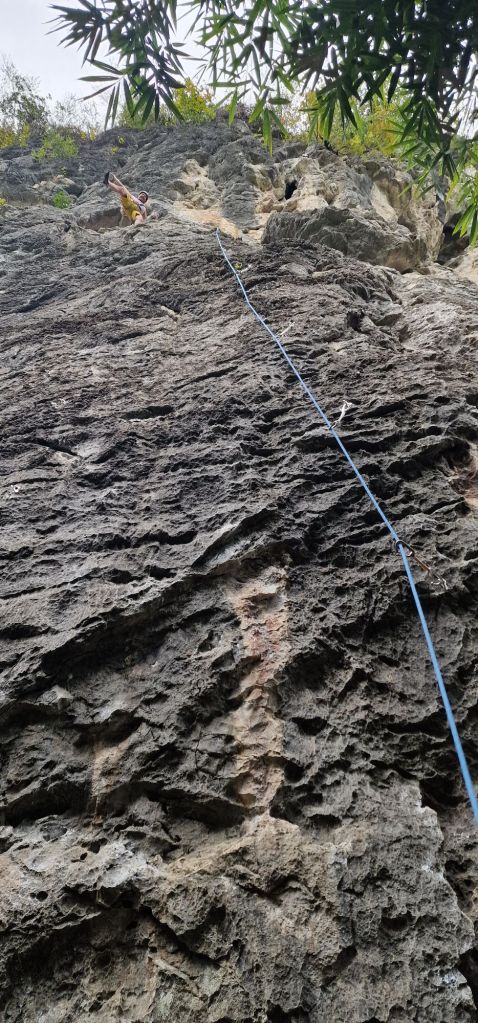
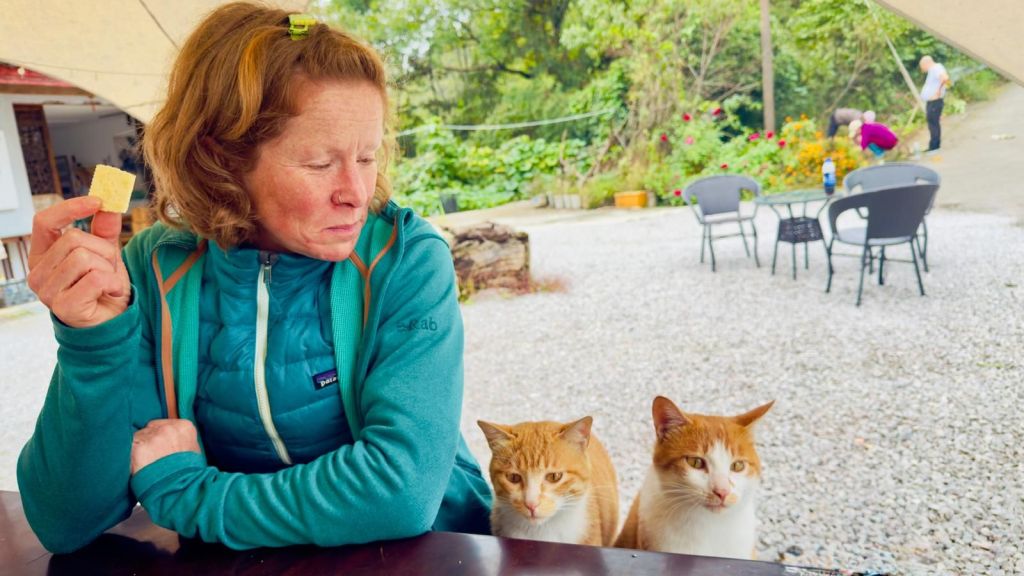
Recent excitement has included discovering a veritable menagerie at the crag; centipedes, mice, rats, hornets, and this beastie sitting on the very hold I wanted to use.
Makes you think twice about shoving your fingers in cracks, to be sure
Driving has presented its own set of challenges, for example, crossing an intersection diagonally, where 18 separate lanes of traffic meet, with no traffic lights or right of way. Similarly, the ‘bike lane’ seems to exist for people travelling in both directions, including cars, plus animals, scooters, vendors, and lost tourists. We think of it as survival of the fittest. Still alive, for now.
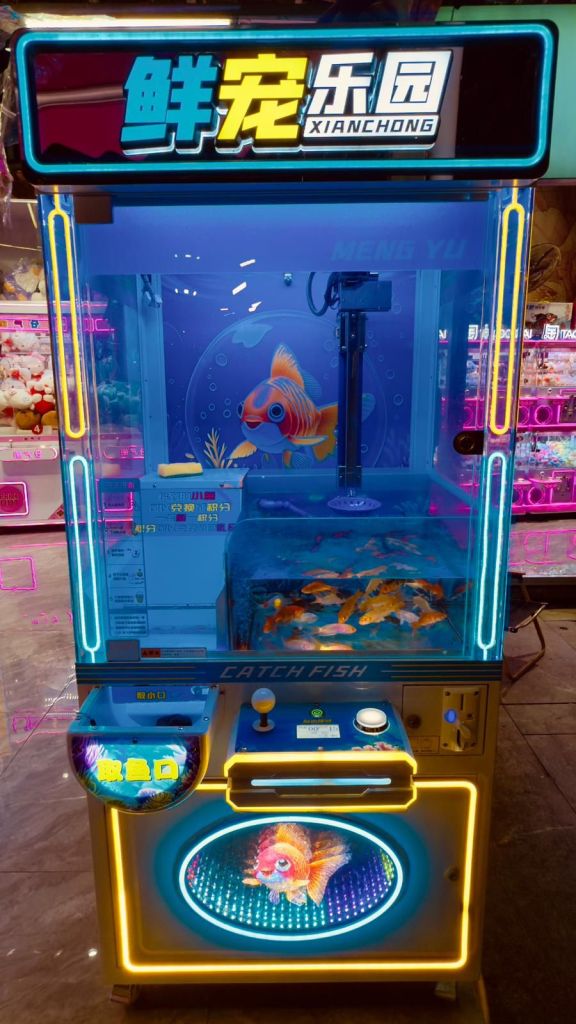
You can be the proud owner of an actual fish. Just grab it and goThese street art structures double up a great playground for childrenA sweet potato McFlurry. Weird.We are now travelling to the Philippines via jetpack 💥
The climbing in Yangshou has been a real treat. There is something for everyone here; overhanging roof thuggery, delicate crimpy wall climbing, huge multipitch adventures, and friendly single pitch scenes. The rock varies wildly from polished and highly-trafficked orange limestone to sharper and esoteric grey limestone – and everything in between.
When 5b becomes 8b: some more popular routes are shinier than a Stoney Middleton skating rink
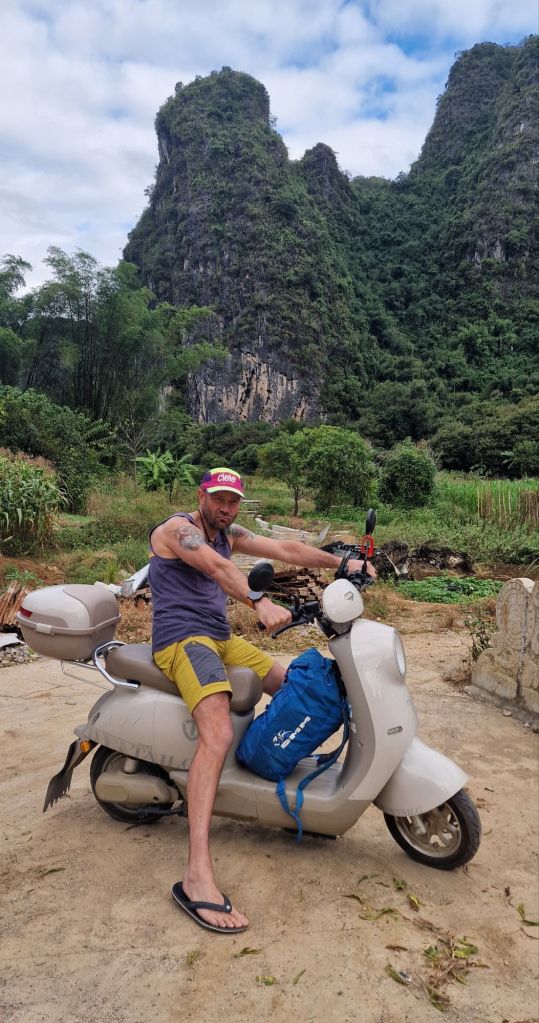
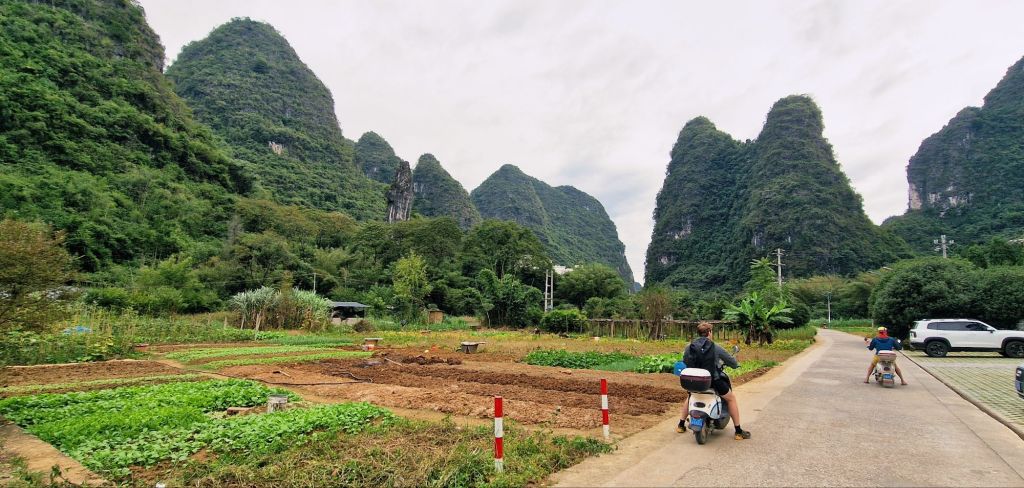
October and November are when the action really happens due to the stable sunny climate. All crags are accessible by scooter, which you can park anywhere you fancy – no one is judging. In fact, no one really cares.
Here he comes!EXTREME scenes
The climbing community is the friendliest we have ever experienced (including the impossibly huge flying insects and hornet population); everyone is happy to share knowledge and help out, which reflects our experience of the Chinese in general. Minor scooter collisions are met with chuckles and friendly concern, and there is no preoccupation with rules or trespassing or which way locals decide to drive up and down the dual carriageway. Simitaneously hair-raising and carefree.
Yesterday we erroneously ended up on a building site and while trying to reverse my bike off a large mud bank, I twisted the GO FASTER handle and my bike shot forward and got some air like a stunt in the A-Team. The foreman shrugged his shoulders and helped us retrieve it from the ditch with a smile on his face. All in a day’s work.
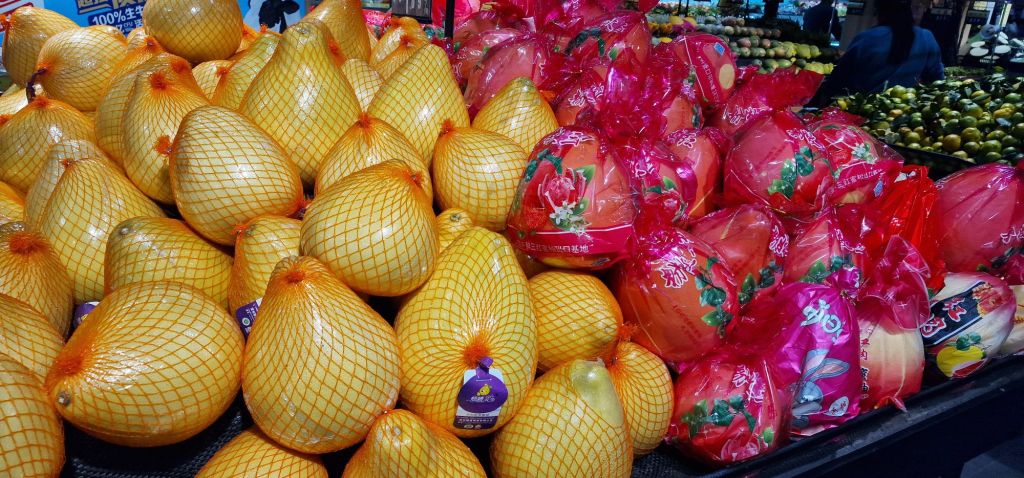
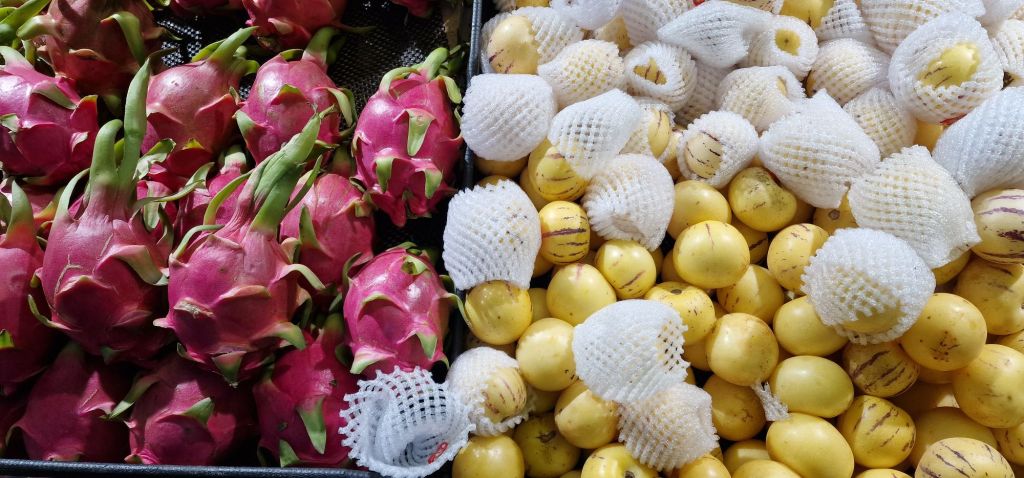
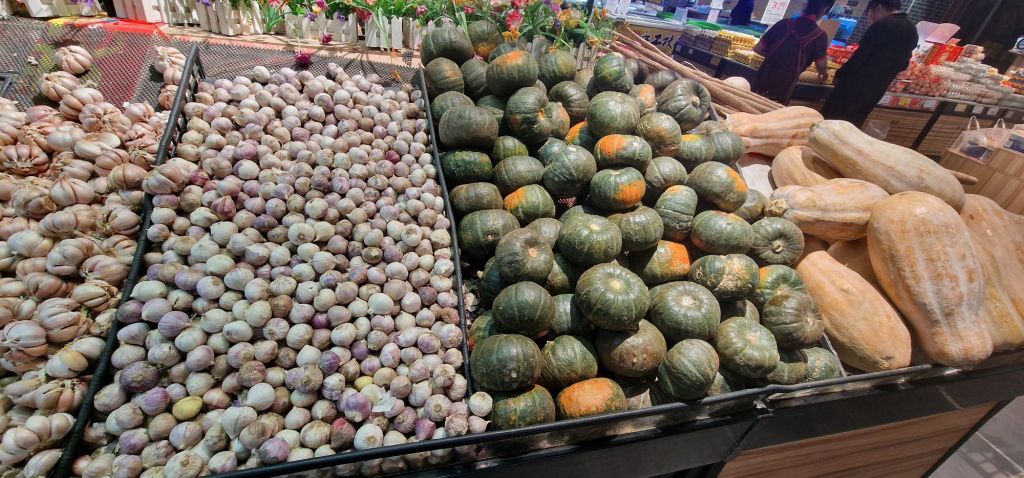
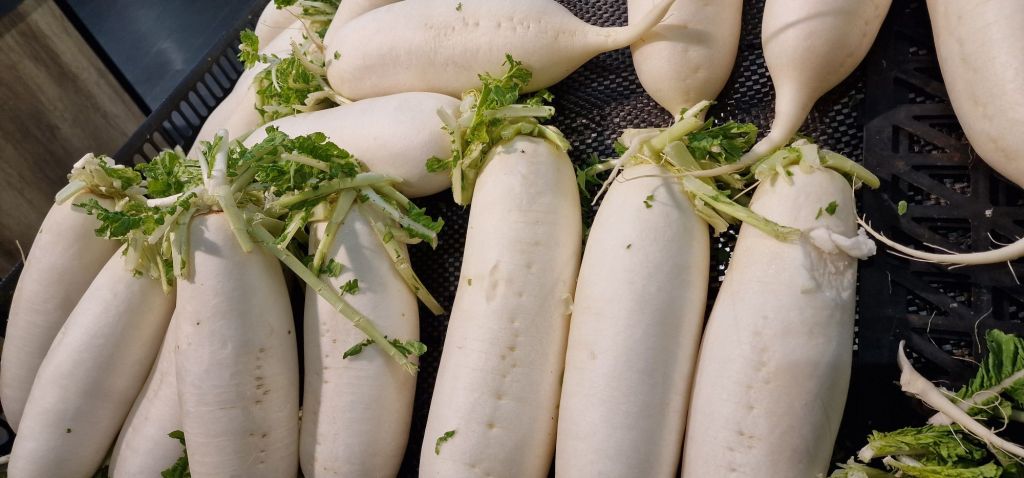
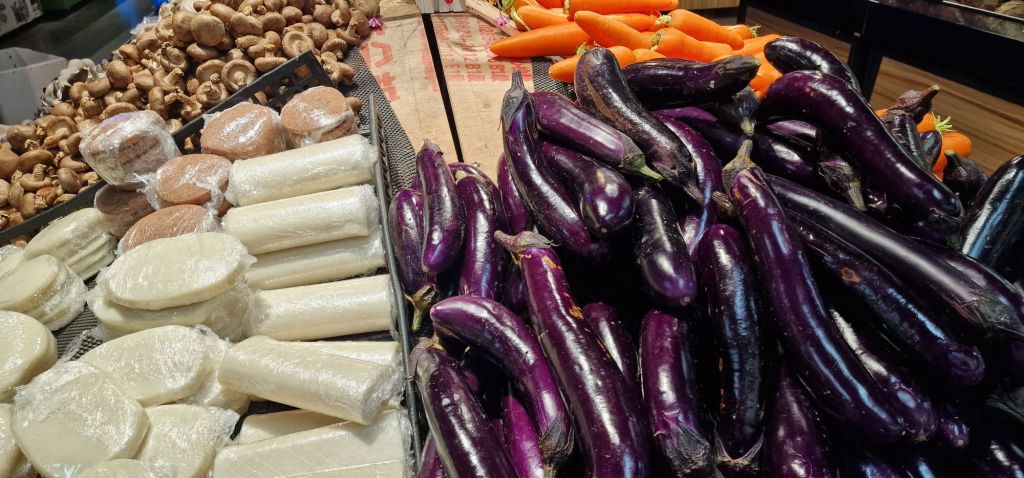
Shopping for groceries is an adventure in itself. The fruit and vegetable section is like entering an alien planet.
Pomelo – like a large grapefruitPossibly persimmon or loquat on the left and longan on the rightDragonfruit and pepino melonOther things, including a Chinese pumpkin and normal pumpkin Spikey things, maybe a durian?We think a radishFreaky looking aubergines 🍆 (💦)
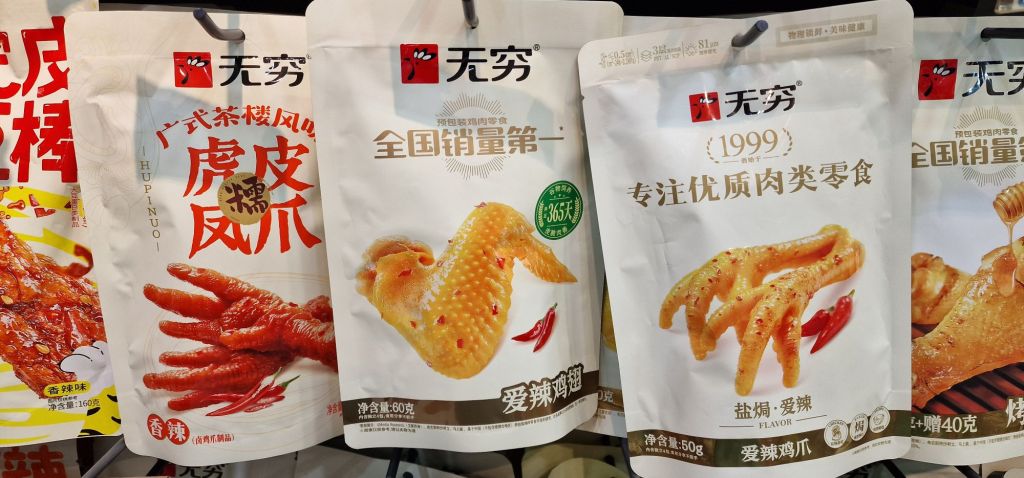
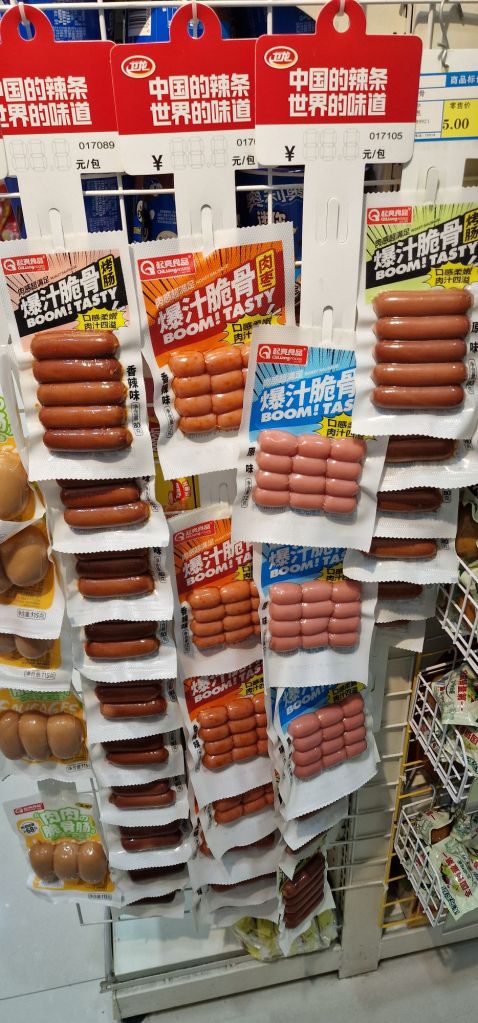
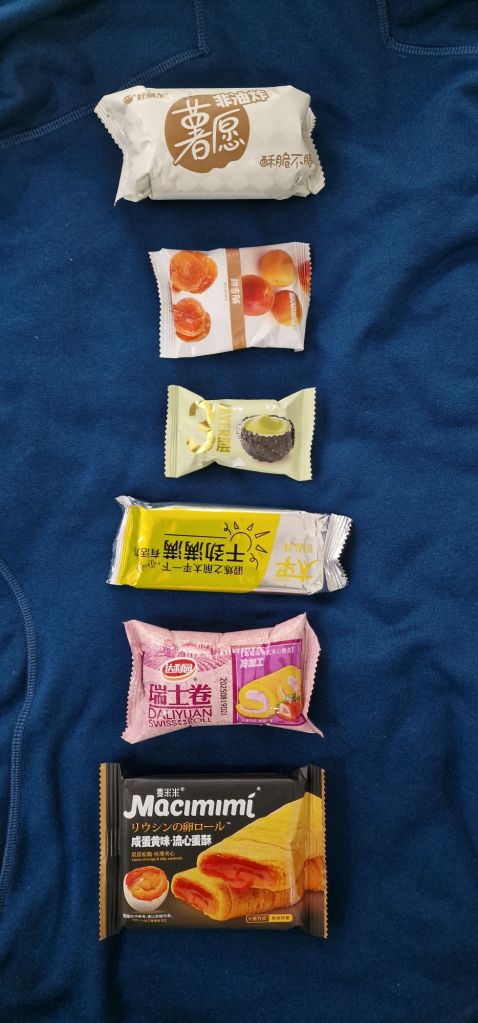
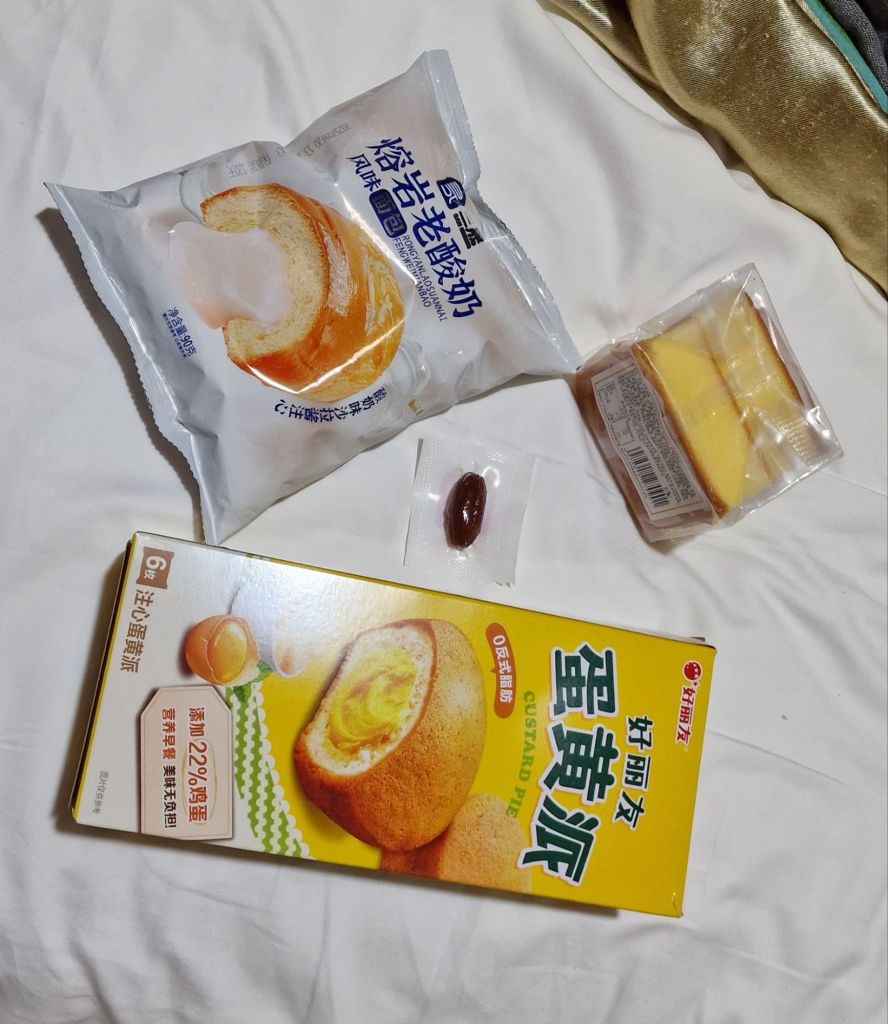
Similarly, finding tasty and eco-friendly crag treats is quite a task, and we have introduced the concept of a ‘supermarket decision tree’ to whittle down decent edible options. Sweet or savoury? Offal or meat? Processed or natural? Will it detain us in the toilet all night?
As you may decipher from the below selection, most portable snackage would survive a nuclear holocaust.
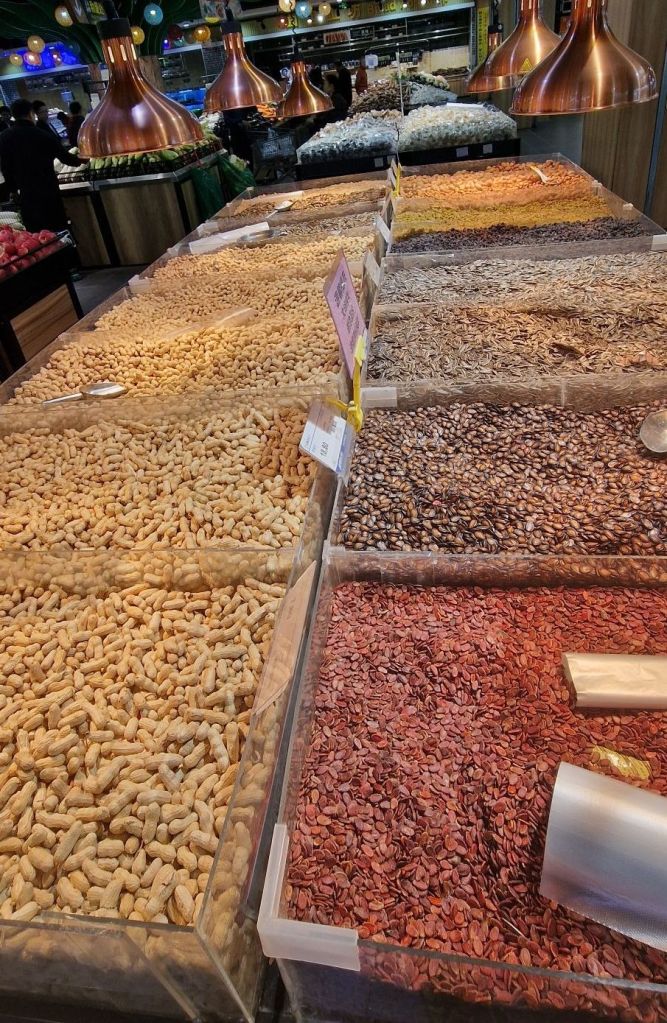
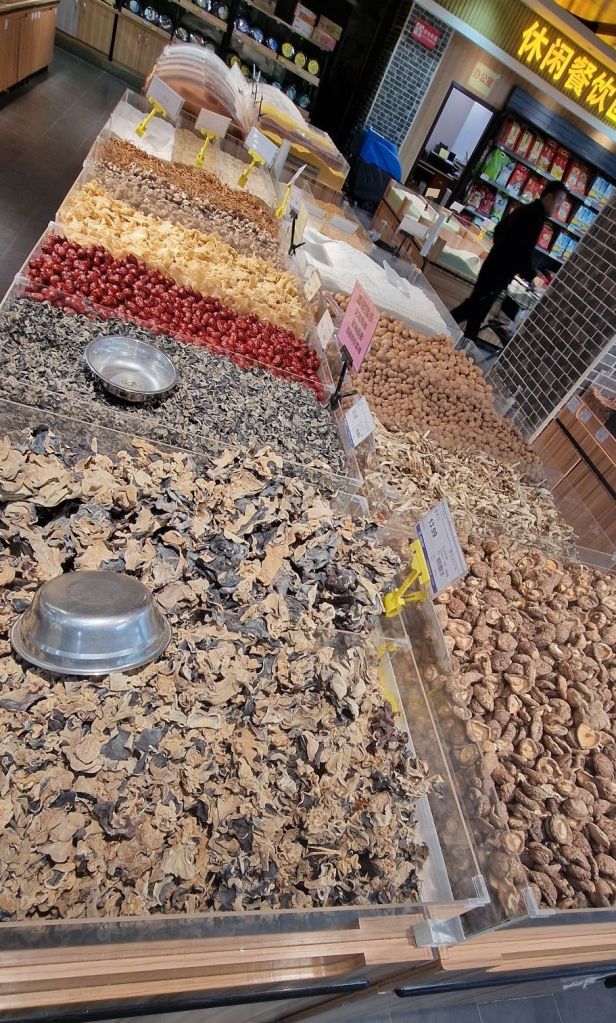
Supermarkets are a real contradiction; on one hand, there are mountains of rices, nuts, grains, pulses and dried mushrooms which consumers weigh themselves with very little plastic wastage.
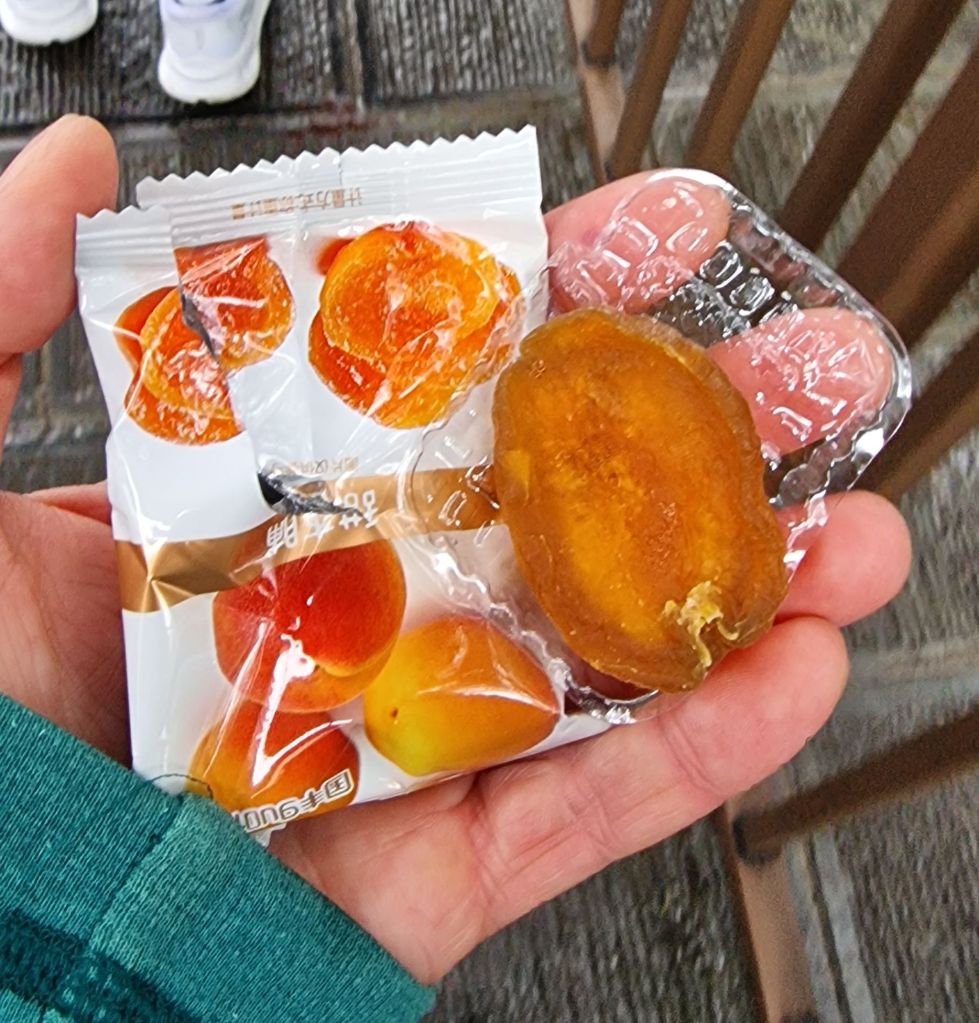
On the other hand, the aisles are packed with instant noodles, which contain at least 5 smaller plastic sachets to add to the mix, and prepacked snacks are the least eco-friendly commodity going.
When half an apricot comes presented with its own little tray, individually wrapped, and packaged with 20 others in a plastic bag
To comprehend how China achieves a carbon emmissions output per capita measuring a third less than that of the EU, despite apparently burning the globe with its single-use synthetic clothing and tsunami of plastic toys and gifts, it took some research. More on that another day.
For now, we are off to enjoy being amongst the locals, who, young and old, dance and sing in the street like no one is watching.
We woke up with serious climbing-related aches and pains, which were definitely nothing to do with middle age or rice wine. So, instead of cragging, we went on an adventure on our scooters to find out more about the geography of the area.
Yangshuo’s extraordinary hills were made in much the same way as the Peak District was created. The land was once covered by a sea, and the skeletons of dead sea creatures created a calcium-rich deposit on the seabed, which built up over millions of years and became limestone.
The uplift of a seabed and the lowering of the water table exposed the limestone. Over time, rainwater and rivers, slightly acidic, dissolved the rock, creating the area’s signature topography.
Jem trying to get his knee downMoon Hill, which used to be the main climbing event in Yangshuo. It was closed down to climbers due to falling rocks
Our scooters were fantastic steeds, with a top speed of a whopping 15mph. Yesterday proved almost too much excitement, so I opted for a helmet today, and my kevlar La Sportiva trousers. It turns out that we are pretty nifty on our bikes except when going forwards instead of backwards and very nearly toppling over an entire line of bikes like a set of dominoes.
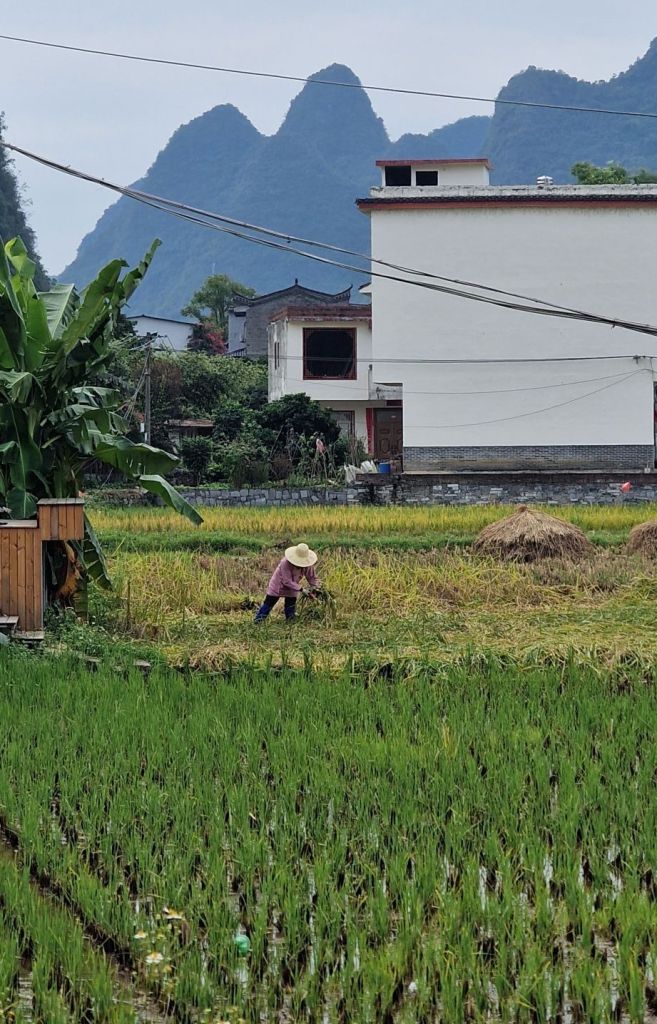
Last night, we sampled some local vintage rice wine. It tasted fairly innucuous but was like rocket fuel, and very quickly, we were almost fluent in Chinese. It seemed timely then that today we witnessed the birthplace of the wine; Yangshuo’s paddy fields.
Nom
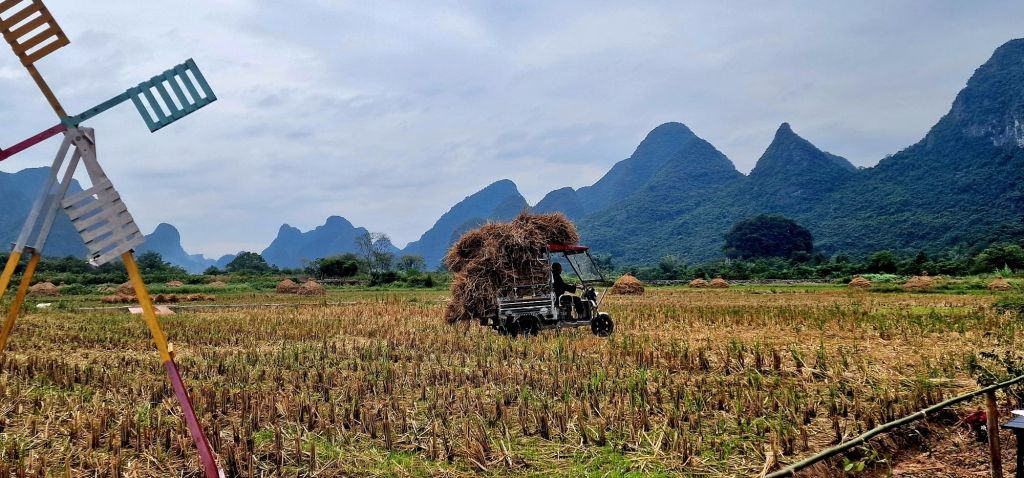
China is the largest rice producer in the world, with an output of an estimated 200 million metric tonnes of rice per year, much of it from this region. Rice in Yangshuo is grown in irrigated paddy fields, where tracts of land are flooded with water and carefully managed to keep the plants submerged for most of the growing season. The area is also known for agricultural products like maize, wheat, soy bean, and sweet potatoes.
Drying the harvested rice
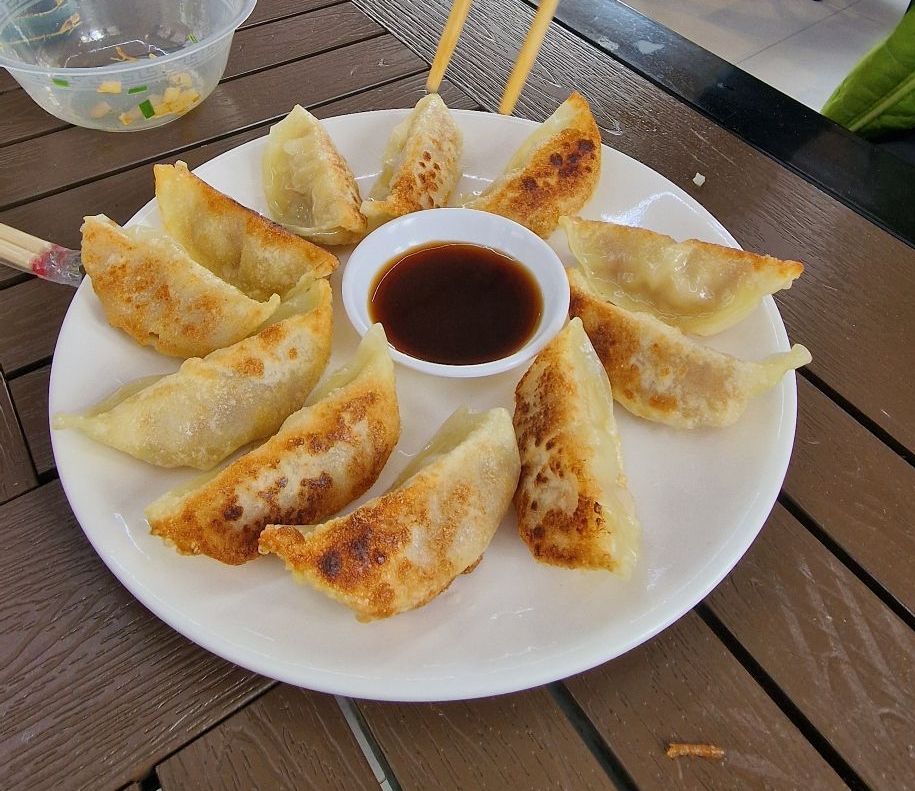
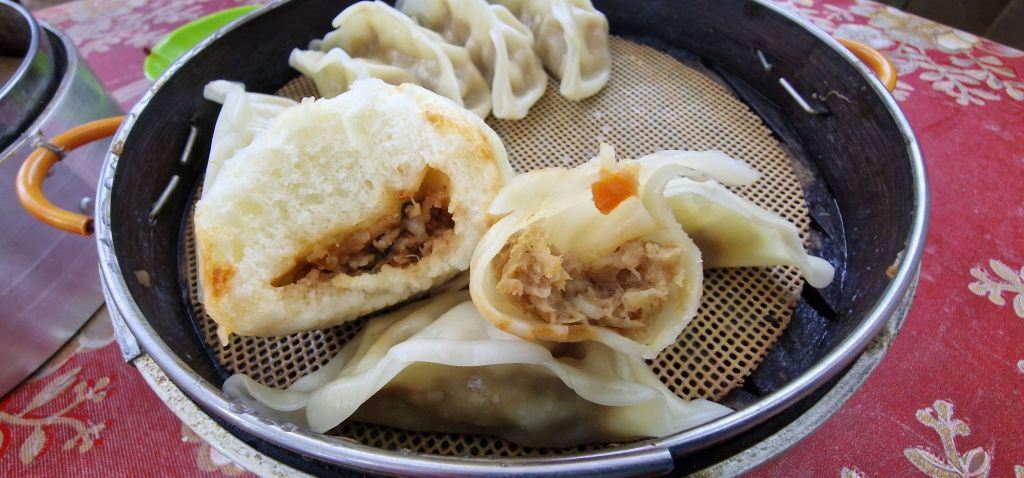
The day was filled with such highs and lows. The high: presenting the snack crown to the fried jiaozi, which blows the competition out of the water.
Other highs:
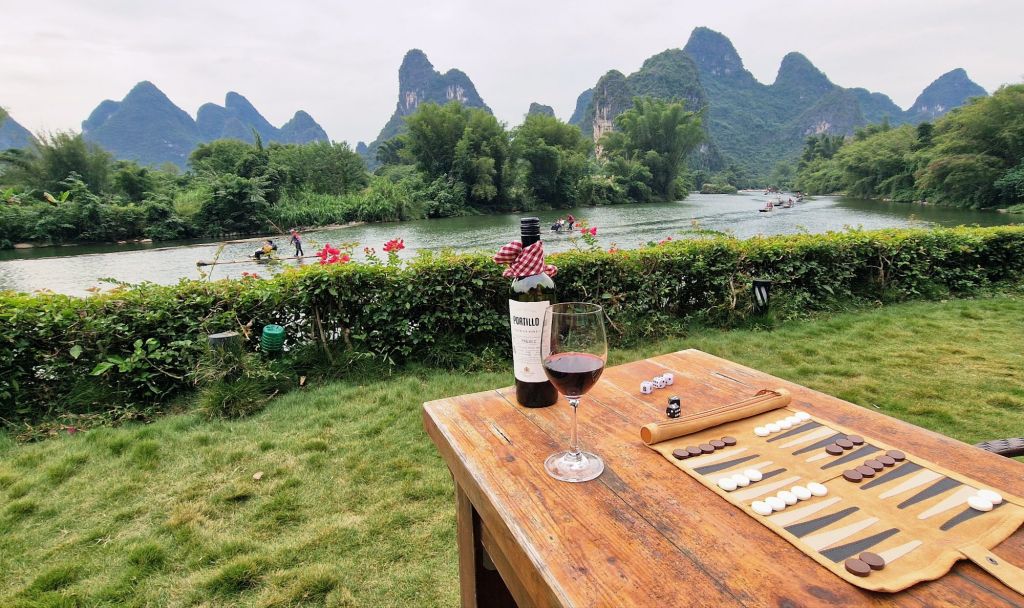
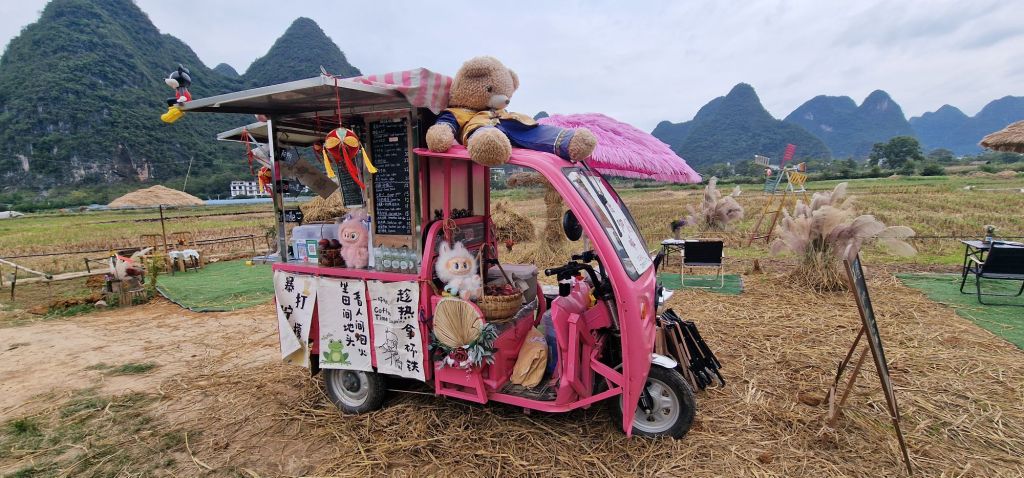
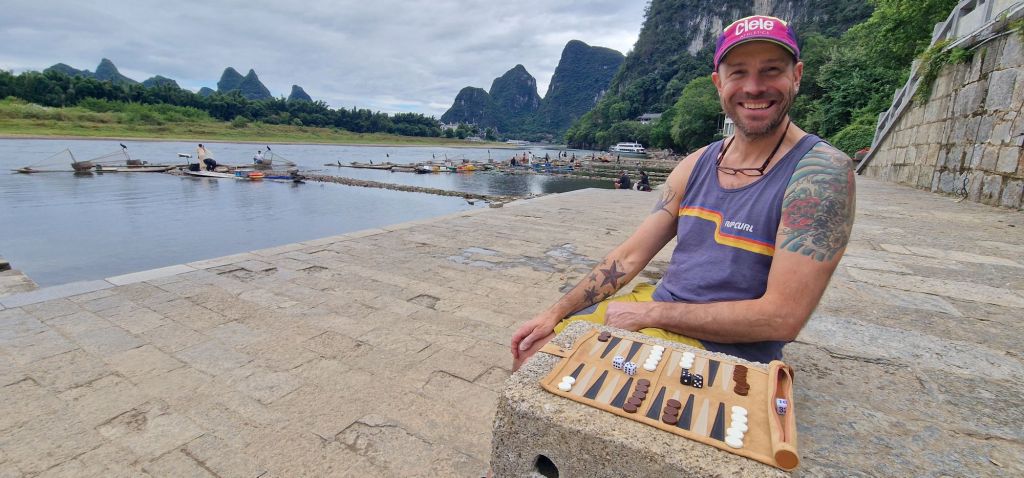
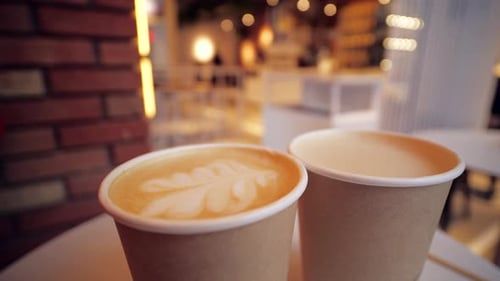
Finding the most scenic backgammon spot known to manDid someone say coffee? For £2?
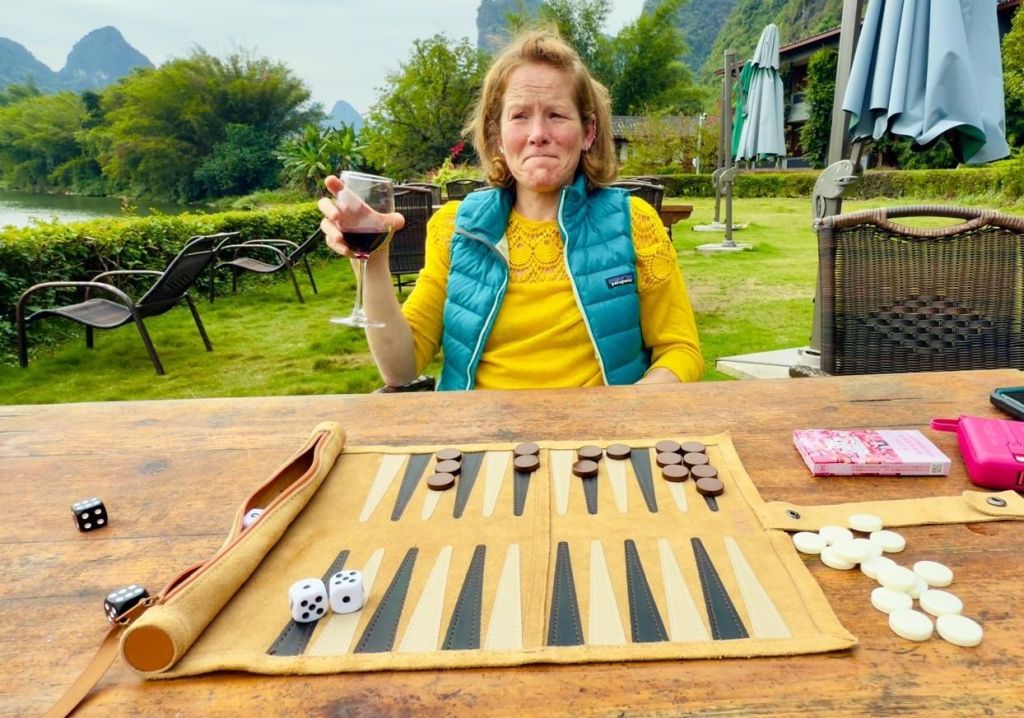
Such highs must be balanced with deep sorrowful lows, and today was surely the saddest when Jem backgammoned me. Those who play the game will know that I must hang my head in shame until my next victory.
Properly gammonedThe celebrations lasted for some time
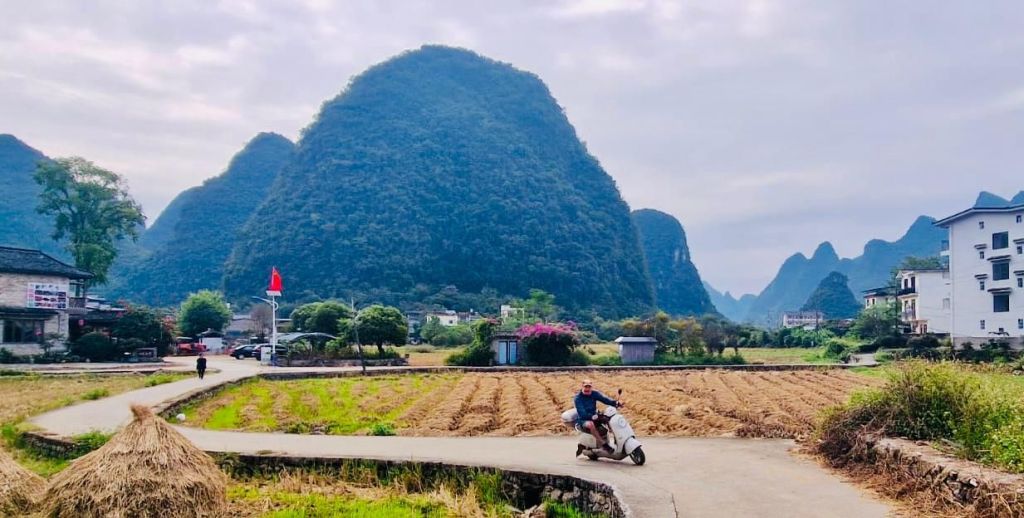
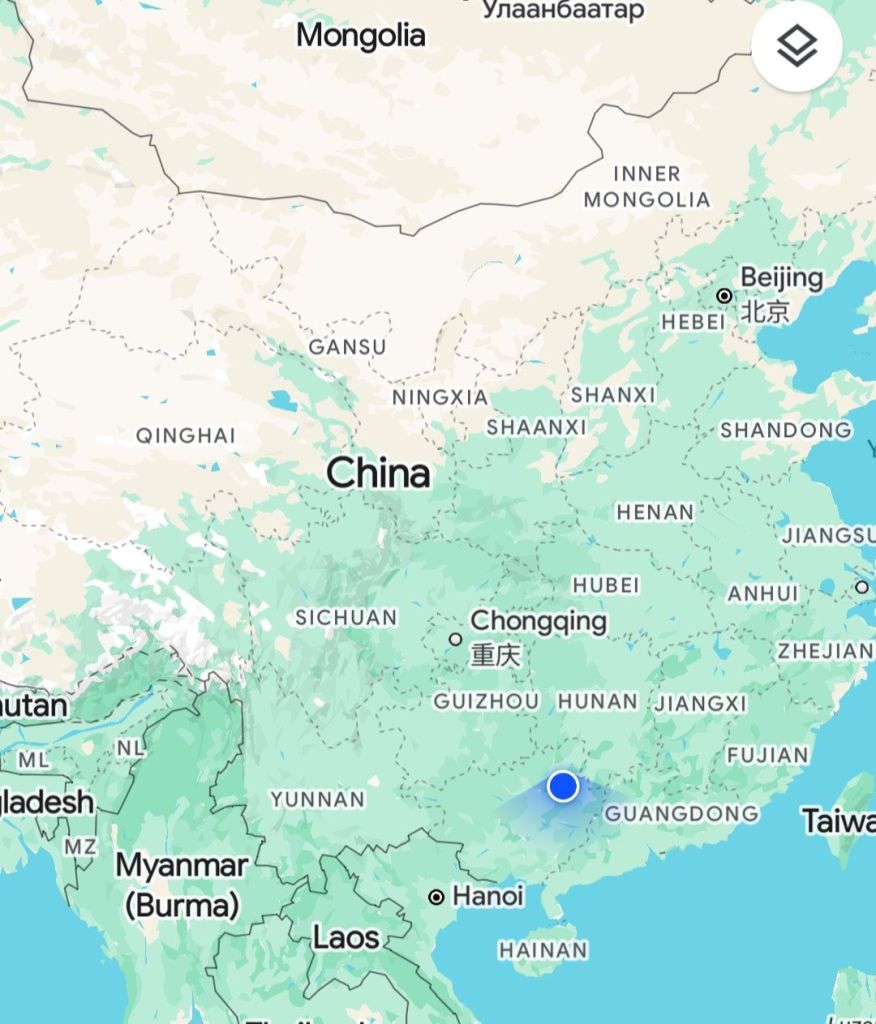
Yangshuo is China’s premiere rock climbing destination; a region gifted with a multitude of limestone cliffs that offer climbing at all grades. The region is off the tourist route for Westerners and more a holiday destination for the Chinese and also European dirtbag crag monkeys.
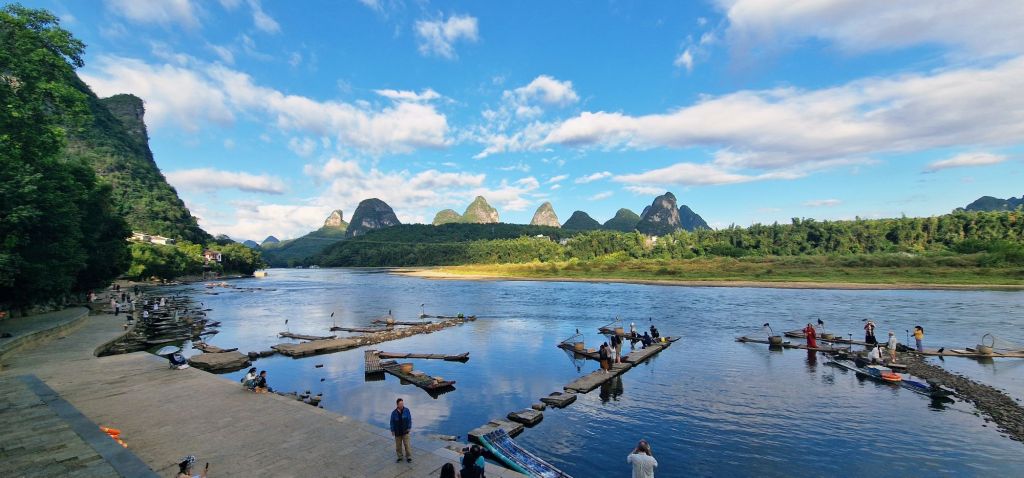
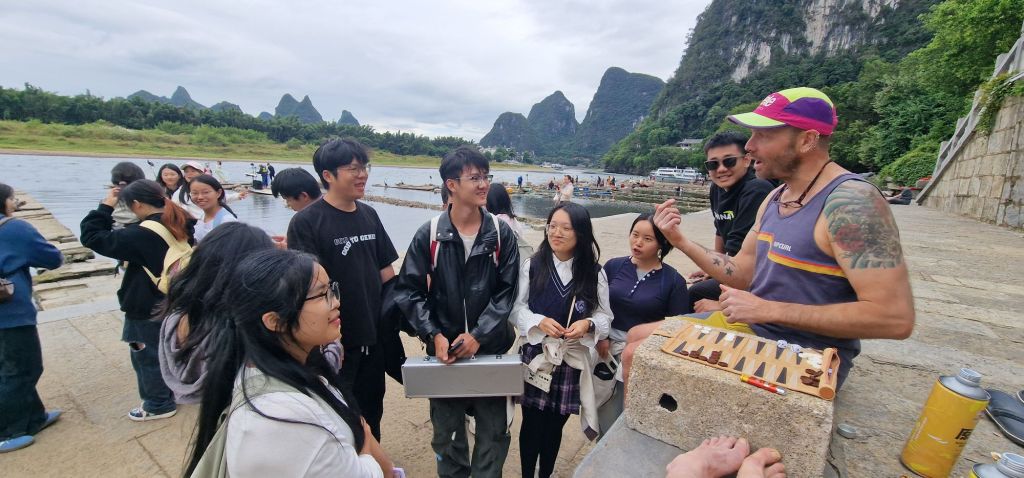
As we headed down towards the tropics, the weather stabilised, with sunshine forecast everyday 🌞 On arrival, our host at the Climbers Inn, Lilly, recommended we take a walk down to the river with a beer to admire the jaw-dropping views. It took minutes before we were mobbed by students, rapt as Jem explained the rules of backgammon.
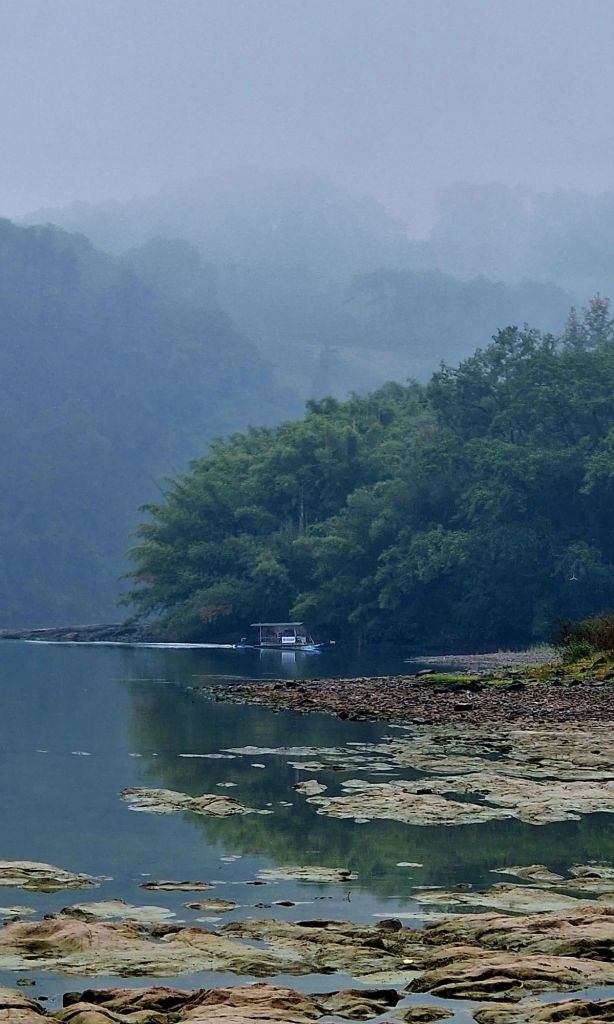
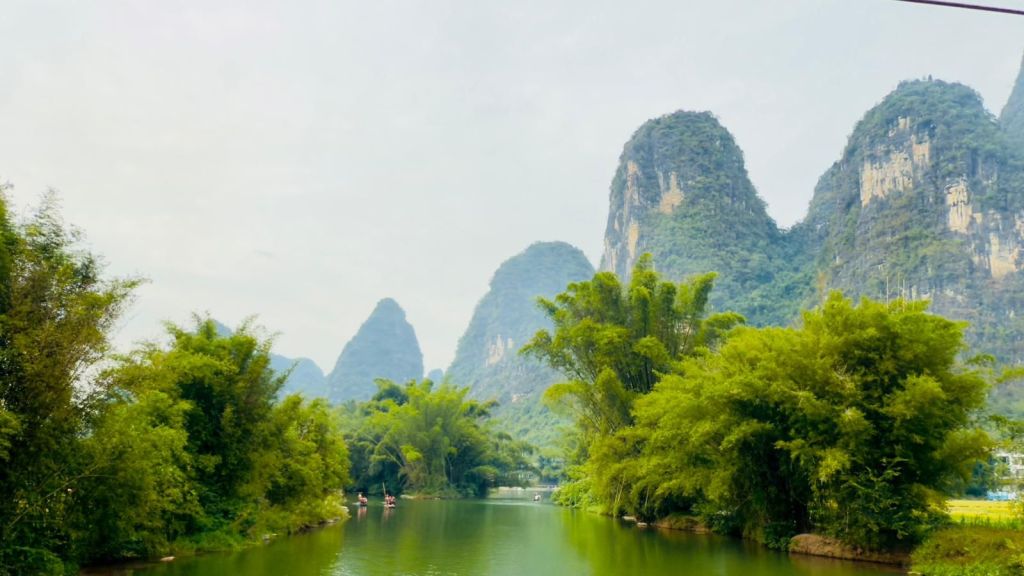
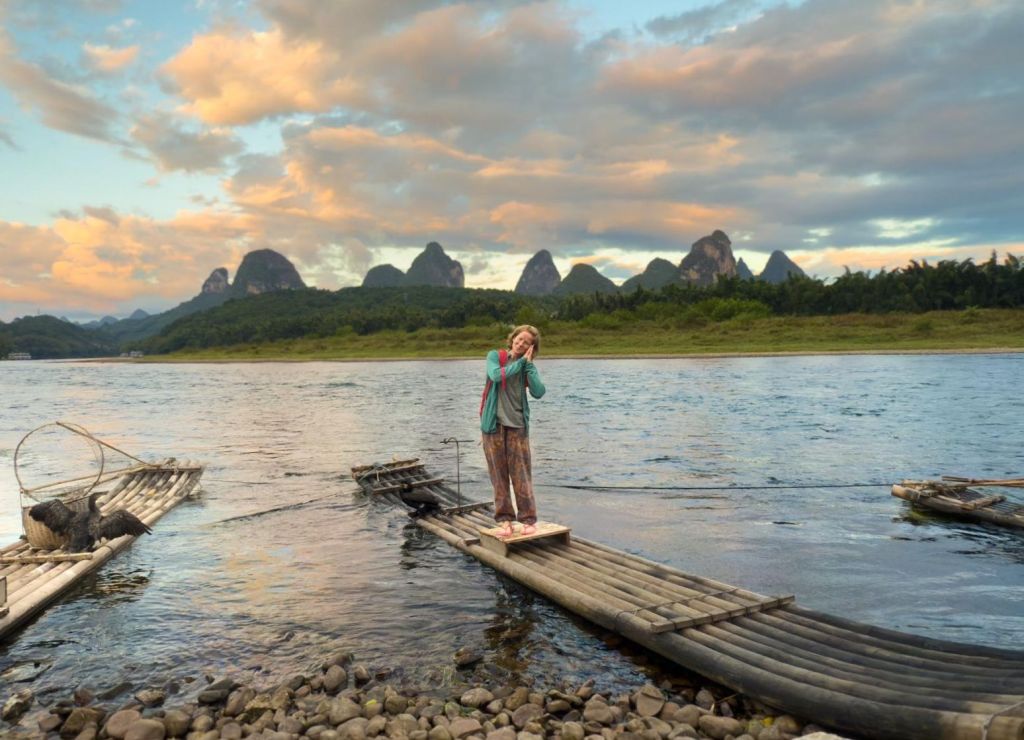
The Lijiang River is exceptionally warm, and pleasure boats regularly chug past, flanked by bamboo outcrops and peculiar dramatic peaks.
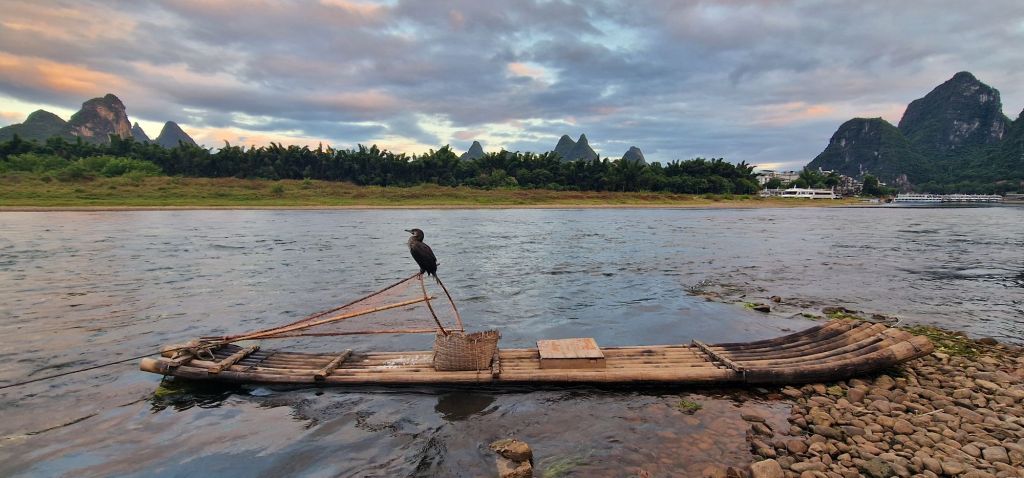
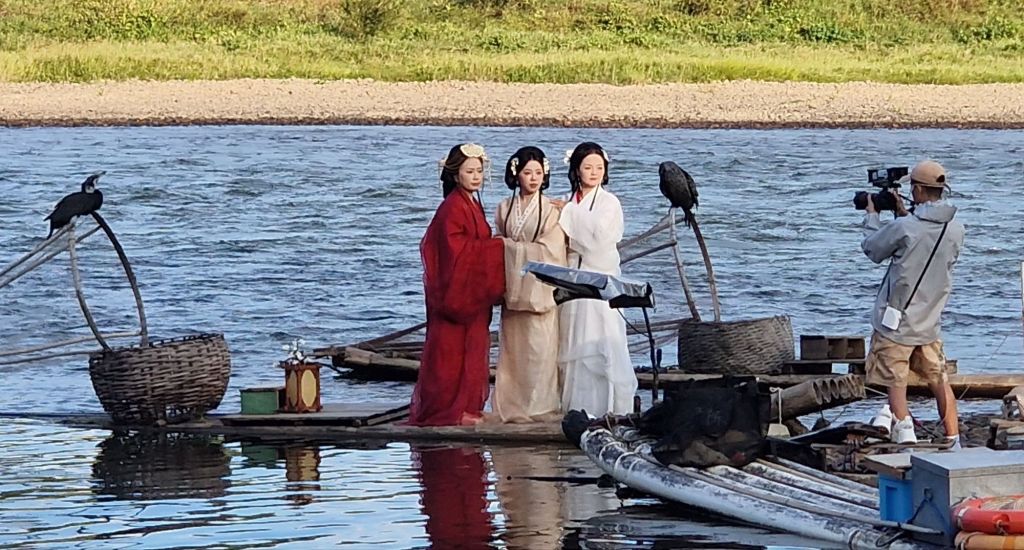
There is also a population of courmarants that reside in the region. Since the 9th century, fishermen in southern China (and widely in Japan) have used trained courmarants to catch fish. To control the birds, the fishermen tie a loose snare near the base of the bird’s throat to prevent it from swallowing larger fish. When it has caught a fish, the fisherman brings the bird back to the boat to regurgitate its prey.
A courmarant on an old-fashioned fishing vessel
Though cormorant fishing was once a successful enterprise, its primary use today is to serve the tourism industry, and they still demonstrate this technique in Guilin, about 1.5 hours north from here. Apparently, this traditional fishing technique was even used in France and England for a short period.
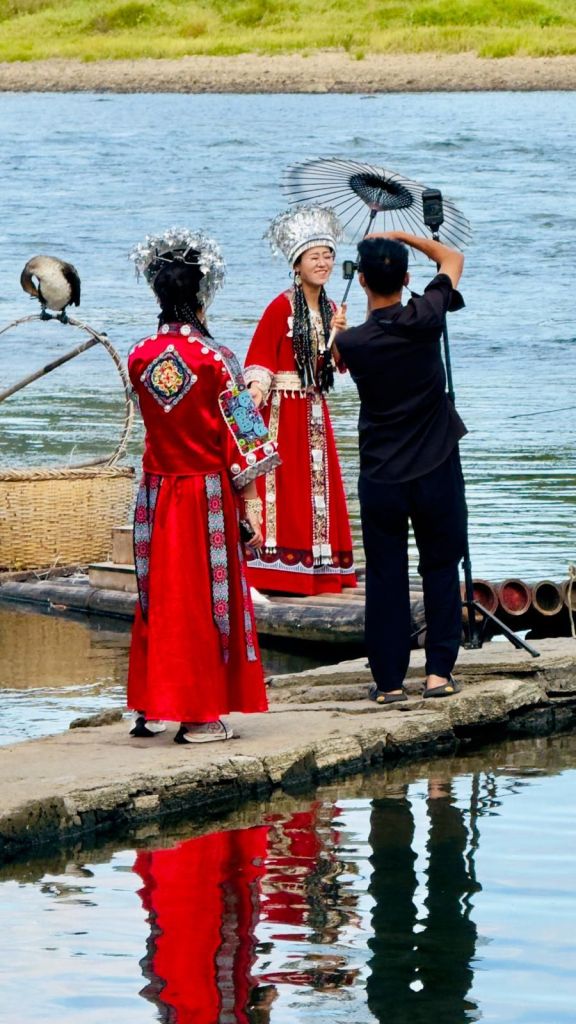
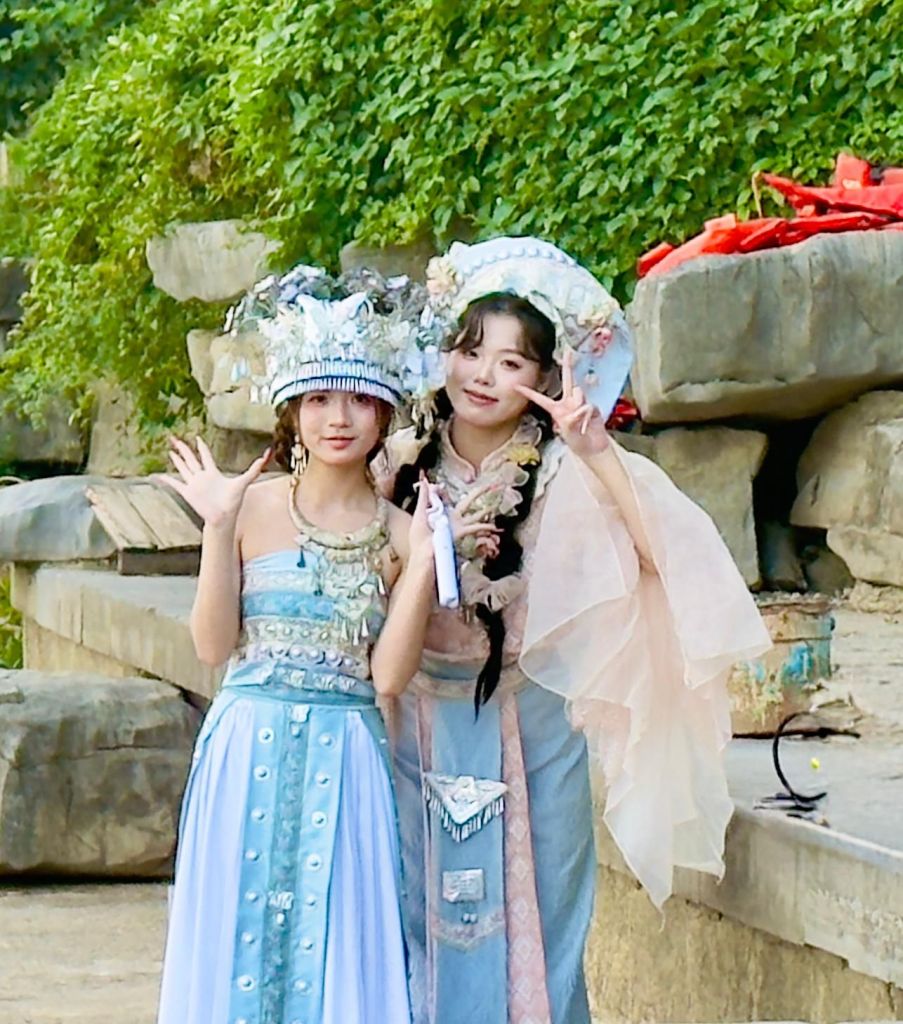
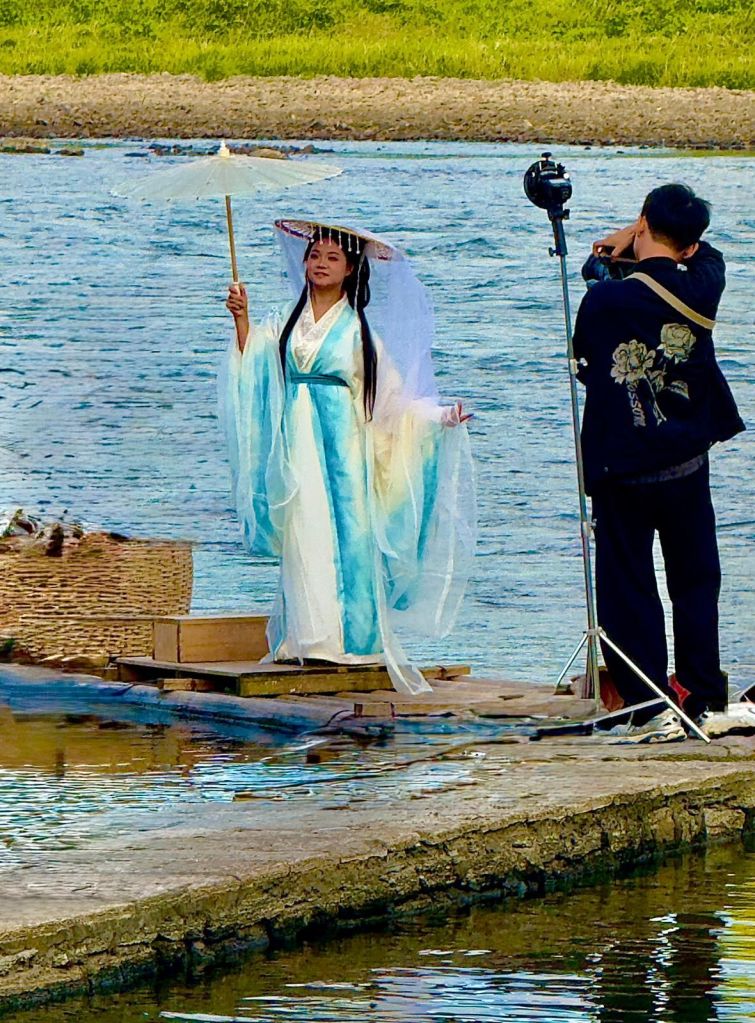
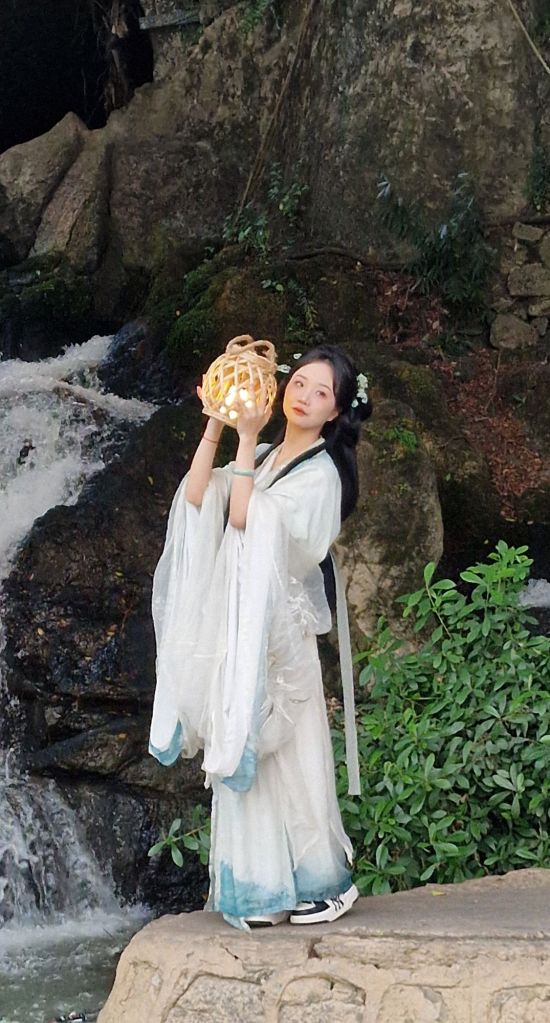
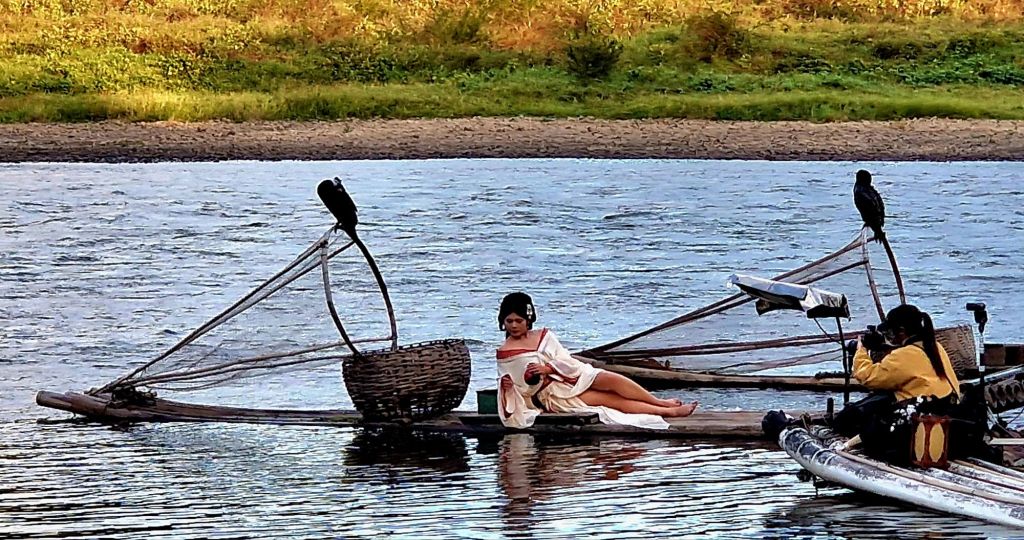
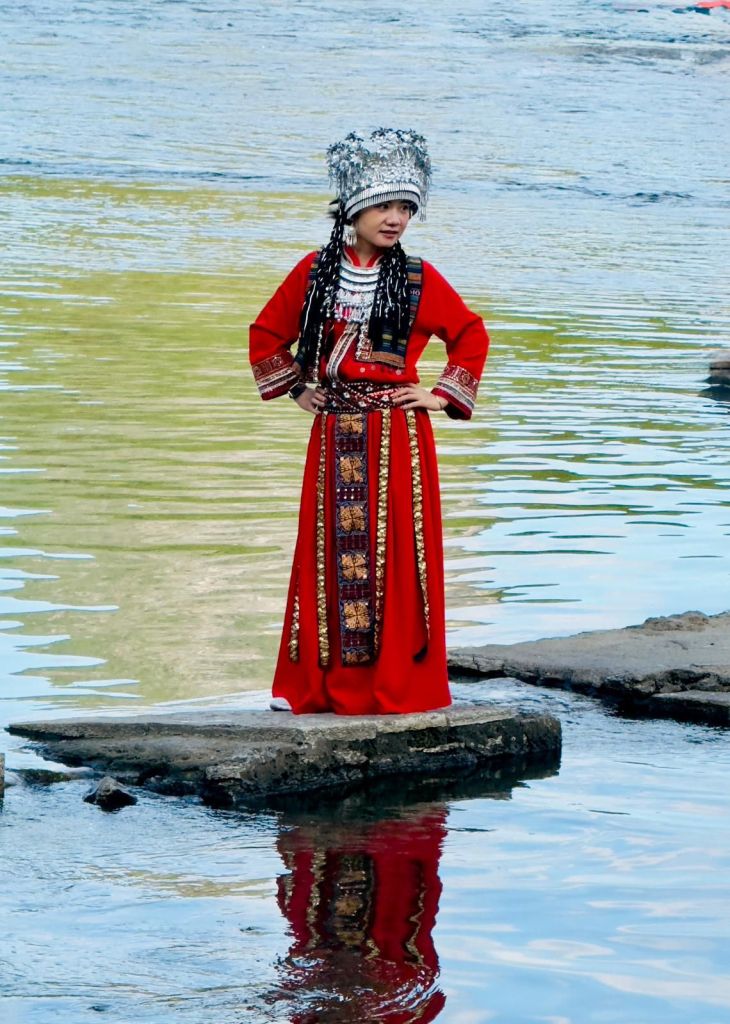
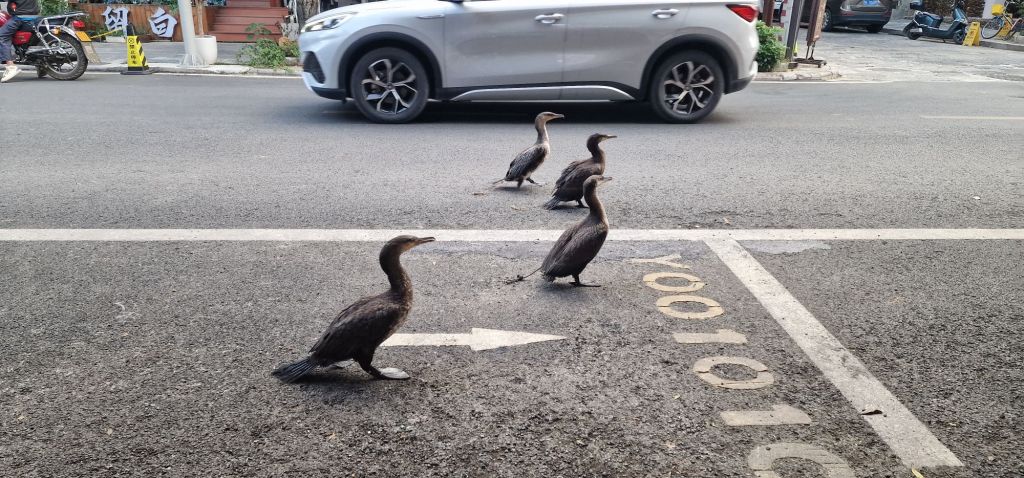
Today, the courmarants are the background stars of the local trade; photo shoots of young girls in traditional dress who flock to the river with an army of professional photographers. At first, we couldn’t quite believe how compliant the birds were. Until we discovered they were all tethered to the boats for aesthetic reasons.
We got told off for not crossing their palms with silver 😂 these birds need feeding yo
China is really quite barbaric in terms of animal welfare. We have seen many poor turtles, hamsters, chicks, and terrapins amongst others shoved in small boxes mostly upside down, with the poor sods doing everything in their power to escape. It was some relief to see the courmarants were released at night and didn’t have to balance on their stands 24 hours a day.
Despite their apparent mistreatment, we were sure these courmarants were on their way to work yesterday with no encouragement
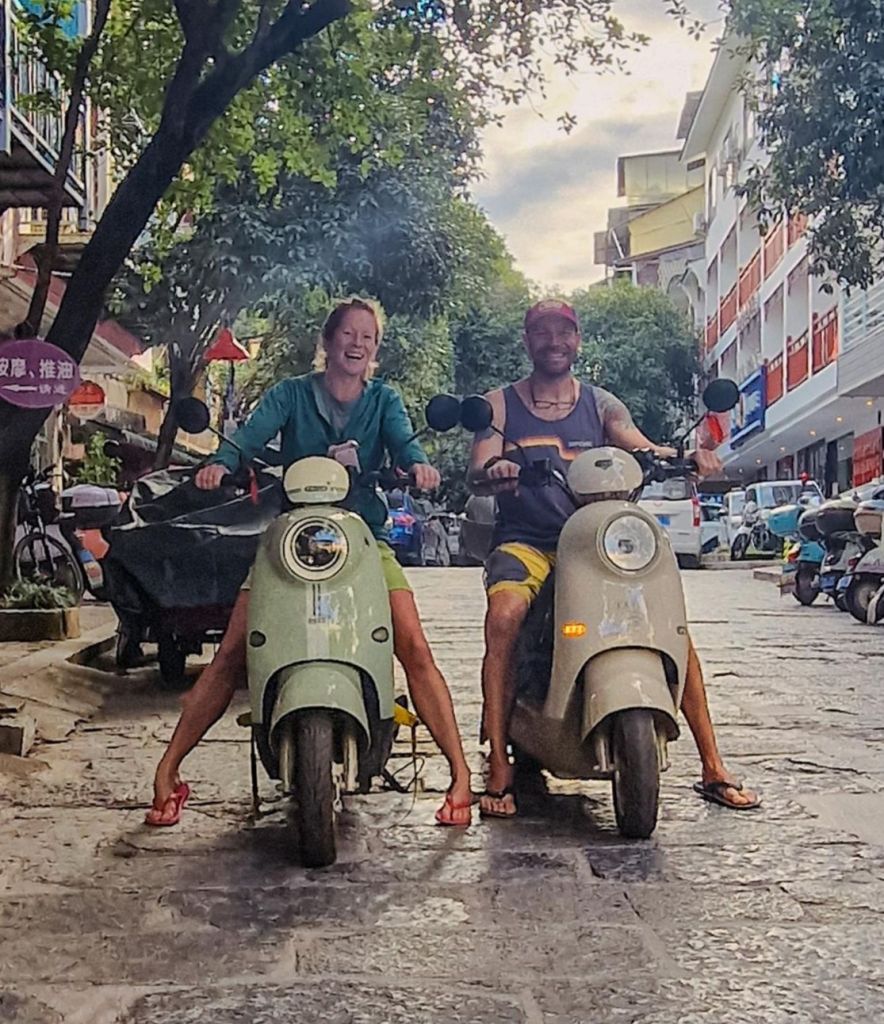
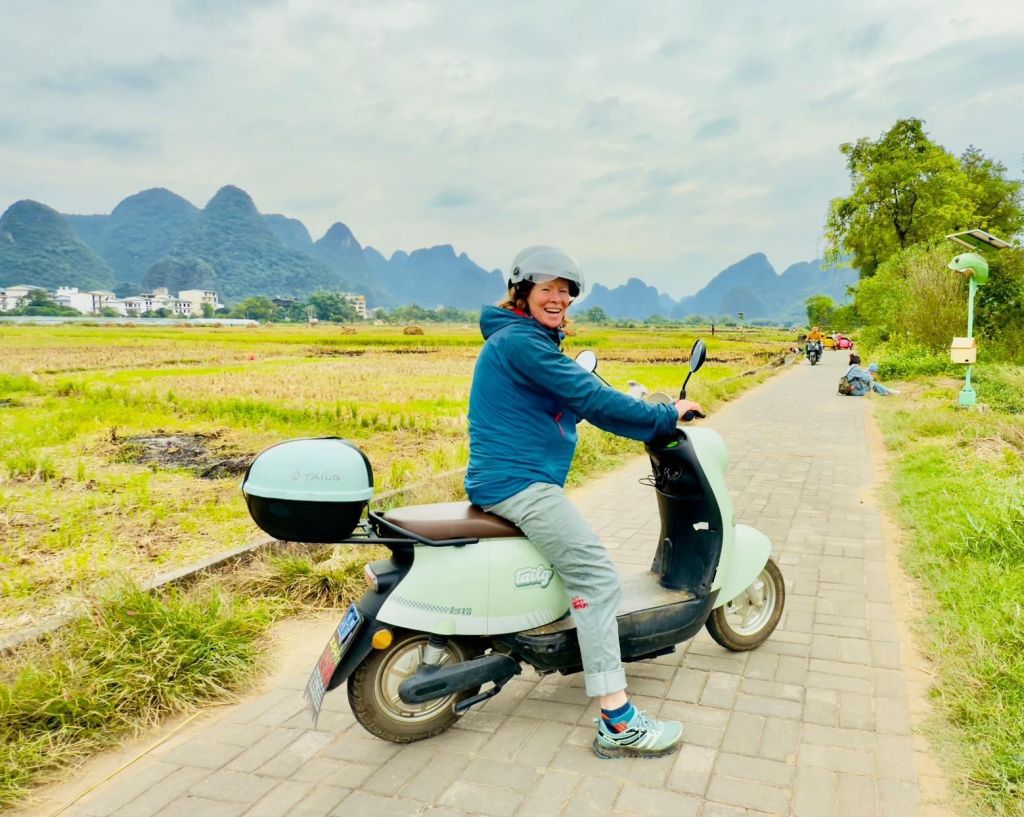
Our host Lilly is one of those people who knows everyone and can get hold of anything. We got ourselves some dirt cheap electric scooters, £3 each a day, and it was climb time.
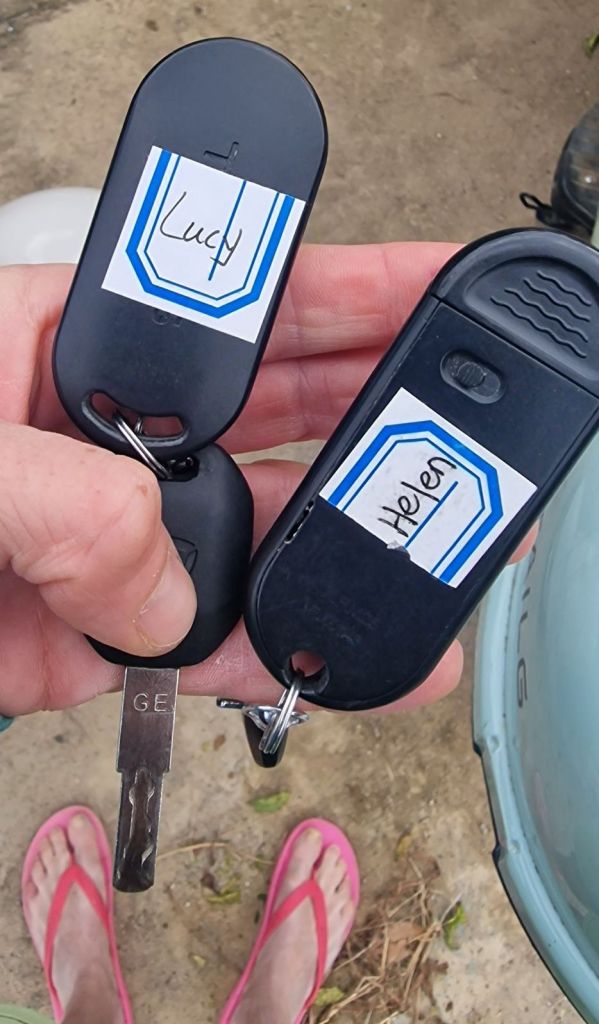
In a strange twist of fate, our scooters were named Lucy and Helen. It was meant to be!
Having not worn a harness for fun for quite some time, we started out on some very low grades. Despite this, it took some kind of herculean effort and much grunting to get to the top of route one, and we wondered if spending three years running had withered our puny pistons into oblivion. We had our pathetic asses handed to us on a plate.
Unwitting victim ready for battle, sir
We later found out that Yangshuo is sandbag heaven and not to be too ashamed. Having checked thecrag.com, we discovered a hilarious list of routes deemed vastly undergraded, and we happened to have chosen them all. Hurrah! Day two provided more success…. onwards and upwards.
Yangshuo is really superb. We have met so many people and have spent the day today climbing with new friends. The town is crazy (even more so than the Muslim Quarter in Xi’An), and there are even proper clubs where people go dancing! So we cancelled all of our plans until November 4th and decided to extend our stay here until we fly to the Philippines via Shanghai. More climbing adventures coming up soon.
It has taken almost two weeks to not feel overwhelmed by the alien systems here; to not get shafted by inconsistent prices including the inevitable ‘tourist tax’, to consider the incessant surveillance a comfort rather than a threat, and to take advantage of the order and efficiency when there is so much chaos.
Firstly, the cost of living has been something of a rollercoaster. In a country where a hearty bowl of noodles away from the tourist trail costs about £1.20 and a tray of bao buns costs 50p, it is an eye-watering event to order two flat whites for the princely sum of £7.50.
Real coffee is considered an artisan product. So we purchased a box of 80 instant sachets for £9
This week, after three ‘organic’ beers each and a bit of food, we were charged more than it cost to spend two nights in our hotel; £22. Undoubtedly, they had our tourist pants down, but alcohol is expensive here with beer and wine very similar to UK prices. Outraged, Jem had to remind me that it equalled the cost of four beers in the UK and to suck it up.
Roast potatoes: these can vary from a few pence to £3. Remember to ask for the price first 🤯
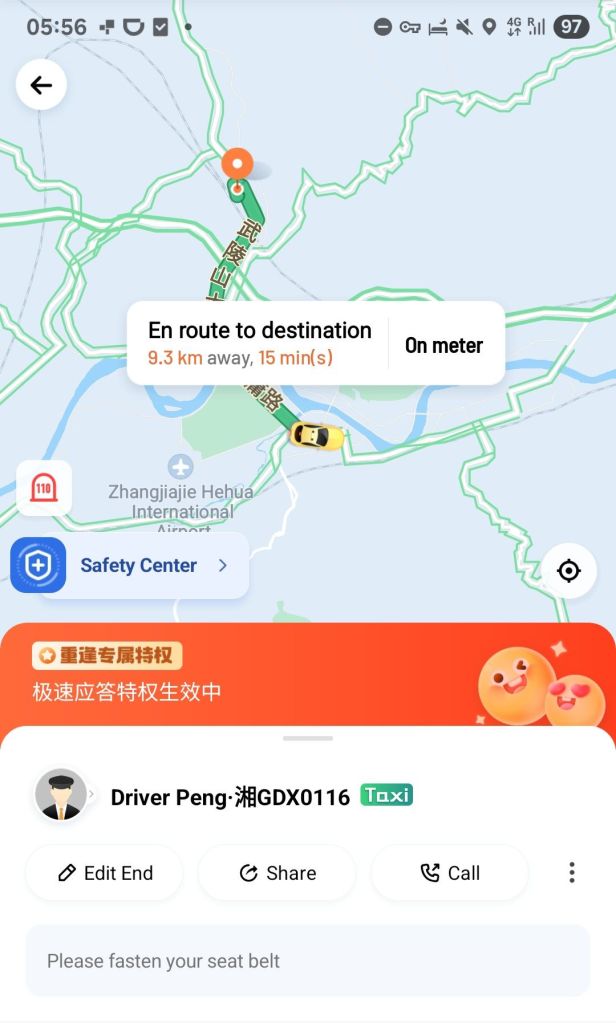
There are many ways to keep costs down by using the apps that locals use. This morning, a taxi on the national Uber service Didi cost £2.50 for a 20-minute journey across town. Now we have discovered Didi, I am having to force Jem onto the bus with every tactic going, including a twist around the ear and failing that a red hot poker 😆 (and resist saying ‘its not the destination, its the journey….’)
Didi is a godsend. No haggling or rip-off tactics.
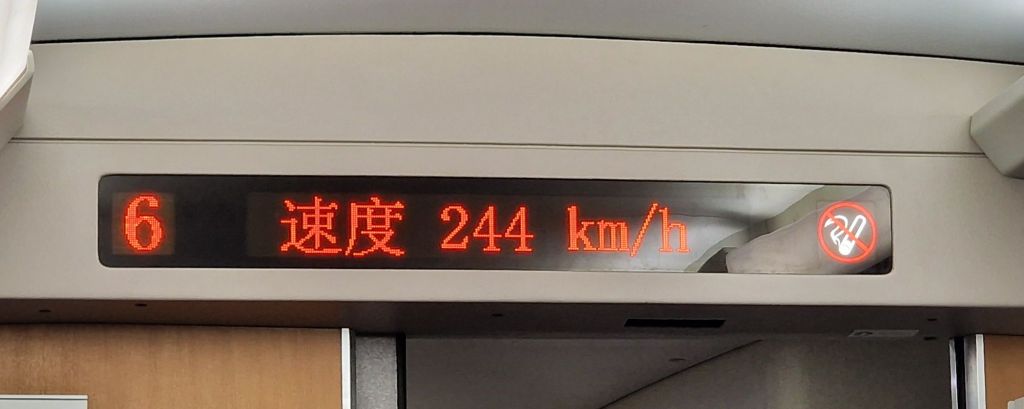
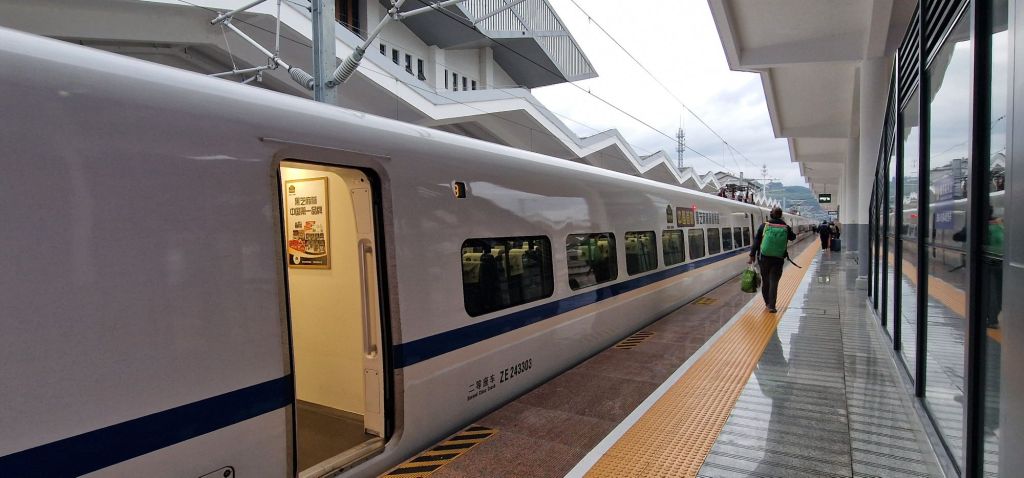
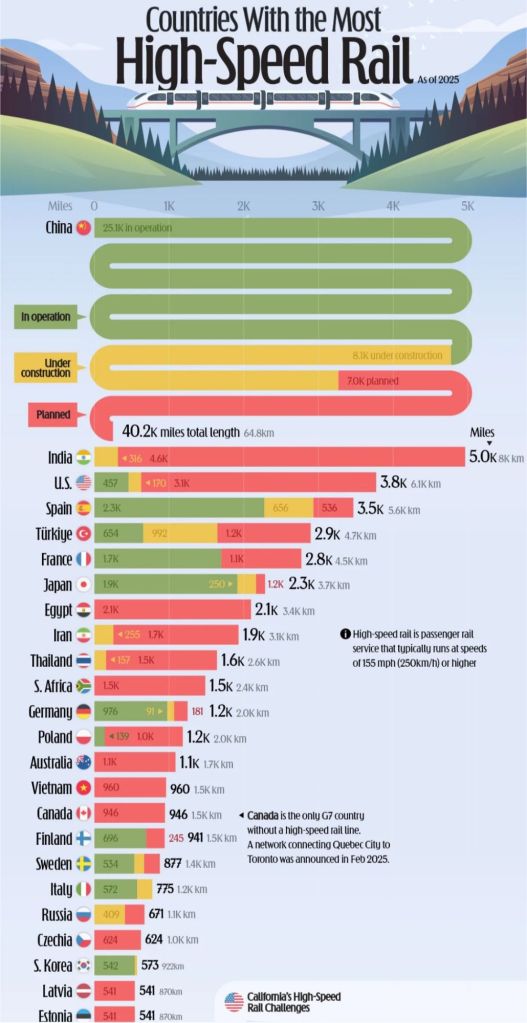
You would also expect to pay about 80p for an hour’s bus journey, £65 for a 4-hour 1,000km bullet train in economy class, and £40 for a 7-hour 580km journey on the slightly slower D-class train. All on time and immaculate.
Today, we are on a D-class train, which is considered the second fastest and much cheaper than its G-class (bullet) counterpartNot too shabbyA bit off-topic, but I’ll tell you something for nothing: leaves on the line mean nothing here
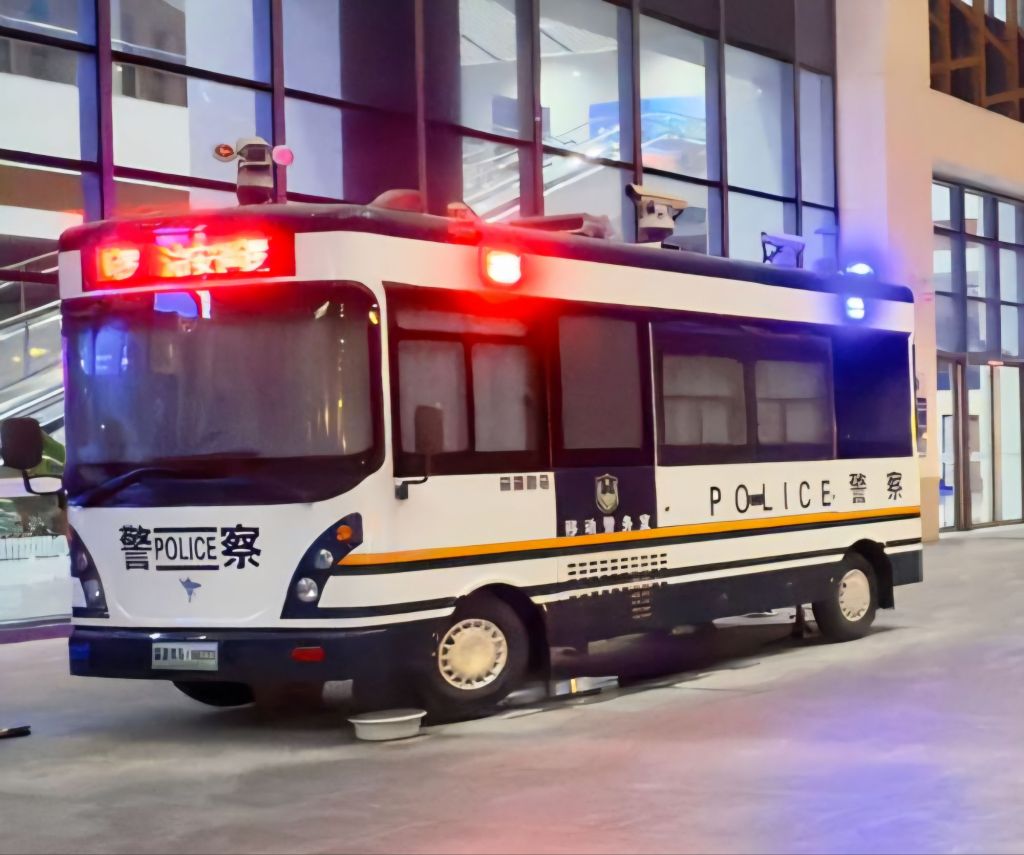
Similarly, it has taken time to adjust to the omnipresent CCTV and law enforcers; outside every travel hub and on many street corners (particularly in Beijing), you will see a panda winnebago with police creating a bottleneck requiring everyone to show ID and have bags scanned. On our bus yesterday, there were no less than six cameras pointing at the driver and passengers.
Mass surveillance has multiplied in recent years. In 2019, it was estimated there were 200 million surveillance cameras in China; as of August 2023, the country had over 700 million, according to online data.
At first, this felt extremely oppressive. For me, it is a similar phenomenon to Amazon’s Alexa allegedly listening in on your household conversations; while I don’t consider myself interesting enough to be a target for surveillance, there is also a looming sensation of having civil liberties slowly eroded. A feeling that, if left unchallenged, it would result in the unconscious pacification and compliance of society by Big Brother.
Perversely, as time has passed, the CCTV has become something of a reassurance. The crime rate here is notably low; the murder rate is around 0.44 to 0.50 per 100,000 people, compared with 1.2 in the UK and 5.9 in the US. Not once have we felt threatened or at risk of crime.
This has ignited many discussions about a reasonable price of admission to live in a society where a level of safety and respect is almost guaranteed, especially as a woman. What Western constitutional and human rights, such as freedom of speech and individual expression, would be worth sacrificing to deny a platform to poisonous far-right extremists like Tommy Robinson and Andrew Tate? Especially in a prosperous capitalist society like China, where the government invests billions in infrastructure and runs the spotless and affordable state-owned facilities like clockwork?
It is a moot point, really; as a Westerner, one can not overestimate how intrinsic individualism and self-expression are to our psyche and culture. The government here maintains tight control over media, speech, and civil society, stifles dissent, and restricts freedoms of expression and religion. Zipping through the country as a tourist, one can have a rose-tinted view of what it must be like growing up and living here. But behind the scenes, self-expression is near non-existent, and the government is feared.
Northern China is experiencing its fair share of rainfall this week, and this morning’s trip up Tianeman Mountain (‘Heaven’s Gate’ Mountain) was, by all accounts, a bit of a washout.
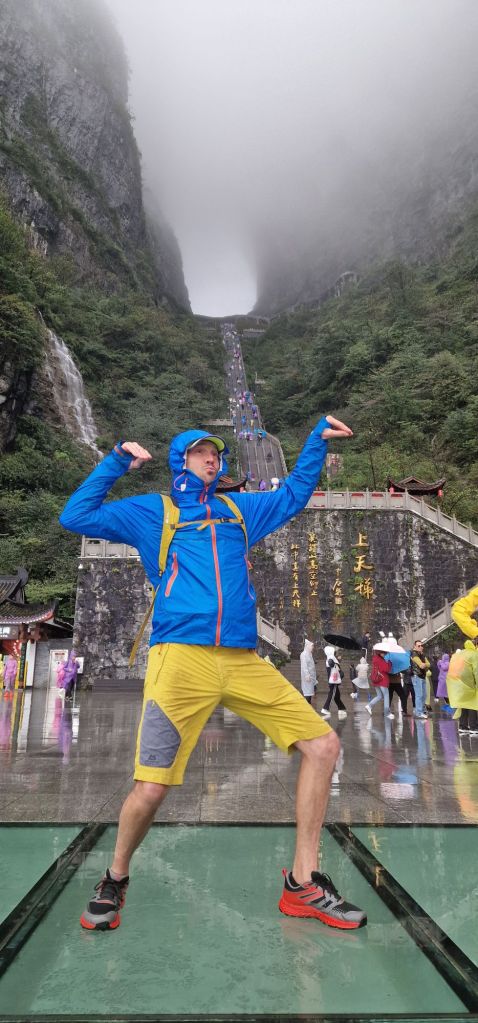
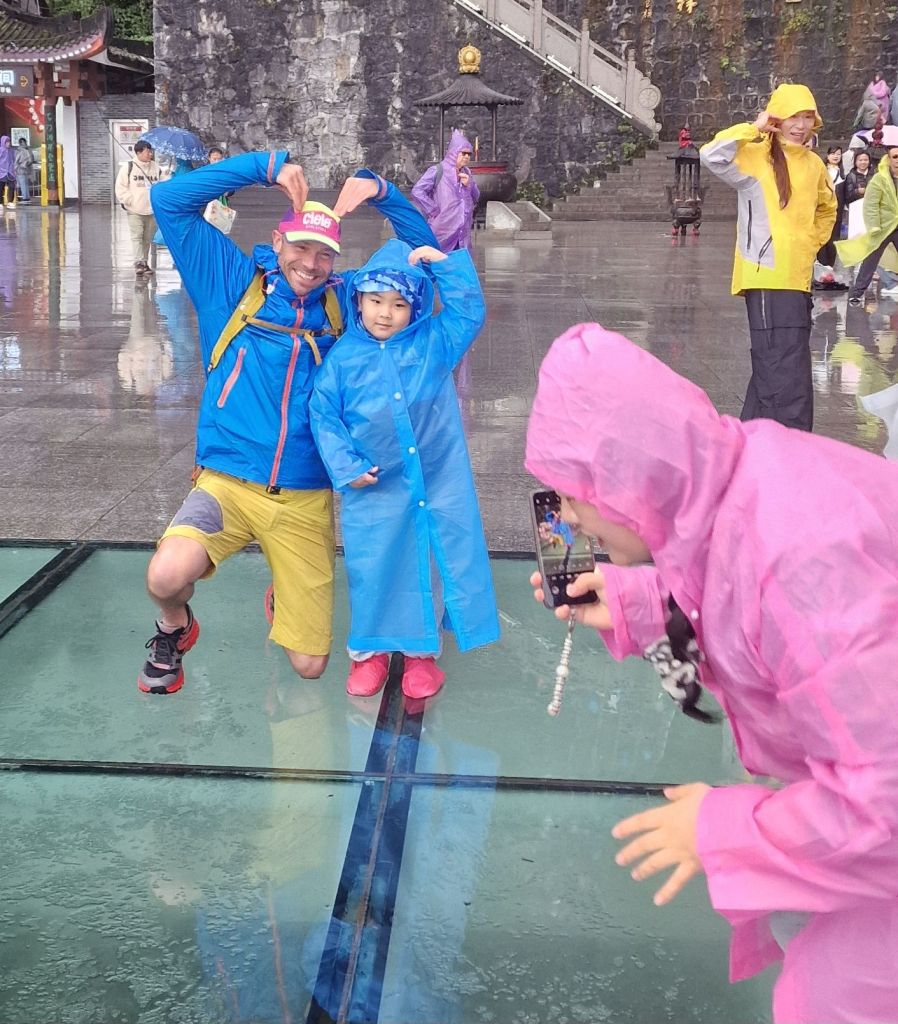
I think this pose represents Kung Fu. The locals don’t seem to mind Jem talking to them in a Chinese accent or practising his martial arts for the camera
Rainfall is higher than average for this time of year. It is lucky then that there is a vendor selling shoe sheaths and plastic raincoats on every corner.
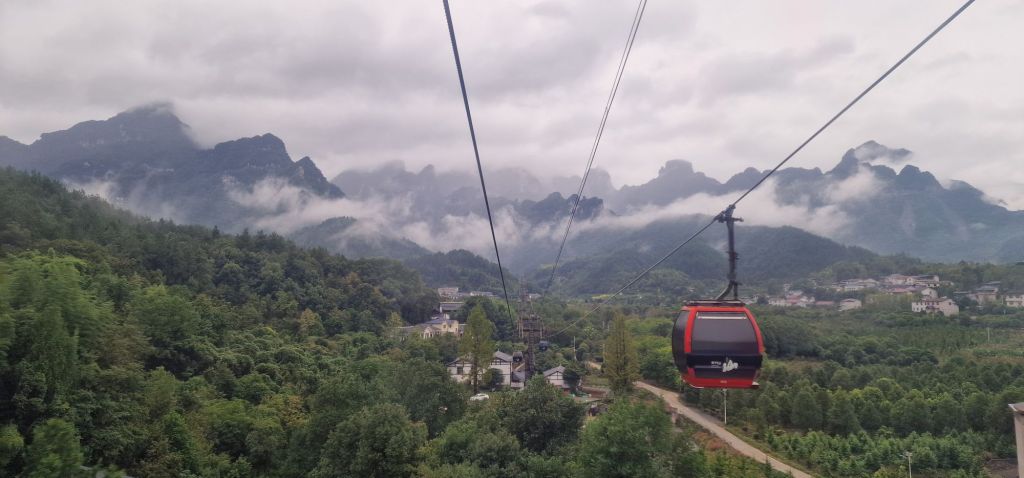
The cableway to the top of the mountain claims to be the longest in the world; a total length of 7,455 metres, and an ascent of 1,279 metres.
The trip to the summit in the cablecar takes 24 minutesHere, you can just see the pedestrian walkway through the mistWHITE OUT
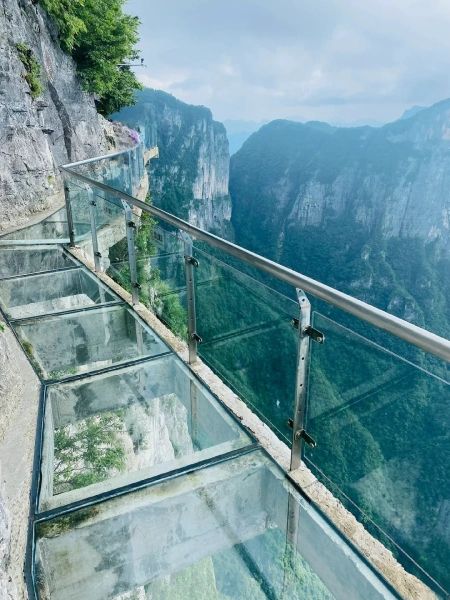
Had the weather behaved, then this is what we would have seen.
The ‘Heaven’s Gate’ at the top of 999 steps, which cheerful OAPs were powering up like Duracell bunnies. These three photos were taken from the Internet.The road down, if you choose to take the bus, allegedly has 99 hairpin bends. This seemed implausible in our opinionThe mountain is also celebrated for its 3 glass walkways. Today, they served as more of an opaque ice rink, which presented an unintended type of excitement
As we descended the mountain, Jem was mobbed yet again by old ladies who flock to him like moths to a flame. I mean, they are only human, but his celebrity status is becoming something of legend (in his mind). Before the final descent, an insistent mother threw her protesting child at him for his third photoshoot of the weekend.
Work it baby
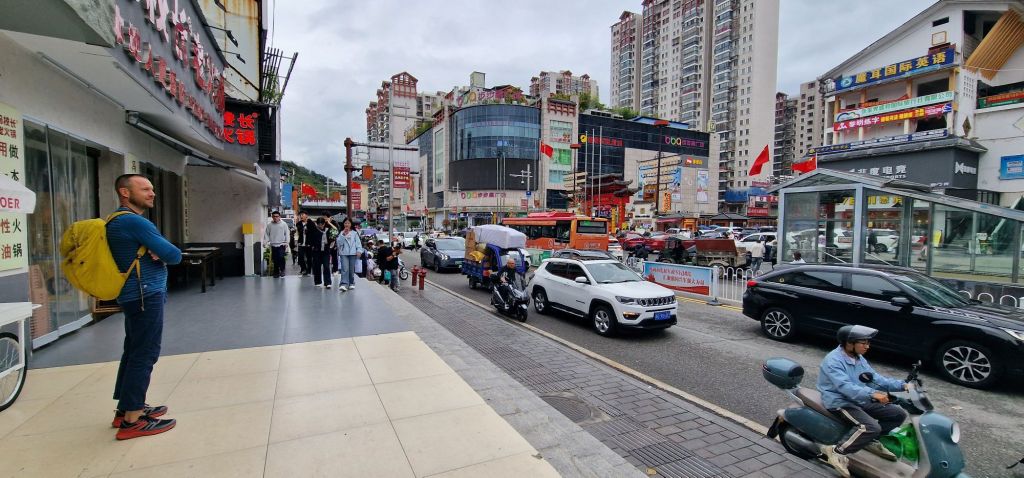
Yesterday in downtown Zhangjiajie, which is just off the tourist trail, we were both followed, photographed, and pointed at, like some kind of mobile side show of British freakery. School children crowded around us, reciting random English words and staring at my jazzy leggings.
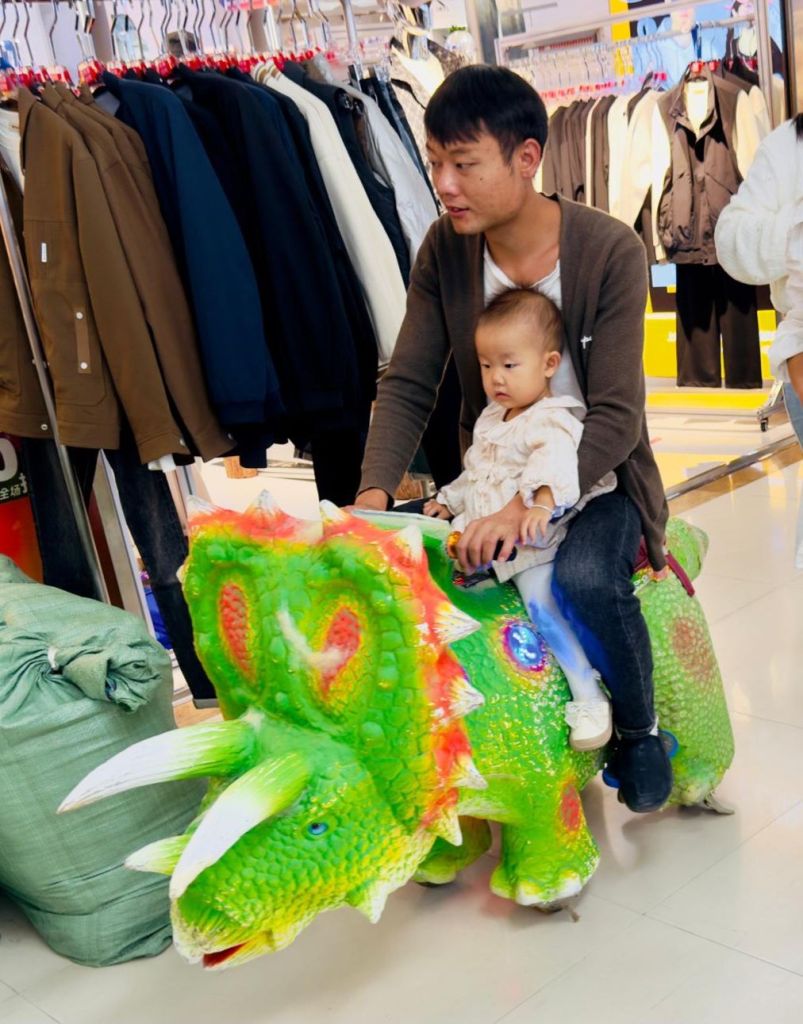
Downtown Zhangjiajie, which features a huge and sprawling underground shopping centreYes, you saw that right! It’s a dinosaur an adult can ride around the shopping centre! Some grown ups didn’t even have a child aboard 🫡
But it wasn’t just the punters following us around town. In every shop, we had a dedicated shop assistant who would walk six inches behind at all times, observing every movement, picking up everything we looked at, and putting it in our hands.
Another urban peril includes the treacherous zebra crossings, which signify that drivers should accelerate towards you and brake at the very last minute or swerve around you with inches to spare.
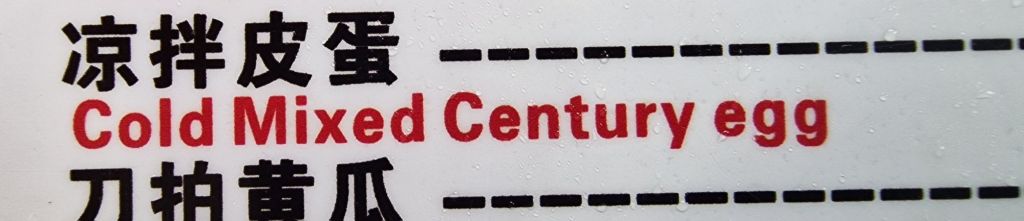
Dining can also be an exciting game of Russian Roulette, where menu translations provide little insight into the meals on offer, and the accompanying photos resemble your communal garden beef or chicken (but are definitely not). One thing is for certain; we have MSG coming out of our eyeballs.
We continue our adventure to Yangshuo tomorrow, seven hours south on the train. The sun shines, and limestone towers offer some of the country’s finest rock climbing.
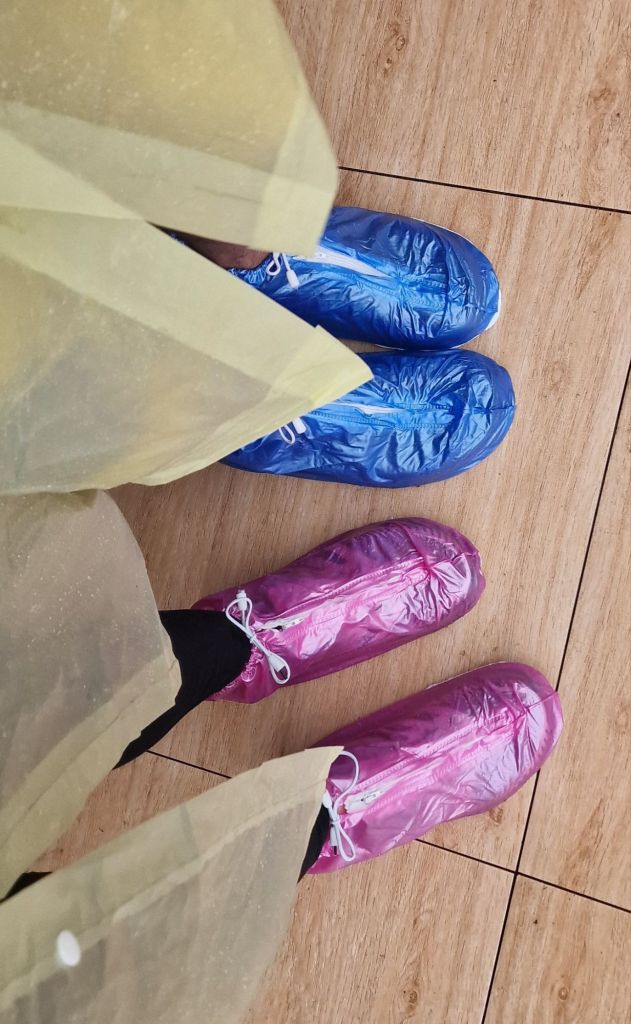
However, Jem will never prise my beloved plastic booties from my feet. I wonder if they fit over climbing shoes 🤔
After the intensity of visiting two of northern China’s mega-cities (exceeding 10 million inhabitants), we were elated to find ourselves back in our natural habitat. We breathed a sigh of relief as we drove up the mountains, surrounded by vegetation, altitude, and our kindred primate spirits.
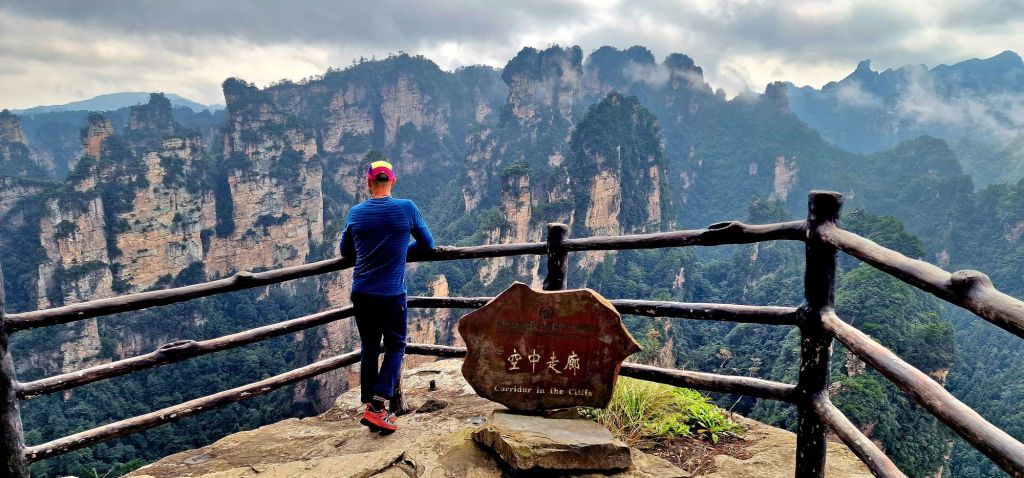
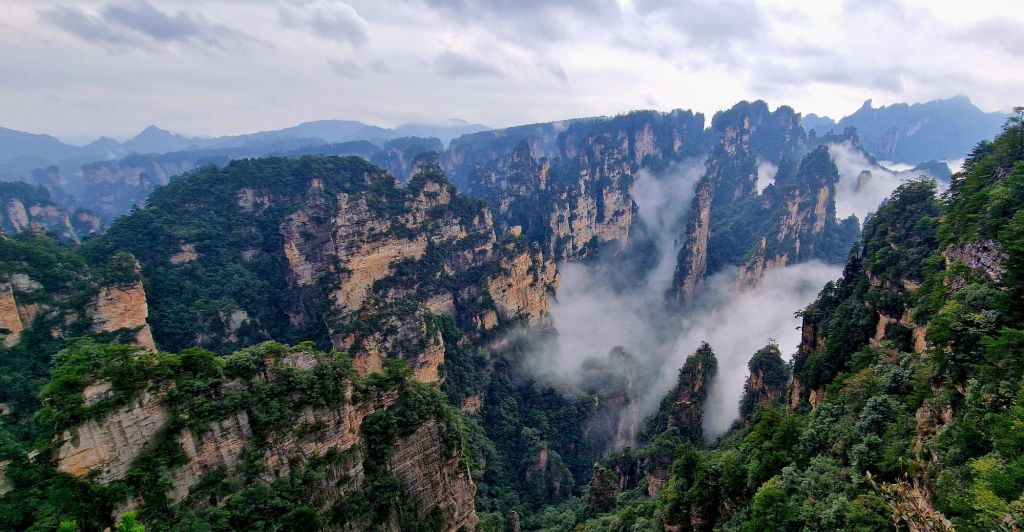
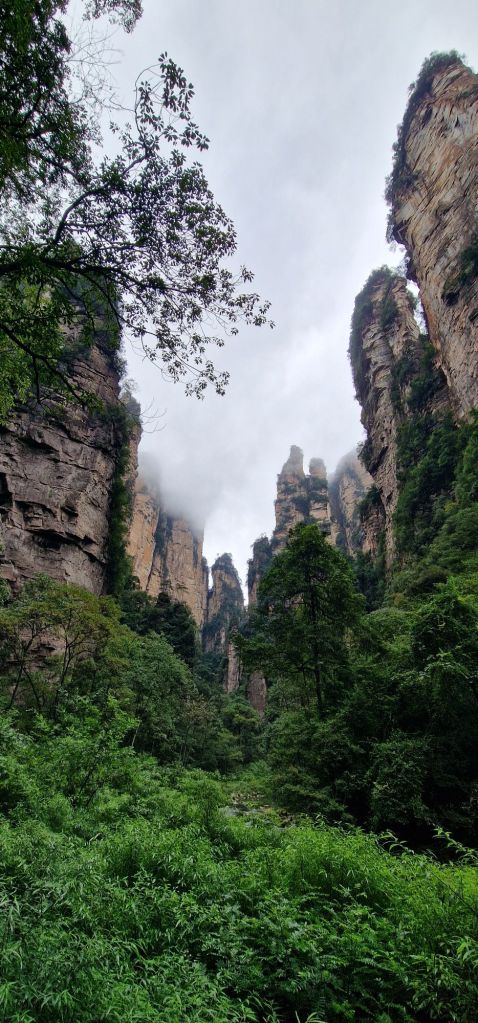
Zhangjiajie National Forest Park is a national treasure, hosting almost 20 square miles of unique pillar-like formations. Climbers reading this may assume these gravity-defying towers are made of limestone, famously seen in, for example, Guilin in China, Ha Long Bay in Vietnam, and even the Peak District.
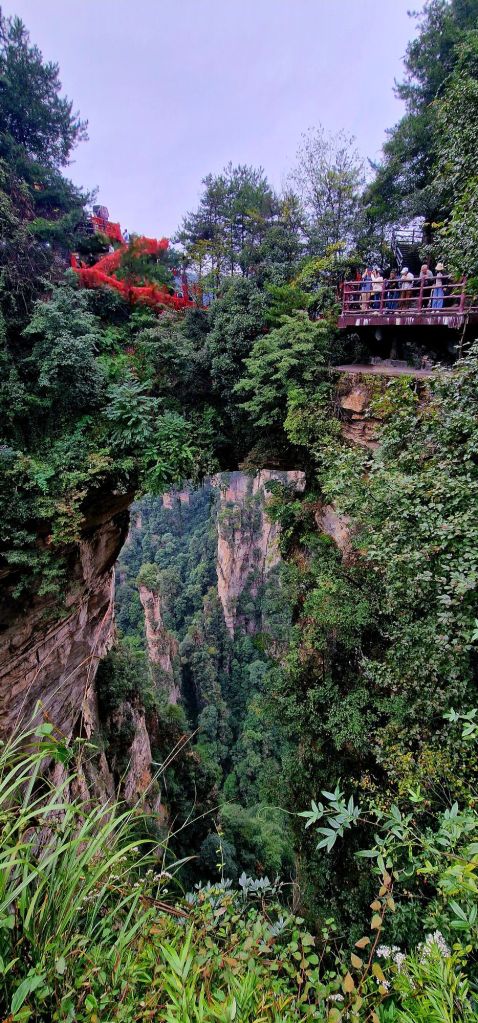
The famed natural rock bridge
The pillars are actually made from quartz sandstone, and amazingly, the result of environmental physical erosion. Deposited and tightly pressed together over millions of years, sandstone was turned into hills and mountains due to the uplift of the earth’s crust. These were cut into parallel stone peaks under the force of weathering, primarily expanding ice in the winter. If this were not a UNESCO World Heritage Site, it would definitely be a world-class rock climbing destination!
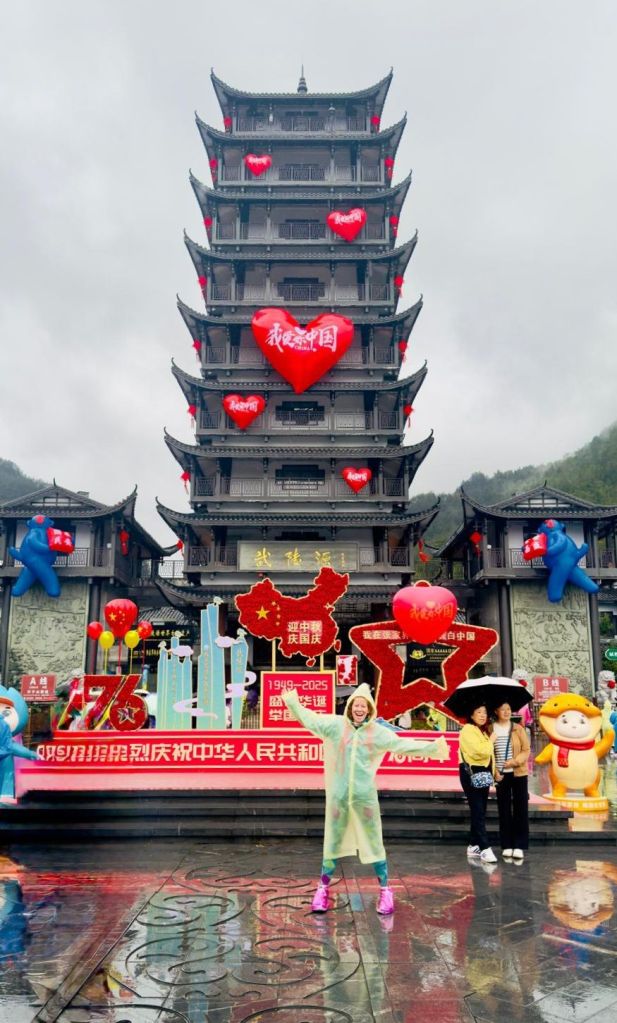
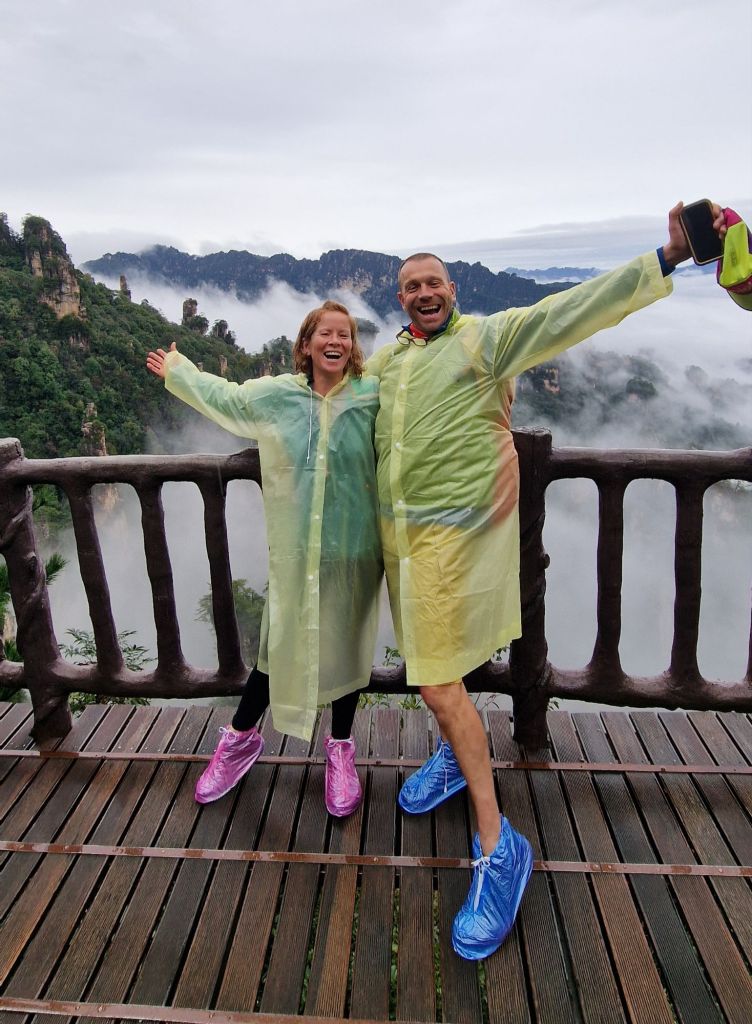
The weather is damp year-round, which enables the dense foliage to grow so jungular. It was indeed moist during our four-day visit, and so we dressed up like big bananas and wore podiatry Durex to fit right in with the locals.
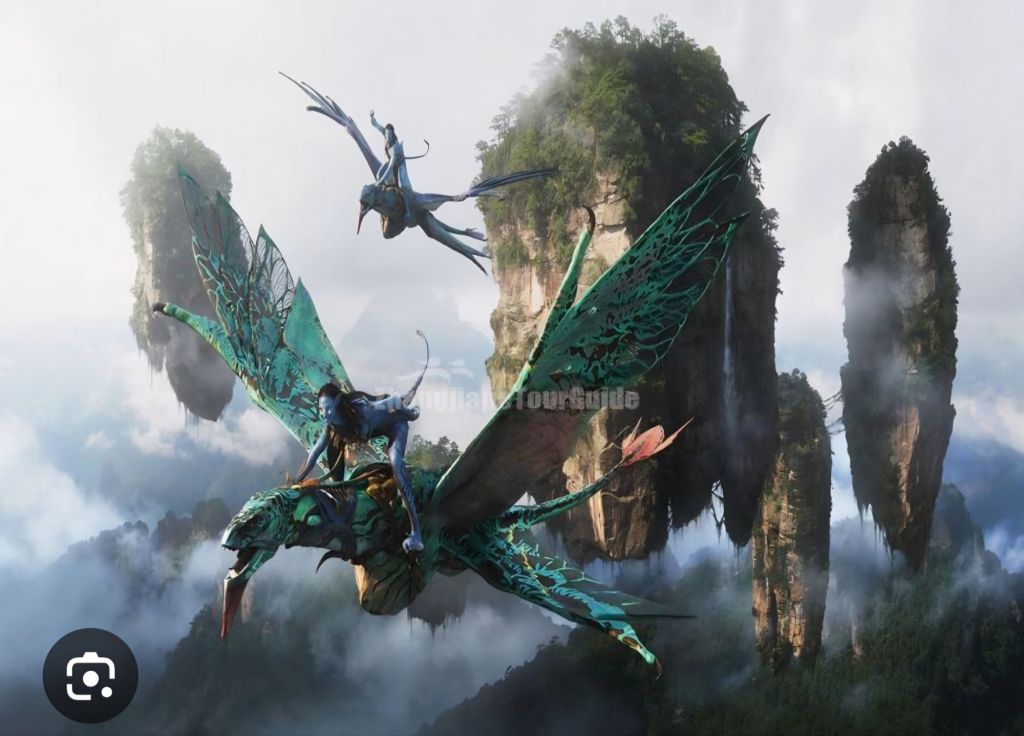
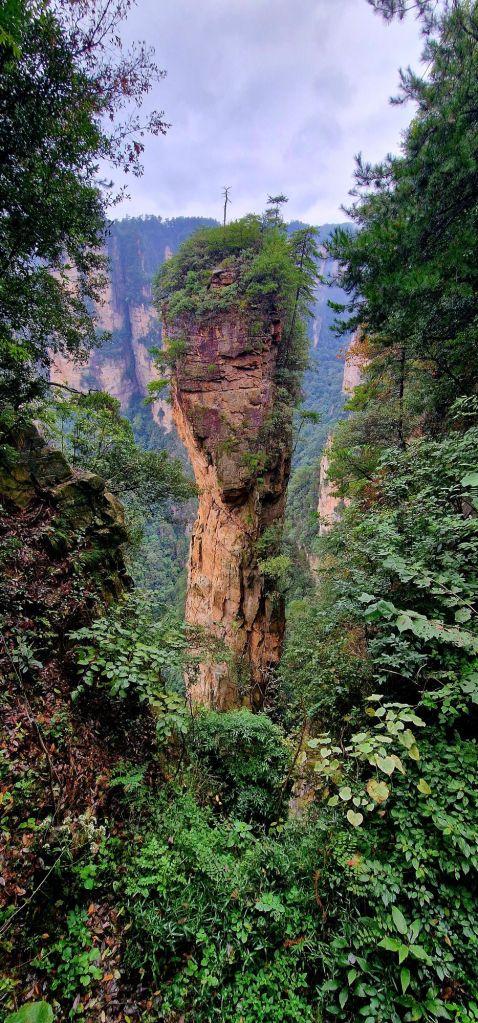
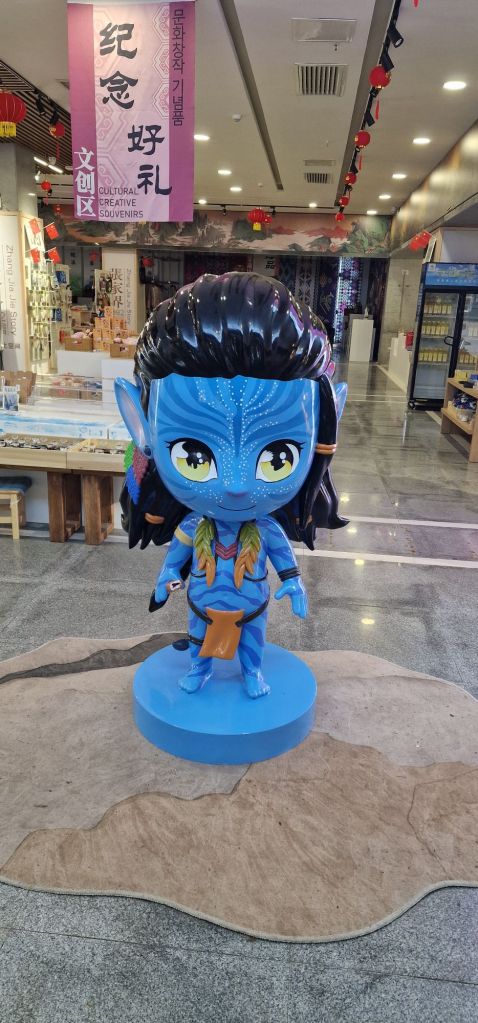
One of the park’s pillars, the 1,080-metre Southern Sky Column, was officially renamed Avatar Hallelujah Mountain in honour of the movie Avatar in January 2010. The director and production designers drew inspiration for the film’s floating rocks from mountains in Zhangjiajie.
A still image of the Avatar movie (that I stole from the Internet)The real-life ‘Avatar Mountain’The park has undoubtedly capitalised on its links with the franchise!
Another notable feature of the park is its massive elevator; the world’s tallest outdoor lift at 326 metres.
The Bailong Elevator, literally “hundred dragons sky lift”, can transport visitors to the top in less than two minutes.
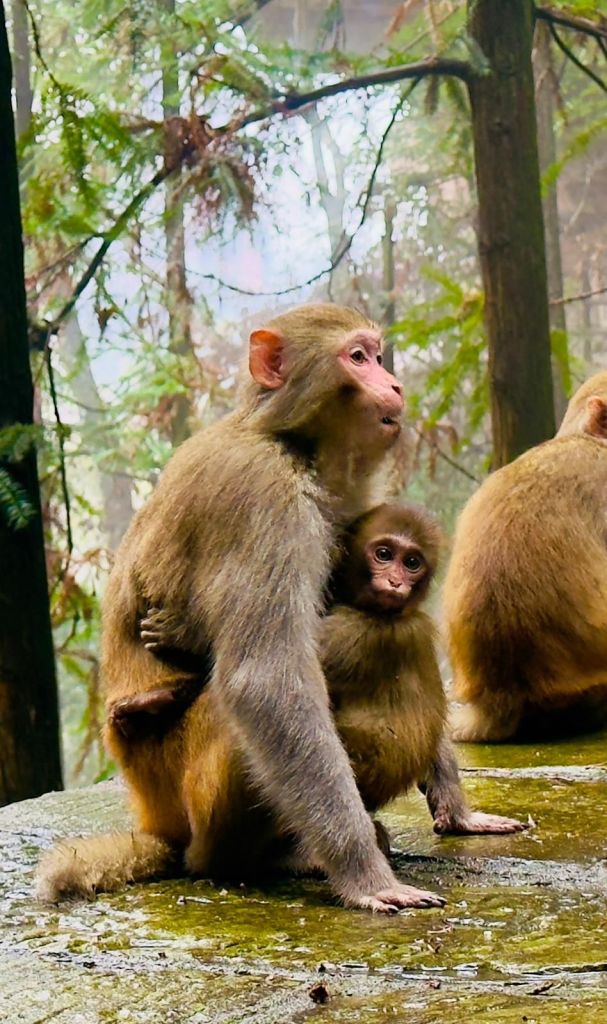
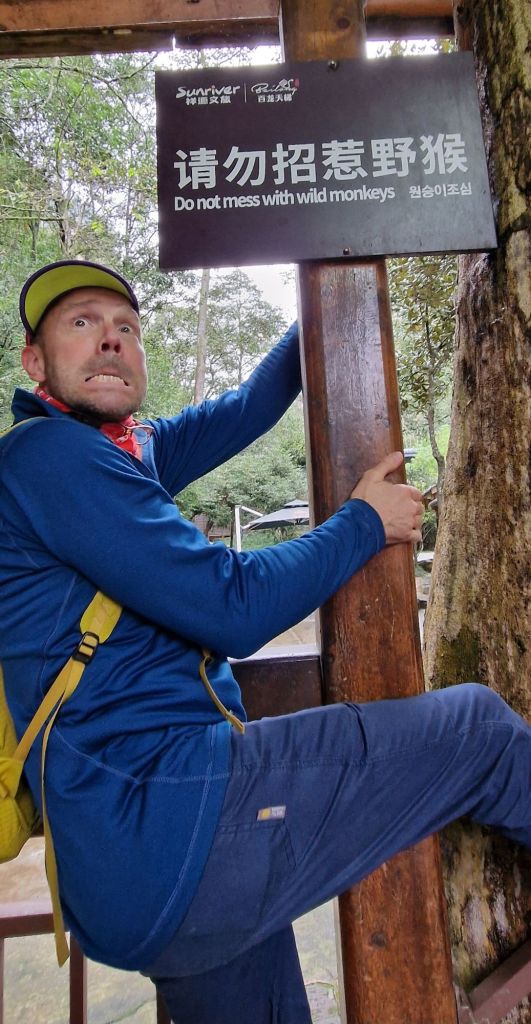
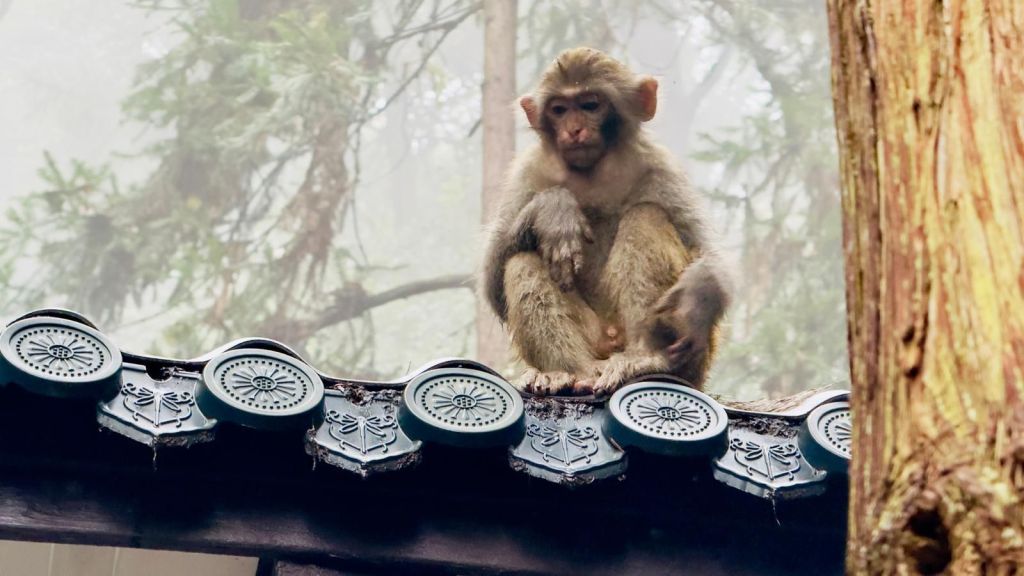
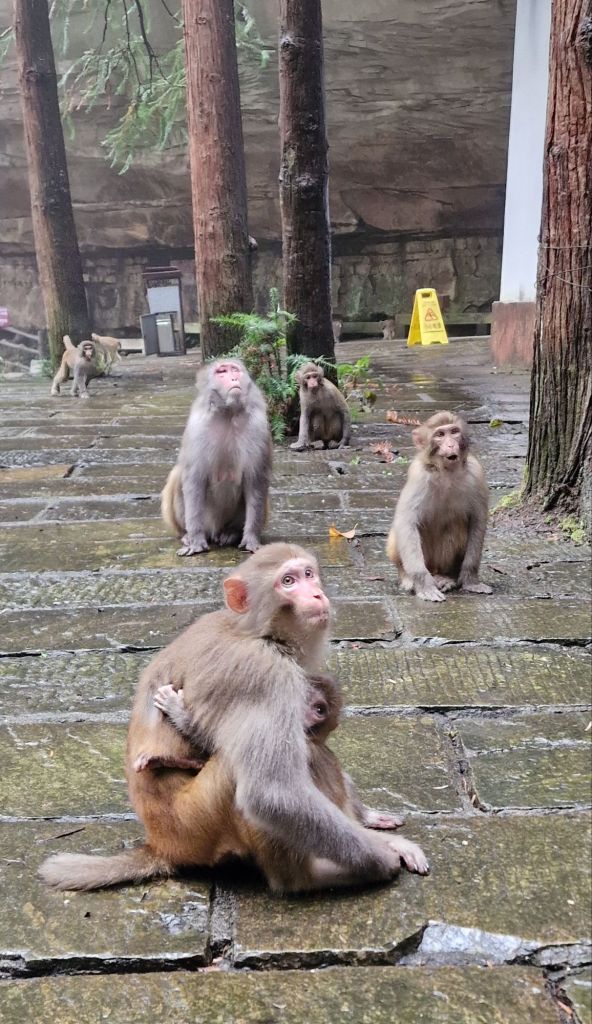
The park also hosts a population of cheeky and opportunistic monkeys whose job it is to look really cute and then thieve your food/hat/bag/camera (or bite your hand off).
In keeping with China’s mad efficiency, the park’s daily 20,000 visitors are managed exceptionally well, bussed and cable-carred around with a facial-recognition system acting in lieu of visitors’ tickets. 330 free shuttle buses transport hordes of humans from site to site. Queueing can be a real issue here when the park reaches its 50,000 capacity, but this is the end of peak season, and so we had the luxury of hopping on and off without delay.
The Chinese can at first appear to be quite brusque and pushy. However, we came to realise that this is probably a required trait in a country with 1.4 billion inhabitants. Our interpersonal interactions have brought us much joy; we have had so many laughs and jokes with the locals, and they relish saying hello and practising one or two words with huge smiles on their faces.
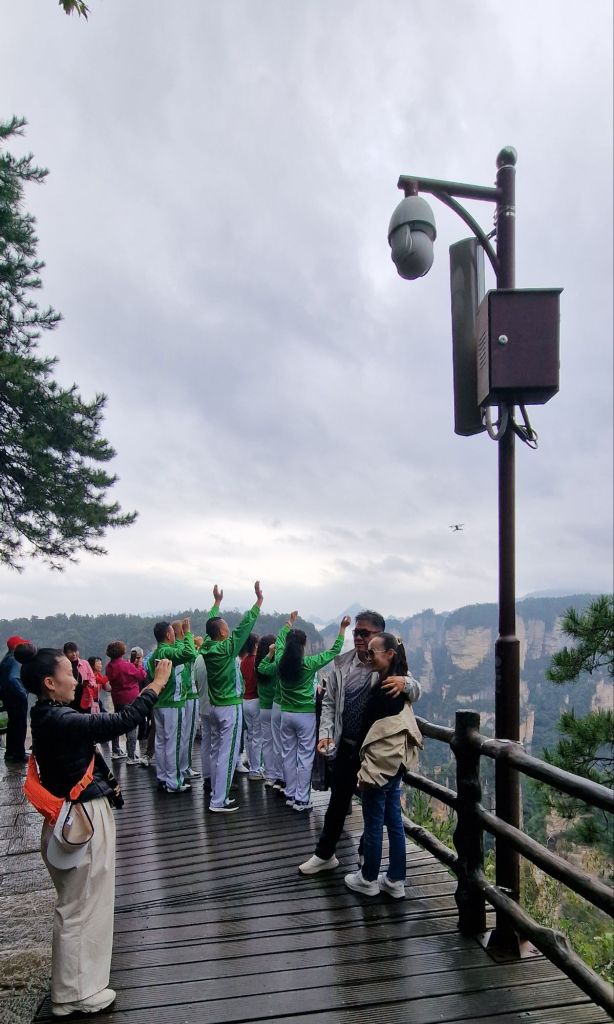
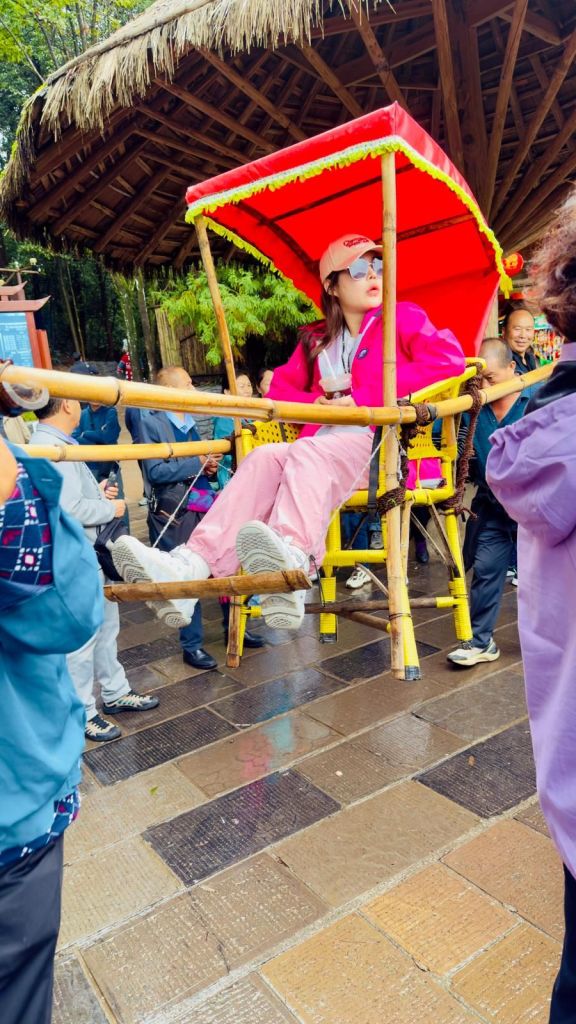
A tourist group doing a dance for the droneDespite the crowds, a few choose to be ferried around in a Sedan chair 👀
We have also enjoyed watching tour groups around the park, all wearing matching outfits, breaking into song and dance even in the most inclement of weathers. It is a fascinating nation, and we feel we have hardly scratched the surface. Here’s to more making friends along the way!
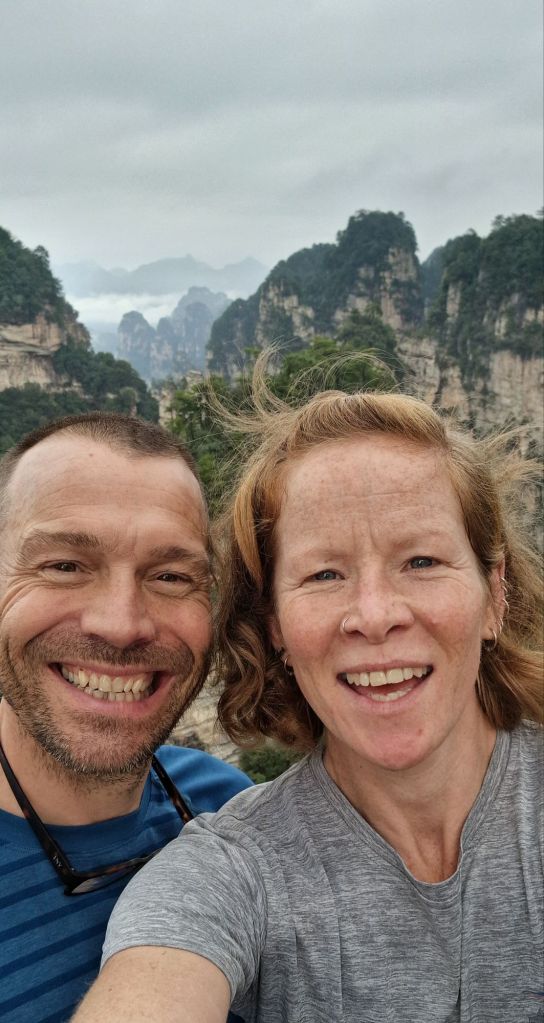
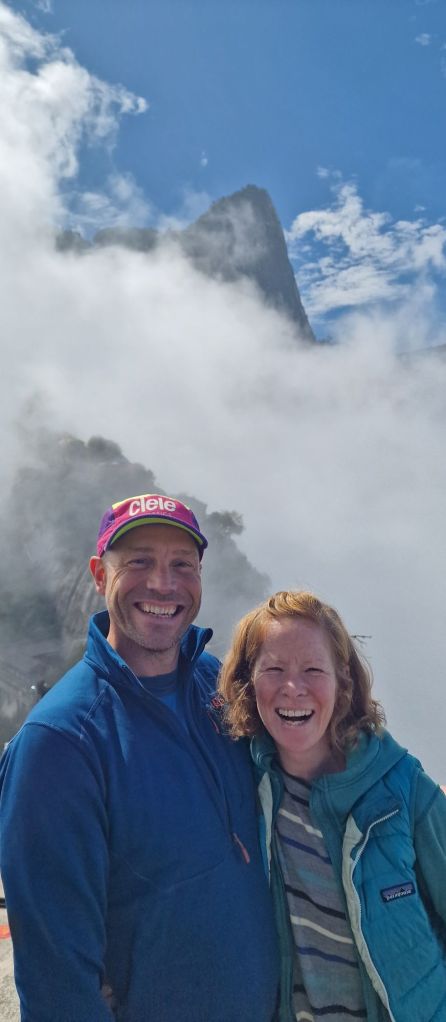
GINGERS UNITE! 👊
We didn’t think anyone would read this apart from our parents! It’s really nice to know it’s being enjoyed by more than a handful of people 😘
Thanks everyone for reading about our adventures so far ❤️ 💙 💜
Our travels continued down to Zhangjiajie (pronounced Jang-jar-juh) to visit a world-famous national park that you may recognise from the Avatar franchise. Zhangjiajie National Forest Park is comprised of dense forests, deep ravines and canyons, unusual peaks, caves, and pillar-like formations. More on that later!
Zooming out: It’s all about perspective!
To avoid a 12-hour multi-public transport challenge, we flew straight to Zhangjiajie in 1.5 hours. All was going well until airport security, where our bags were scanned three times, and each time, more items were confiscated, including four powerbanks that contravened Chinese flying regulations – plus my favourite lighter (stolen from my brother at Boomtown). This presents quite a problem in China, where leaving the hotel requires instant Internet useage; navigation, translation, and payment (it’s an almost cashless and cardless economy here).
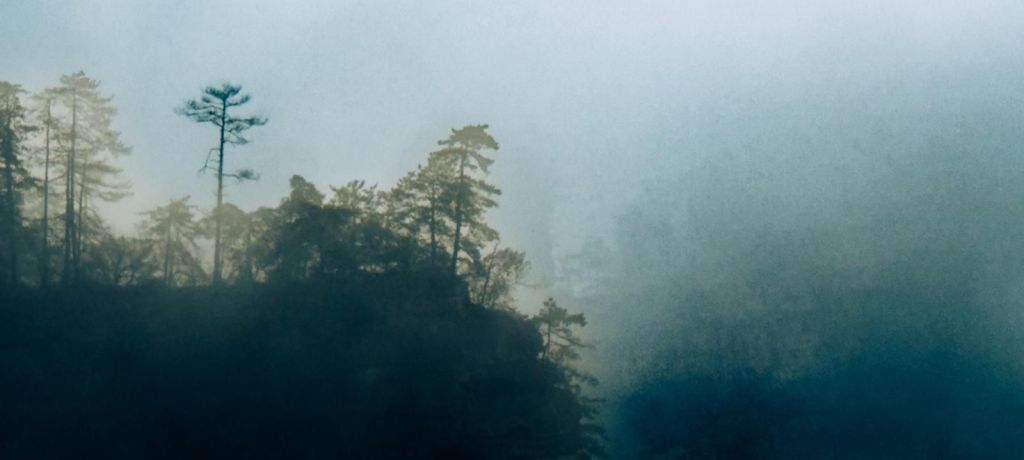
Landing in Zhangjiajie was so exciting, the landscape a panorama of misty green peaks stretching into the distance.
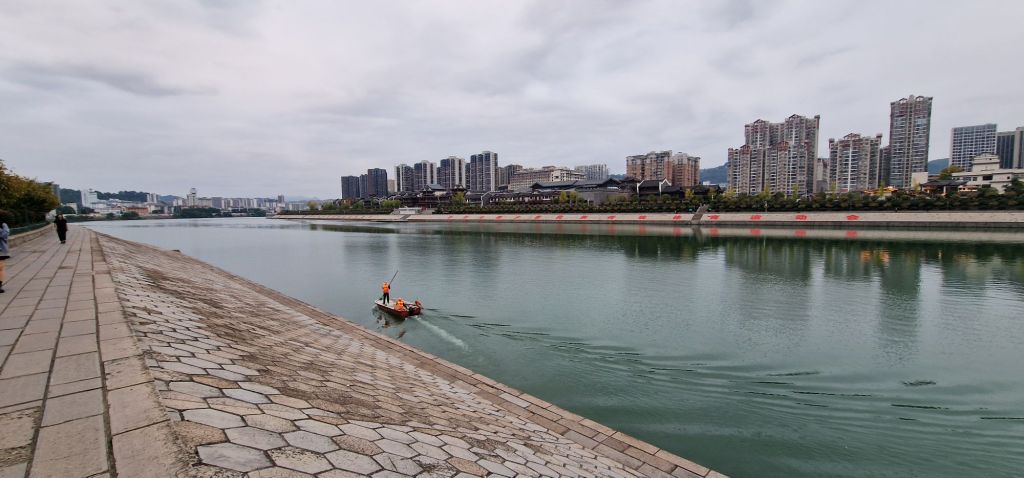
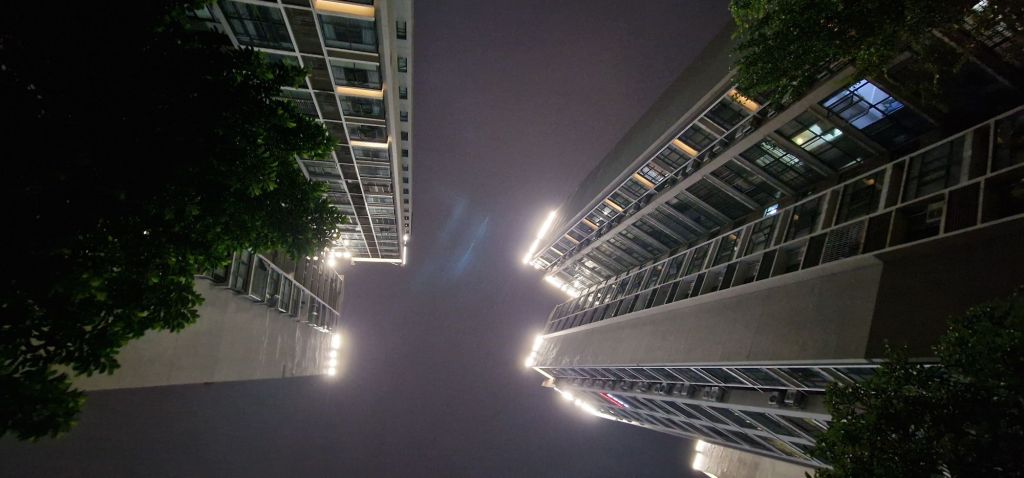
Downtown Zhangjiajie was fairly standard, featuring a small vibrant touristy area, high-rise flats, and an exceptionally pristine river, with floating debris fished out by a flotilla of boats travelling up and down.
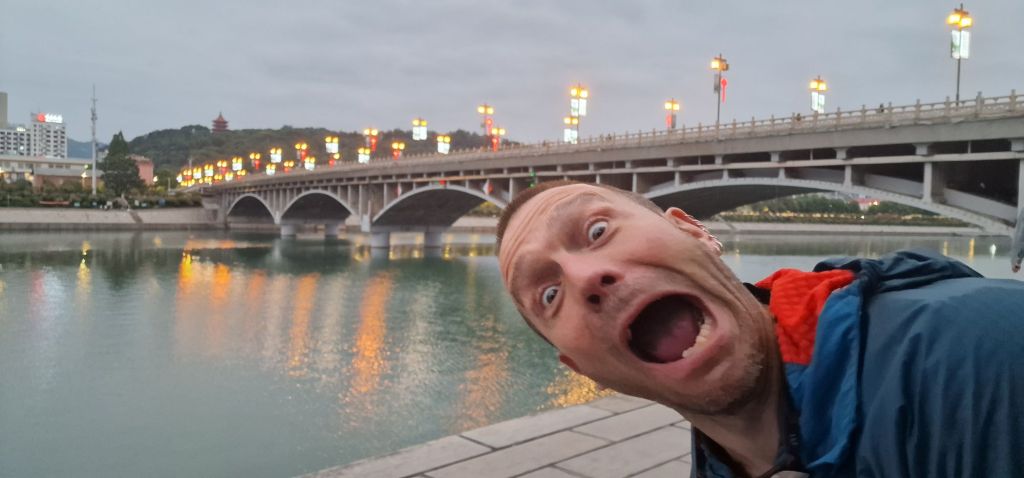
Photobomb master 😂
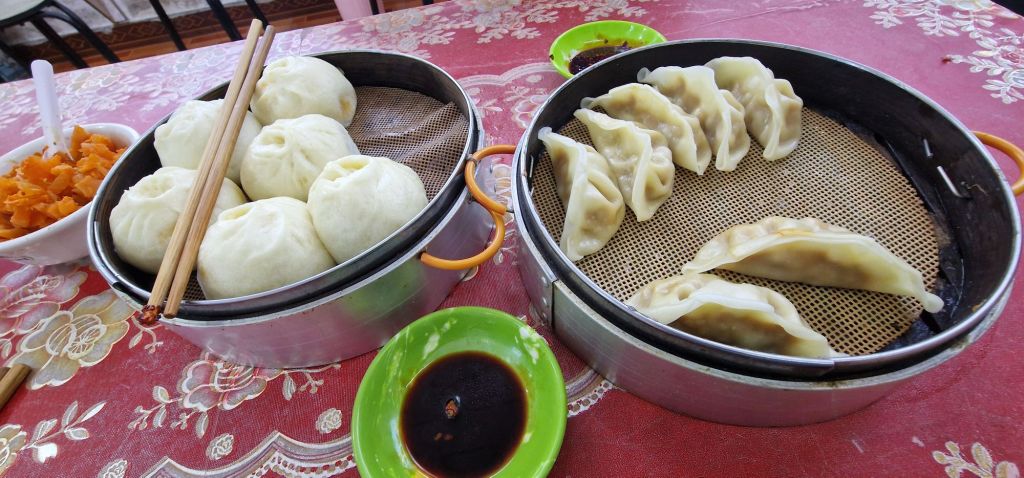
For all meals, there are typically three items on the menu in different guises; baozi (bao buns/dumplings), jiaozi (known in the UK as their Japanese name gyoza), plus a myriad of noodle dishes.
Reaching Noodle Warrior Level 2. Jem put his Big Girl’s Pants on and tucked into some cold tripe. Verdict? “Bland and furry” 😆
Breakfast reawakened the extremely contentious Baozi vs. Jiaozi Debate. So which has the edge?
The answer, of course, will depend on the filling. However, the package in which they are delivered can make all the difference! Despite its ability to instantly fill the belly, I find the local bao buns to lack the optimum bun-to-filling ratio. However, the yeast-levened dough is tastier than the flour/water/salt wrapping of the jiaozi. We will have to do more research before presenting the crown. Off we go!
Huashan is one of China’s five great Taoist mountains. Her five granite peaks were formed by huge granite intrusions (volcanic activity) about 100 to 220 million years ago, with the tallest peak reaching over 2000m.
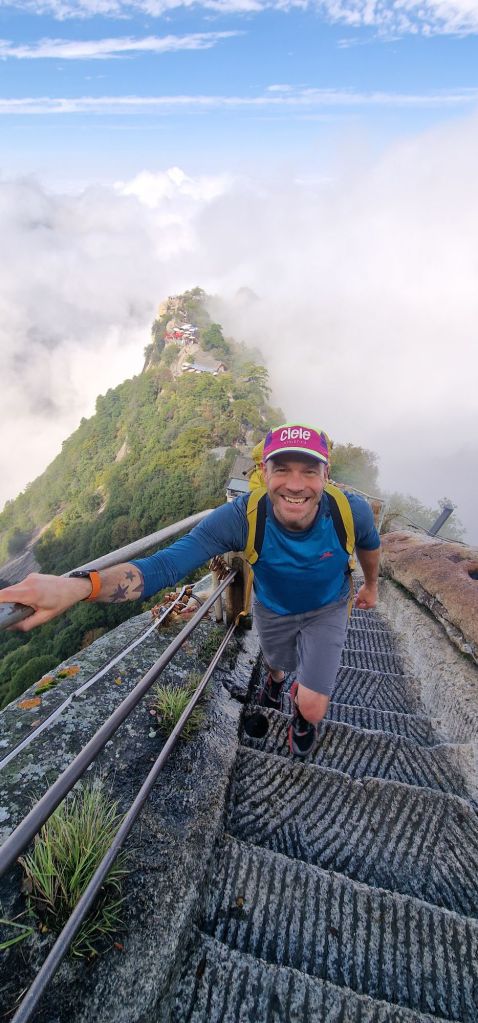
We spent the day summitting all of the peaks and exploring the temples, which incredibly were built on precipitous and inaccessible cliffs by Taoist monks thousands of years ago.
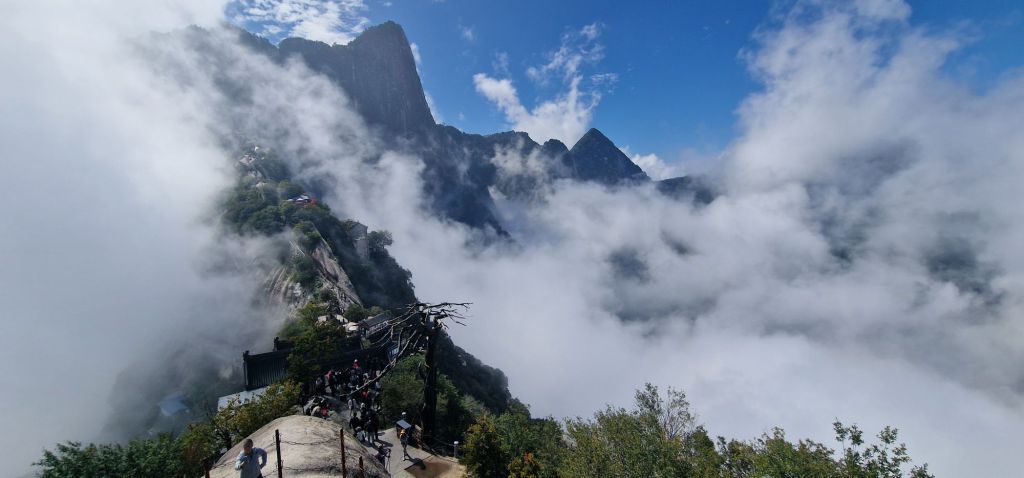
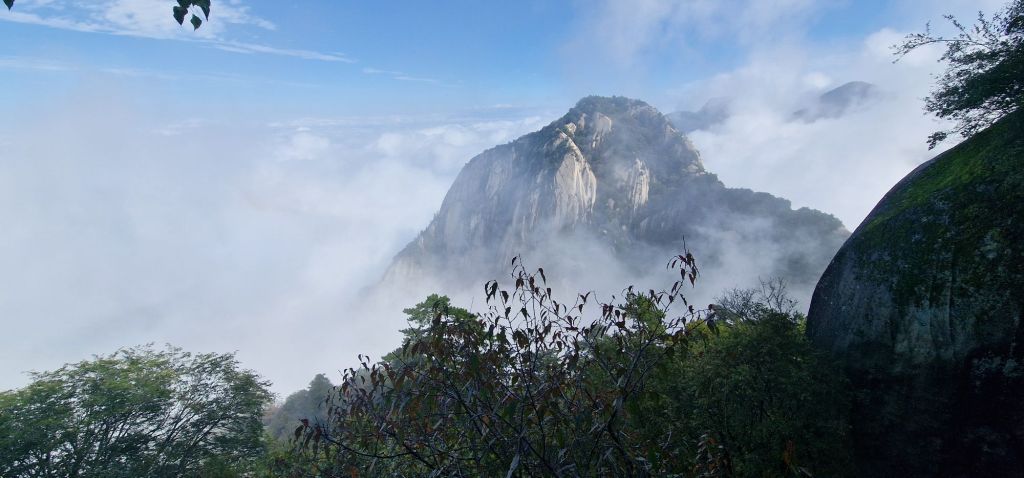
The tallest peak, at 2160m, can be seen in the background
Huashan is considered one of the most sacred Taoist mountains. The first known Taoist temple, the Shrine of the Western Peak, was established here in the 2nd century BC.
Shrine of the Western Peak
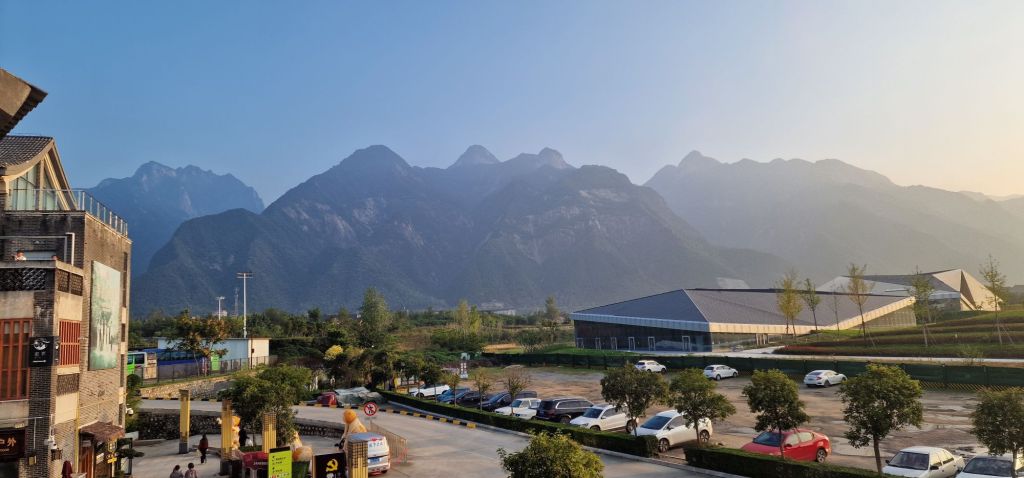
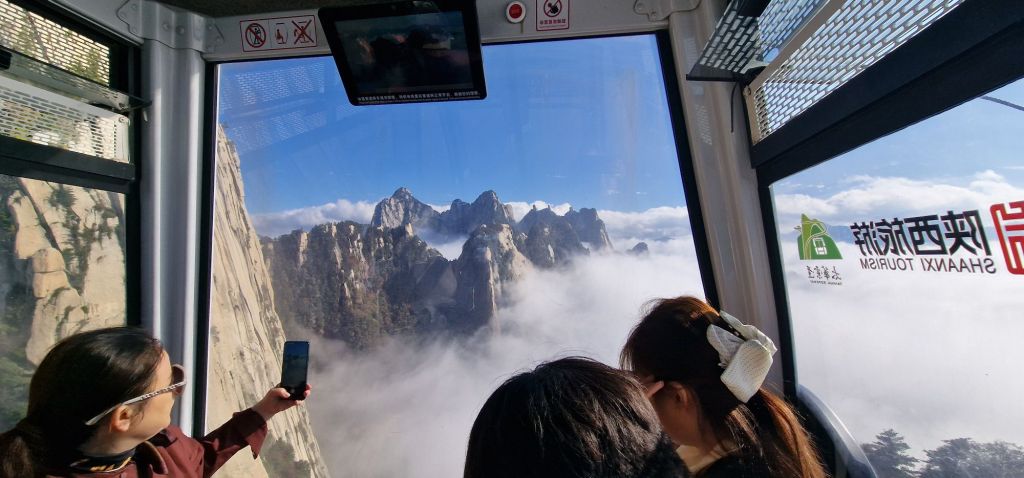
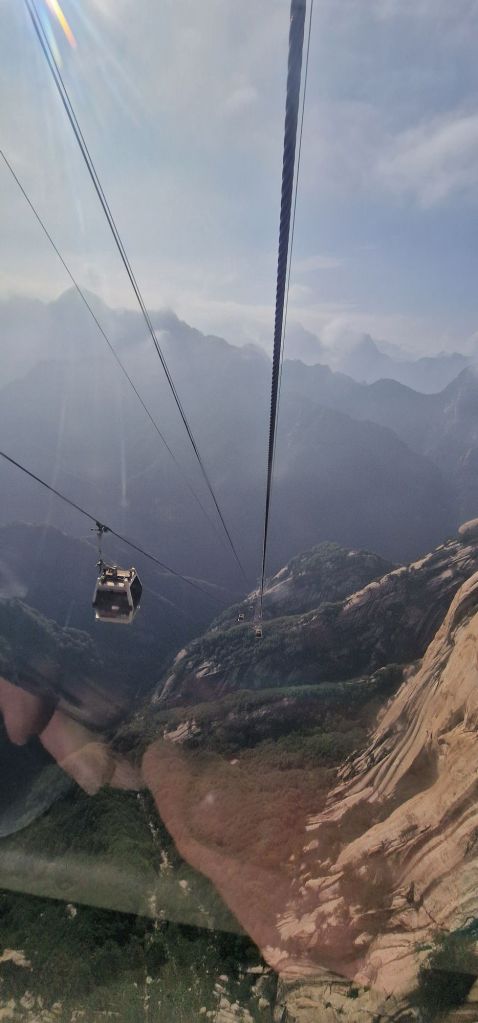
To access the mountain, we booked a transport package which involved getting picked up by a bus at 7am, driving 1.5 hours east from Xi’An into the mountains, before taking a series of shuttle buses and cable cars.
Mount Huashan is in the background on the left-hand side
The bus was packed with Chinese tourists who were all taking different routes up and down the mountain. After taking our seats, there was a one-hour safety and logistics briefing in Chinese. Although we missed the gist, Jem managed to translate a fraction of it on ChatGPT, so we at least got on the right shuttle bus.
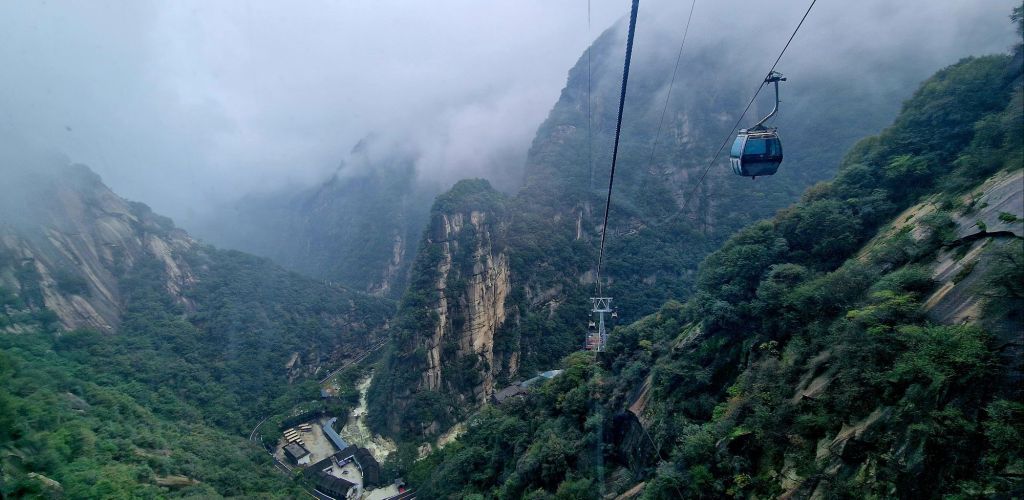
The cable car up the northern peak
Luckily, the Chinese tourists took pity on us and kept us on track, with Jem making many new friends along the way.
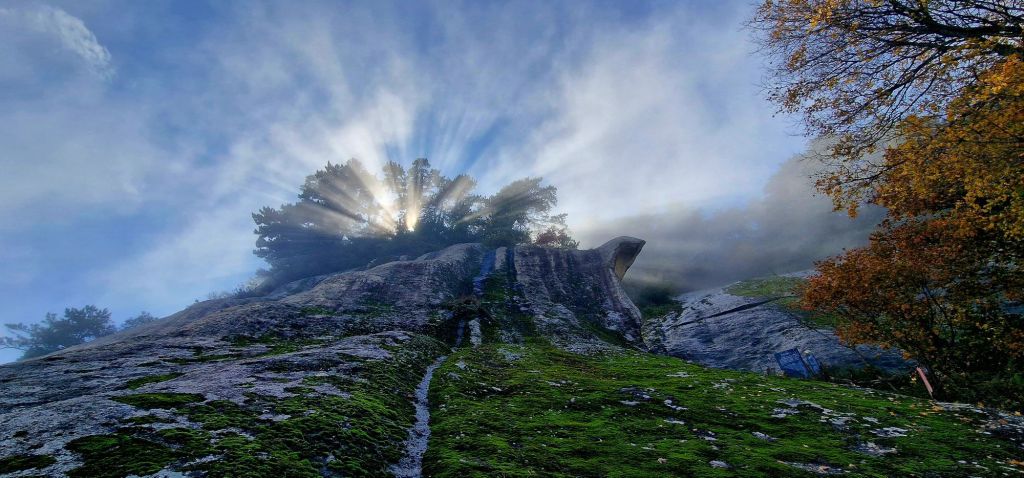
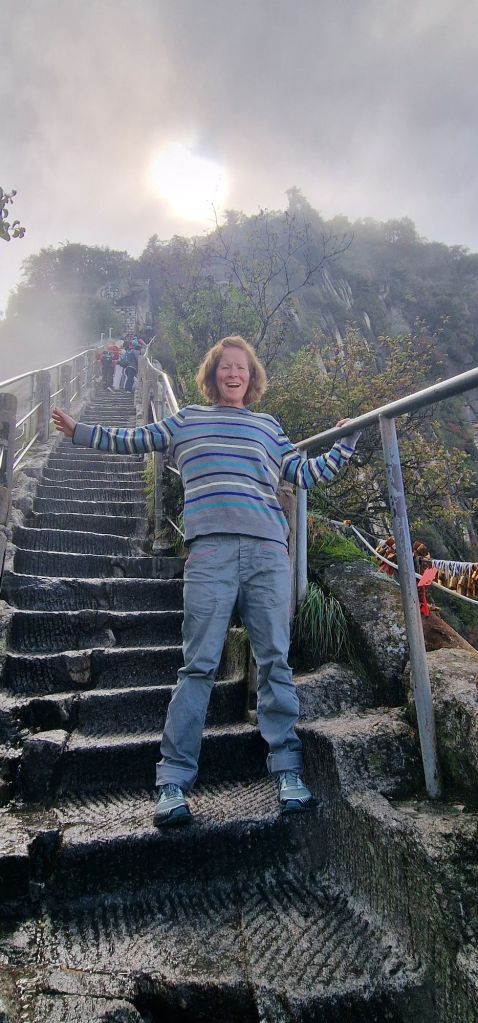
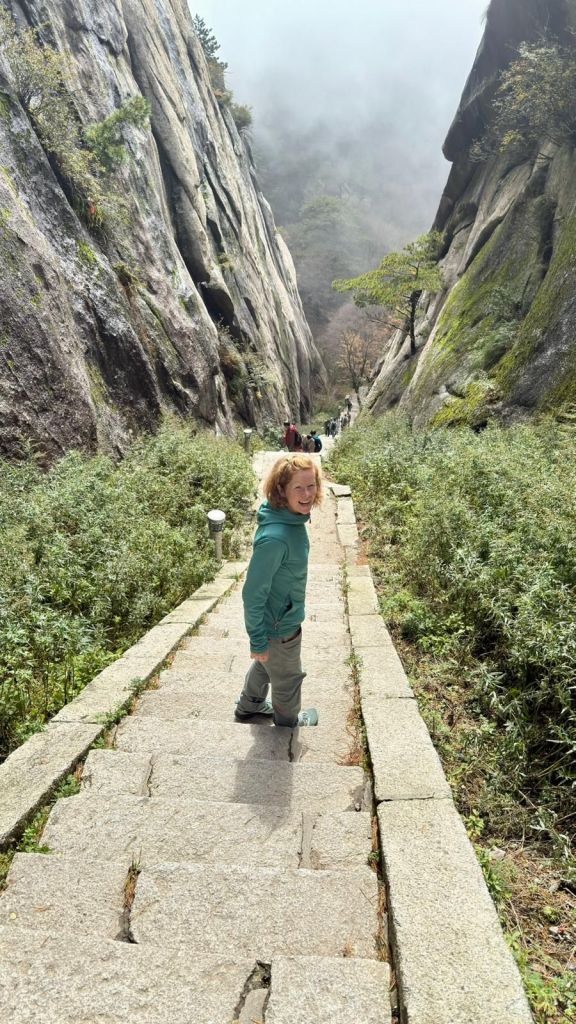
The adventure on top was awesome, going from peak to peak and passing temples and catching views through the clouds. The steps had been carved by the monks many centuries ago, and there was a real sense of history and legend on the journey.
We were in awe of the Chinese octogenarians sure-footedly reaching the summit like spritely mountain goats. The same attraction in the UK would surely be littered with red-faced portly units spluttering their way up the peaks. It was no give-away, even for youthful middle agers like us! 😉
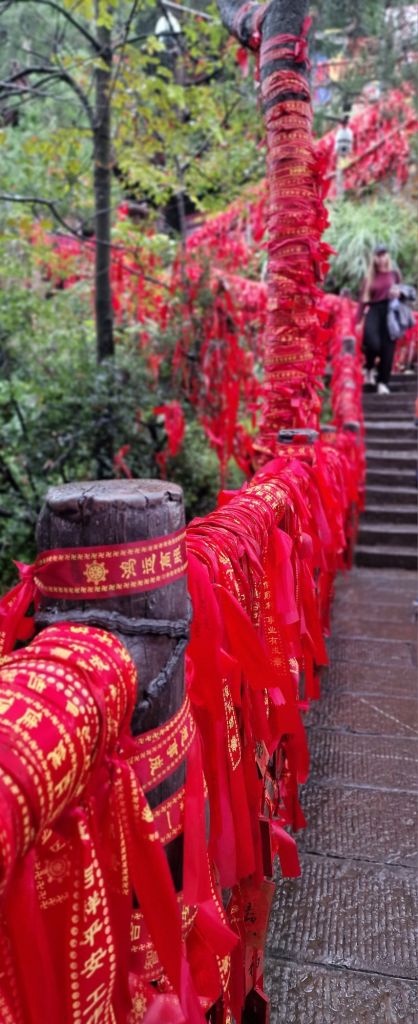
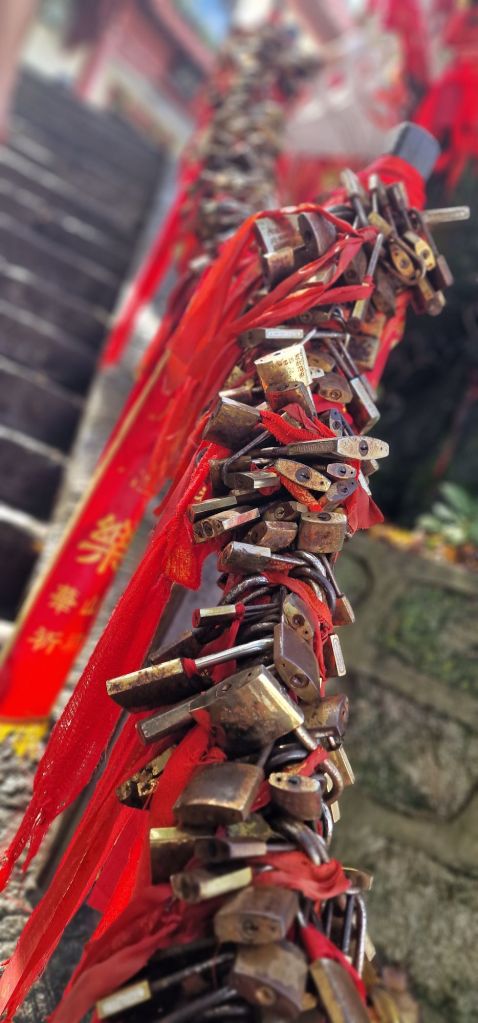
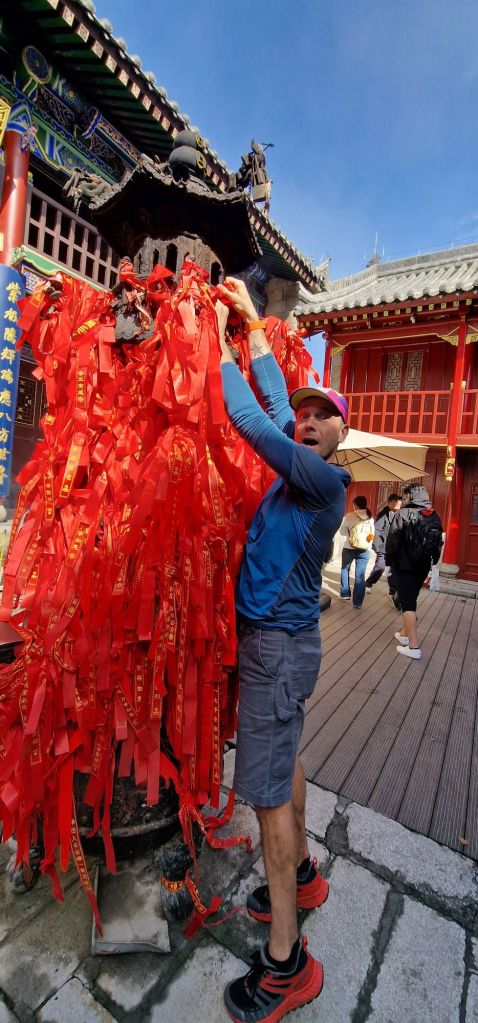
It is customary to tie a ribbon on one of the structures to give a blessing to someone of your choosingThe journey back down
We had such a splendid day and couldn’t resist purchasing the obligatory official Huashan photo and fridge magnet. No shame!
Xi’an is one of China’s oldest cities with a history spanning over 3,000 years. The city was the eastern starting point of the Silk Road, served as the Chinese capital for 13 dynasties, and is also famous for being the location of the Terracotta Army.
The city walls, which started construction in 194BC and were reconstructed in their present form in the 1500s, are the oldest preserved city walls in the world.
The southern gate of the cityOn the outside of the city walls, a reflective skyline rivals that of Beijing (in my opinion)
Muslim merchants arrived via the Silk Road in the 7th Century. Nowadays, the city has a vibrant Muslim Quarter and hosts the oldest pre-modern mosque in China, originally built in 742AD.
An evening out in the Muslim Quarter is pretty wild.
Xi’An MosqueThe Muslim QuarterBelgium craft beer and backgammon 🍺
It is interesting that in Xi’An, counterculture is alive in comparison to the repressed Beijing. And despite being off the beaten track of the more metropolitan and wealthy eastern seaboard, it hosts its fair share of tourists – and locals, in our experience, speak more English. We have been doing our best with the Chinese and mostly get pitiful and amused looks. I am not yet sure if they are judging our language skills, table manners, or dress sense. Probably all of the above.
You will frequently see enticing scenes in doorways, only to end up in a tat market with no exit doors Obligatory tuktuk home. Ensure you negotiate a price before you get in 👀Ostentatious squid sticks